


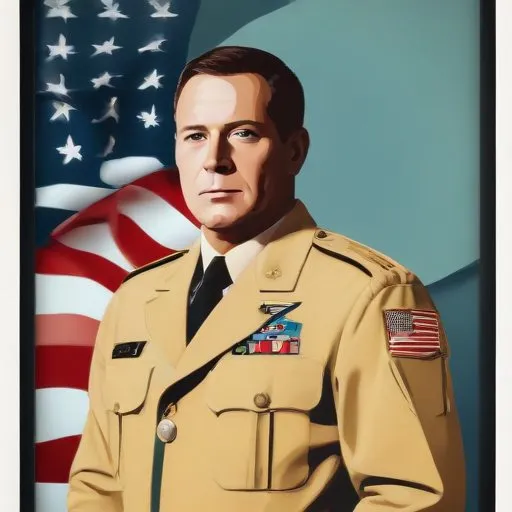
A decorated military pilot and astronaut who flew on two Space Shuttle missions, conducting scientific experiments and deploying satellites. He was also a test pilot and instructor at the US Air Force Test Pilot School.
Charles L. Veach, also known as Lacy Veach, was a renowned United States Air Force fighter pilot and NASA astronaut who left an indelible mark on the world of aviation and space exploration. With a decorated career spanning over two decades, Veach was known for his exceptional flying skills, bravery, and pioneering spirit, which earned him numerous accolades and honors.
Veach was born on September 18, 1944, in Chicago, Illinois, but considered Honolulu, Hawaii, as his hometown. He graduated from Punahou School in 1962 and went on to receive a Bachelor of Science degree in Engineering Management from the United States Air Force Academy in 1966.
Veach was commissioned in the United States Air Force upon graduation from the Air Force Academy. He received his pilot wings at Moody Air Force Base, Georgia, in 1967, and then attended fighter gunnery school at Luke Air Force Base, Arizona. Over the next 14 years, he served as a USAF fighter pilot, flying the F-100 Super Sabre, F-111 Aardvark, and F-105 Thunderchief. Veach's military career was marked by bravery and distinction, earning him the Distinguished Flying Cross with two Oak Leaf Clusters, Air Medal with 13 Oak Leaf Clusters, Air Force Commendation Medal with one Oak Leaf Cluster, and the Purple Heart.
One of the highlights of Veach's military career was his 275-mission combat tour in South Vietnam during the Vietnam War. He also had the distinction of being a member of the USAF Air Demonstration Squadron, the Thunderbirds, flying the T-38 Talon in 1976 and 1977.
In January 1982, Veach joined NASA as an engineer and research pilot. He brought his extensive flying experience and skills to the space agency, contributing significantly to various projects and missions. During his tenure at NASA, Veach logged over 5,000 flying hours, demonstrating his exceptional proficiency and adaptability as a pilot.
Veach was married to Alice Meigs Scott of Waycross, Georgia, and they had two children together. In his free time, he enjoyed surfing, bicycling, reading, and spending time with his family. His parents resided in Honolulu, Hawaii, and Veach maintained a strong connection to his hometown.
Charles L. Veach's remarkable career serves as an inspiration to aspiring pilots, astronauts, and engineers. His dedication, bravery, and expertise have left a lasting impact on the world of aviation and space exploration. As a testament to his legacy, the museum display F-16 at the Ellington Field Joint Reserve Base in Houston, Texas, proudly bears his name.
Charles L. Veach's life and achievements serve as a shining example of dedication, perseverance, and excellence. His legacy continues to inspire generations of aviation enthusiasts, and his contributions to the fields of fighter piloting and astronautics remain unparalleled.
95 Years Old
First person to walk on the Moon during the Apollo 11 mission, marking a historic milestone in space exploration.
96 Years Old
Second man to walk on the Moon during the Apollo 11 mission, a pioneering astronaut and advocate for space exploration.
96 Years Old
Led the third manned mission to land on the Moon, Apollo 12, and became the third person to walk on its surface. Known for his bold and fearless approach to space exploration.
Born in 1923
First American in space, commanded Apollo 14 mission, and walked on the Moon.
97 Years Old
American baseball player who pitched in the Major Leagues from 1965 to 1975, known for being a four-time All-Star and winning the American League ERA title in 1968.
98 Years Old
Commander of the Apollo 13 mission, known for his heroic efforts in saving his crew after an explosion occurred on board. He's an iconic figure in space exploration history.
Born in 1924
One of the original Mercury Seven astronauts, he was a decorated war veteran and test pilot who later became a NASA executive, playing a crucial role in the development of the US space program.
