


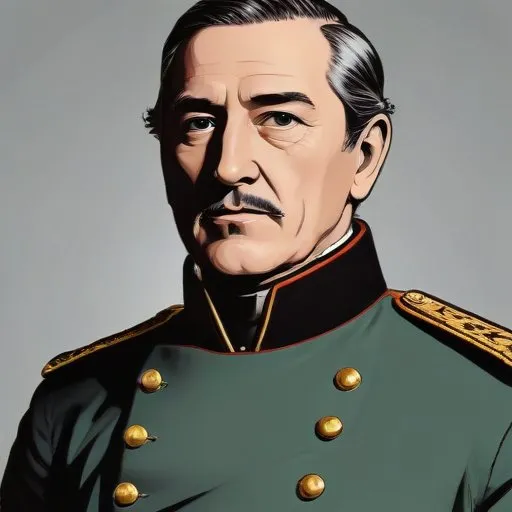
Led a Continental Army during the American Revolutionary War, playing a key role in the early years of the conflict, but was eventually court-martialed and dismissed from the army.
Charles Lee, a British-born American military officer, is remembered for his valiant service as a general of the Continental Army during the American Revolutionary War. His military prowess and tactical genius played a significant role in shaping the course of the war, earning him a prominent place in American history.
Born on February 6, 1732, in Darnhall, Cheshire, England, Lee was the son of Major General John Lee and Isabella Bunbury. His maternal family, the Bunburys, were prominent landed gentry with a strong presence in British politics. Lee's early life was marked by poor health, suffering from rheumatism and chronic attacks of gout, which would affect him throughout his life.
Lee's military career began in the British Army during the Seven Years War, where he saw action in various battles. After the war, he sold his commission and served in the Polish army of King Stanislaus II Augustus. In 1773, Lee moved to North America, settling in western Virginia, where he bought an estate.
When the American Revolutionary War broke out in 1775, Lee volunteered to serve with the rebel forces. His military experience and knowledge of European warfare made him an invaluable asset to the Continental Army. Lee's ambitions to become the Commander-in-Chief of the Continental Army were thwarted by the appointment of George Washington to that post.
In 1776, Lee's forces repulsed a British attempt to capture Charleston, boosting his reputation and earning recognition from Congress. Later that year, he was captured by British cavalry under Banastre Tarleton and held as a prisoner until exchanged in 1778.
Lee's military service was not without controversy. During the Battle of Monmouth in 1778, he led an assault on the British that miscarried, leading to his court-martial and eventual dismissal from the Continental Army. This incident tarnished his reputation, and Lee's legacy has been the subject of much debate among historians.
Despite this, Lee's contributions to the American Revolution cannot be overstated. He was a skilled military strategist and a passionate advocate for American independence. His flamboyant personality and strong opinions often led to conflicts with his contemporaries, but his commitment to the revolutionary cause remained unwavering.
Lee's personal life was marked by turmoil and tragedy. He never married, and his relationships with his family members were strained, particularly with his mother, Isabella. Lee's health continued to deteriorate, and he died on October 2, 1782, in Philadelphia, Pennsylvania.
Charles Lee's complex and multifaceted personality, combined with his significant contributions to the American Revolution, make him a fascinating figure in American history. Despite his flaws and controversies, Lee's legacy as a brave and dedicated military leader endures.
Born in 1732
The first President of the United States, a military hero who led the country to independence, and set the standard for the office of the presidency. He's known for his honesty, integrity, and leadership skills.
Born in 1741
A traitorous American general who defected to the British Army during the American Revolutionary War, leading to a pivotal moment in American history.
79 Years Old
A Pulitzer Prize-winning composer, known for blending minimalism with complex rhythms, creating a unique sound that resonates with audiences worldwide.
Born in 1743
The principal author of the Declaration of Independence and a strong advocate for individual liberties and limited government, shaping America's foundational principles. He oversaw the Louisiana Purchase, doubling the country's territory.
Born in 1706
A founding father of the United States, he was a leading figure in the Enlightenment, known for his groundbreaking inventions, scientific discoveries, and influential writings. He played a key role in shaping American history and politics.
Born in 1735
This American patriot and artisan is famous for his midnight ride during the American Revolution, warning colonists that the British were coming, and for his iconic engravings, including the Boston Massacre depiction.
Born in 1737
First Governor of Massachusetts, instrumental in American independence and famously signed the Declaration of Independence with a large, bold signature .
Born in 1736
A pioneering figure in American history, he played a key role in the American Revolution and is famous for declaring "Give me liberty or give me death!" in a speech that helped galvanize the colonial resistance against British rule.
