


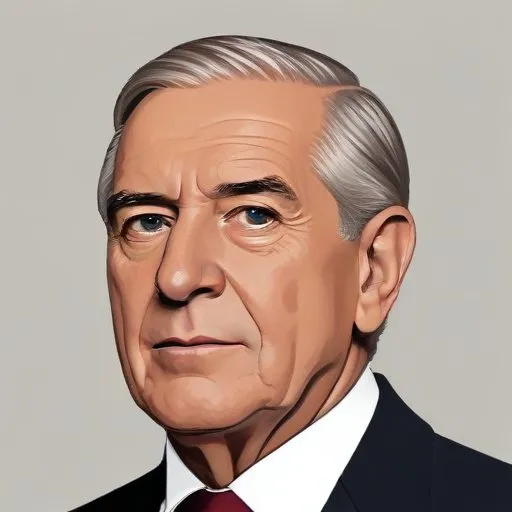
The 4th Premier of Queensland, who served from 1868 to 1870, is most known for his role in shaping the state's early development and infrastructure. He was a key figure in the separation of Queensland from New South Wales.
Sir Charles Lilley is renowned for his pivotal role in shaping the education system of colonial Queensland, leaving a lasting legacy that endured well into the 20th century. As the Premier and Chief Justice of the Supreme Court of Queensland, Lilley's vision for education transformed the state's approach to learning, making him a celebrated figure in Australian history.
Born on 27 August 1827, in Newcastle upon Tyne, England, Lilley was the son of Thomas Lilley and Jane (née Shipley). He was raised by his maternal grandfather and educated at St Nicholas Parish School. Initially, Lilley aspired to study law, becoming articled to Newcastle solicitor William Lockey Harle. He later attended University College, London, for two years, where he abandoned his law studies to enlist in the army.
Lilley's military stint was short-lived, as he was charged with being absent without leave and spent 28 days in cells. Friends intervened, purchasing his honourable discharge. In Preston, Lancashire, Lilley lectured on temperance and industry, which brought him into disfavour with his superior officers. However, this experience ignited his passion for social reform, leading him to join the committee that established the Preston Free Library.
In 1856, Lilley arrived in Sydney and soon after, settled in Brisbane, where he joined the Crown Solicitors Office and completed his law degree. He ventured into journalism, acquiring an interest in the Moreton Bay Courier (later the Brisbane Courier) and serving as its editor for two years. Lilley's foray into politics began with his prominent role in the movement for separation from New South Wales, which led to Queensland's independence.
After Queensland separated from New South Wales, Lilley was elected to the state's first Legislative Assembly, representing the Hamlet of Fortitude Valley. He later formed the Queensland Liberal Association, introducing political parties to the Legislative Assembly. Lilley held the seat of Fortitude Valley until February 1874 and was subsequently returned for the seat of North Brisbane.
Sir Charles Lilley's contributions to Queensland's education system have had a profound impact on the state's development. His vision for education extended beyond the classroom, shaping the state's social and cultural fabric. As a testament to his enduring legacy, Queensland's education system continues to thrive, reflecting Lilley's dedication to creating a better future for generations to come.
Lilley's advocacy for education and social reform was underpinned by his strong philosophical convictions. He believed in the transformative power of education, seeing it as a catalyst for social change and individual empowerment. Throughout his life, Lilley remained committed to creating a more just and equitable society, inspiring generations to come.
Sir Charles Lilley was knighted in recognition of his outstanding contributions to Queensland's education system and his service to the state as Premier and Chief Justice of the Supreme Court.
Lilley's life and work are a testament to his unwavering commitment to creating positive change in Queensland. His legacy extends beyond his own lifetime, shaping the state's education system and inspiring future generations to continue his work. Today, Sir Charles Lilley is remembered as a visionary leader who left an indelible mark on Queensland's history.
Born in 1831
First Premier of Queensland, instrumental in shaping the state's early development and governance. Known for his role in establishing Queensland as a separate colony from New South Wales.
Born in 1835
Scottish-Australian politician who served as the 8th Premier of Queensland, known for his role in shaping the state's economy and infrastructure during the late 19th century. He implemented various reforms and invested in public works projects.
Born in 1841
Pioneering oceanographer and biologist who explored the ocean's depths, discovering new species and advancing our understanding of marine ecosystems.
75 Years Old
Award-winning actor and director known for his powerful performances in films like "Roc" and "Alien 3", as well as his work behind the camera on TV shows like "Sleeper Cell".
Born in 1832
The 13th Premier of Queensland, serving from 1898 to 1899, is most known for his brief but significant tenure during a period of significant economic and social change in Queensland's history. He played a key role in shaping the state's development during this time.
79 Years Old
The first Mayor of Bristol, a pioneering figure in urban planning and design, who transformed the city's infrastructure and architecture, leaving a lasting legacy.
