


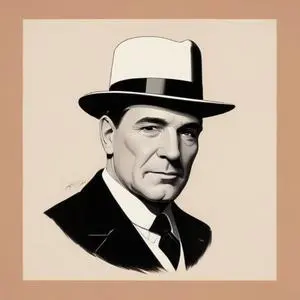
Co-founder of Bethlehem Steel, a pioneering steel producer that revolutionized American industry, and a shrewd businessman who built a steel empire.
Charles M. Schwab, a towering figure in the American steel industry, is best known for his remarkable leadership that propelled Bethlehem Steel to become the second-largest steel maker in the United States and one of the most significant heavy manufacturers in the world. Under his stewardship, the company achieved unprecedented success, making Schwab a legend in his own right.
Schwab was born on February 18, 1862, in Williamsburg, Pennsylvania, to Pauline (née Farabaugh) and John Anthony Schwab. His grandparents, Roman Catholic immigrants from Germany, instilled in him the values of hard work and determination. Schwab grew up in Loretto, Pennsylvania, where his father operated a livery stable and served as a mail carrier. He graduated from Saint Francis University in Loretto in 1877, laying the foundation for his future success.
Schwab began his career as an engineer in Andrew Carnegie's steelworks, starting as a stakedriver in the engineering corps of the Edgar Thomson Steel Works and Furnaces in Braddock, Pennsylvania. His rapid rise through the ranks was a testament to his exceptional skills and dedication. By 1887, he had become the general superintendent of Homestead Works, and by 1890, he held the same position at the Edgar Thomson Steel Works.
In 1897, at the age of 35, Schwab became the president of the Carnegie Steel Company, a position that catapulted him to national prominence. His leadership and vision helped shape the company's growth, and in 1901, he played a crucial role in negotiating the secret sale of Carnegie Steel to a group of New York City-based financiers led by J. P. Morgan.
After a brief stint as the first president of the United States Steel Corporation, Schwab left the company in 1903 due to disagreements with Morgan and fellow executive Elbert Gary. He went on to lead the Bethlehem Shipbuilding and Steel Company, which eventually became Bethlehem Steel, in Bethlehem, Pennsylvania. Under his leadership, the company flourished, expanding its operations to California, Delaware, and New Jersey through its involvement in the United States Shipbuilding Company.
Schwab's contributions to the steel industry are immeasurable. He was a pioneer in the field, introducing innovative practices and technologies that transformed the industry. His leadership and vision helped shape the course of American industrial history, earning him a place among the greatest industrialists of his time.
Schwab's career was not without controversy. He was criticized for his role in the 1892 Homestead Strike, which turned violent whenPinkerton agents clashed with striking workers. Despite this, Schwab remained a respected figure in the industry, known for his fairness and commitment to his employees.
Schwab's life and achievements are a testament to the power of hard work, determination, and vision. He played a pivotal role in shaping the American steel industry, leaving behind a legacy that continues to inspire generations of entrepreneurs and industrialists.
Schwab passed away on September 18, 1939, but his impact on the world of industry and beyond remains indelible. His story serves as a reminder of the importance of innovation, risk-taking, and leadership, inspiring us to strive for greatness and make our mark on the world.
Born in 1835
A self-made industrialist who amassed a vast fortune in the steel industry, then donated most of it to fund over 2,500 public libraries and other philanthropic endeavors.
Born in 1837
Founded a powerful banking dynasty and dominated corporate finance, shaping the American economy through strategic investments and mergers.
Born in 1839
Founded the Standard Oil Company, revolutionizing the oil industry and amassing vast wealth, which he later used for philanthropic efforts. He's remembered for his business acumen and generosity.
Born in 1863
Founded the pioneering automobile manufacturing company that revolutionized the industry with the assembly line production method, making cars more affordable and accessible to the masses.
Born in 1794
Built railroad empires, revolutionizing transportation and commerce, and donated extensively to education and the arts.
Born in 1853
Developed groundbreaking inventions and innovations in electrical engineering, including the first practical welding machine and the first electric streetcar system.
Born in 1846
Developed innovative braking systems for trains, revolutionizing rail safety and transforming the industry. Founded a company that dominated the market for over a century.
Born in 1847
A pioneer in innovation, credited with developing groundbreaking inventions that revolutionized the way people live and communicate, including the light bulb and phonograph.
