


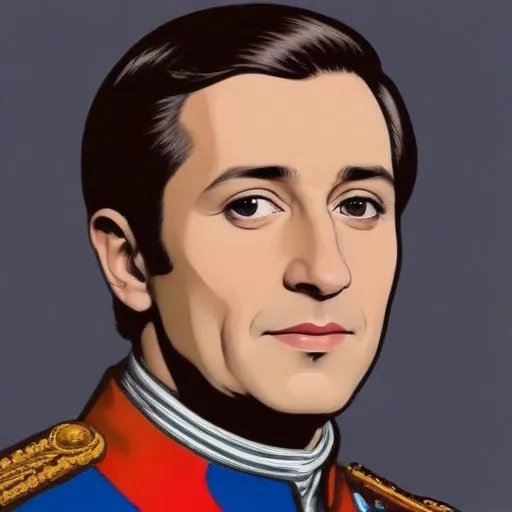
Heir to the French throne, known for his short-lived reign and tragic fate.
Charles Orlando, Dauphin of France, was the eldest son and heir of Charles VIII of France and Anne of Brittany, born on October 11, 1492. This birth was significant, as it marked the beginning of a new era for the House of Valois, with Charles Orlando being the first male heir born to the royal couple.
Charles Orlando's birth was a celebrated event, as his parents had been awaiting a male heir to secure the future of the House of Valois. The Queen's pregnancy was closely monitored, and she was given the utmost care to ensure a healthy delivery. The King and Queen had been preparing for the birth at the Château de Plessis-lès-Tours, where the royal doctors and midwives were on hand to assist with the delivery.
The Queen went into labor on the night of October 10, and Charles Orlando was born at 4 am on October 11, 1492. The newborn Dauphin was immediately the subject of controversy, as his parents and godmother, Jeanne de Laval, wanted to name him Orlando, after Roland, the Carolingian hero of The Song of Roland. However, his godfathers, Louis, Duke of Orléans, and Peter II, Duke of Bourbon, refused to allow a future king of France to be given such a foreign name, and instead, he was named Charles.
Charles Orlando's birth marked a turning point in the history of the House of Valois, as he was the first male heir born to the royal couple. His existence secured the future of the dynasty and brought joy to the King and Queen, as well as the people of France.
Despite his short life, Charles Orlando's legacy is significant, as he represents the continuation of the House of Valois and the hopes for a strong and prosperous future for France. His birth and life are a testament to the importance of securing the future of the monarchy and the role of the royal family in shaping the course of French history.
Charles Orlando's life and legacy must be viewed within the context of the tumultuous 15th century in France. The country was still reeling from the Hundred Years' War, and the royal family was struggling to maintain power and stability. The birth of a male heir was seen as a crucial step in securing the future of the monarchy and the House of Valois.
The marriage of Charles VIII and Anne of Brittany was also significant, as it marked a union between two powerful families and brought stability to the region. Charles Orlando's birth was a symbol of this union and the hopes for a bright future for France.
Born in 1462
The king who ruled France from 1498 to 1515, known for his military campaigns in Italy and his role in the Italian Wars, which shaped the country's foreign policy.
Born in 1640
Younger brother of King Louis XIV, known for his military prowess and cultural patronage, particularly in the arts.
Born in 1601
The queen who ruled France alongside her son Louis XIV, known as the Sun King, and played a significant role in shaping the country's politics and culture during the 17th century. She was a skilled diplomat and strategist who helped to establish France as a dominant European power.
Born in 1619
A 17th-century mastermind who centralized France's economy, creating a powerful and efficient financial system that fueled the country's growth and prosperity. He's renowned for his innovative economic policies and reforms.
Born in 1608
Third son of King Henry IV of France, a rebellious prince who plotted against his brother King Louis XIII and was known for his military prowess and romantic escapades.
