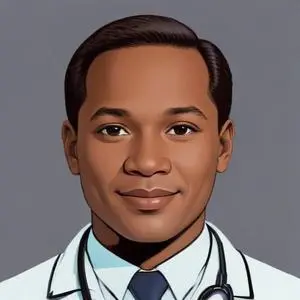
Charles R. Drew

Charles R. Drew

Charles R. Drew was born on June 3rd, 1904

Full Name: Charles Richard Drew
Nationality: American
Profession: Physician and surgeon
Born: June 3, 1904
Died: April 1, 1950
Notable Work: Blood bank development
Education: Amherst College
Awards: Spingarn Medal

Developed the concept of blood banks and revolutionized blood transfusions, saving countless lives. Pioneering work in blood plasma preservation and transfusion medicine.

Written by: David Williams David Williams

Charles R. Drew: The Pioneer of Blood Transfusions

Charles Richard Drew, a renowned American surgeon and medical researcher, is best known for developing improved techniques for blood storage and applying his expertise to create large-scale blood banks during World War II, saving thousands of Allied forces' lives. His groundbreaking work in the field of blood transfusions revolutionized the medical landscape, paving the way for modern blood banking practices.

Early Life and Education

Born on June 3, 1904, in Washington, D.C., Drew grew up in a middle-class African American family in the Foggy Bottom neighborhood. His father, Richard, was a carpet layer, and his mother, Nora Burrell, was a trained teacher. Drew's early life was marked by a strong work ethic, evident in his daily newspaper delivery route, where he would deliver over a thousand papers to his neighbors.

Education and Athletics

Drew attended Amherst College in Massachusetts, where he excelled in athletics, playing on the football and track and field teams. He graduated in 1926 and later spent two years as a professor of chemistry and biology, as well as the first athletic director and football coach at Morgan College in Baltimore, Maryland, to earn money for medical school.

Medical Career and Blood Research

Advocacy Against Racial Segregation

As a prominent African American figure in the medical field, Drew was vocal about the lack of scientific foundation for racial segregation in blood donation. He protested against the practice, citing it as an unnecessary and discriminatory measure. Despite his resignation from the American Red Cross in 1942 due to their segregation policies, Drew's advocacy eventually led to the abolition of racial segregation in blood donation in 1950.

Career Highlights and Major Works

  • Developed techniques for long-term preservation of blood plasma
  • Established the first large-scale blood bank during World War II
  • DIRECTOR of the Blood for Britain project
  • Authored multiple papers on blood transfusions and storage

Awards and Honors

Drew received numerous awards and honors for his groundbreaking work, including the Spingarn Medal from the NAACP in 1944. His contributions to medicine and humanity were further recognized with a postage stamp in his honor in 1981.

Legacy and Impact

Charles Richard Drew's pioneering work in blood transfusions has had a lasting impact on modern medicine. His advocacy against racial segregation in blood donation has paved the way for inclusivity and equality in medical practices. Today, Drew's legacy continues to inspire future generations of medical professionals and researchers.

Trivia and Fun Facts

  • Drew was an accomplished athlete and played football and track and field in college
  • He was the first African American to earn a doctorate in medical science from Columbia University
  • Drew's work was instrumental in the development of modern blood banking practices

Charles R. Drew's remarkable life and achievements serve as a testament to the power of innovation, perseverance, and advocacy. His groundbreaking work in blood transfusions has saved countless lives, and his legacy continues to inspire and shape the medical field today.

Timeline
1904
Born in the United States
Charles R. Drew was born in 1904 in the United States, where he would go on to become a pioneering physician and surgeon.
1930
Earned medical degree
Drew earned his medical degree from McGill University in 1930, beginning his career as a physician.
1940
Developed blood bank concept
Drew developed the concept of a blood bank, which revolutionized the field of medicine.
1944
Resigned from Red Cross
Drew resigned from the Red Cross in 1944, citing racial segregation policies.
1950
Passed away at 45
Charles R. Drew passed away at the age of 45, leaving behind a legacy as a pioneering physician and surgeon.
Charles R. Drew

Charles R. Drew Quiz

What was Charles R. Drew's major contribution to medicine?

Score: 0/5
FAQ
What were Charles R. Drews contributions to medicine?
Charles R. Drew was an American physician and surgeon who made significant contributions to the field of medicine. He developed the concept of blood banks and revolutionized the field of transfusion medicine.
What was Charles R. Drews role in the American Red Cross?
Charles R. Drew played a crucial role in the American Red Cross, where he helped to establish the first large-scale blood bank during World War II. His work saved countless lives and helped to advance the field of transfusion medicine.
What were Charles R. Drews notable research projects?
Charles R. Drew was involved in several notable research projects, including a comprehensive study of blood transfusions and a survey of the uses of plasma. His work helped to shed light on the properties of blood and its components.
What awards and honors did Charles R. Drew receive?
Charles R. Drew received several awards and honors for his contributions to medicine, including the Spingarn Medal and election to the National Academy of Sciences.
How did Charles R. Drews work impact the field of medicine?
Charles R. Drews work had a profound impact on the field of medicine, as it helped to advance our understanding of blood transfusions and saved countless lives. His legacy continues to be felt in the world of medicine and beyond.

Related People:

Daniel Hale Williams

Born in 1856

Performed the first successful open-heart surgery and developed several procedures for heart surgery, paving the way for modern cardiac care.

George Davis

Born in 1914

Academy Award-winning art director behind iconic movie sets, including the futuristic world of "Blade Runner" and the eerie atmosphere of "Alien".