


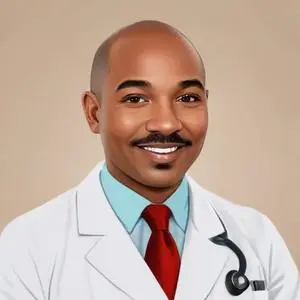
Performed the first successful open-heart surgery and developed several procedures for heart surgery, paving the way for modern cardiac care.
Daniel Hale Williams, a trailblazing American surgeon, is renowned for performing the first successful heart surgery in 1893, a feat that would change the course of medical history. He is also celebrated for founding Provident Hospital in 1891, the first non-segregated hospital in the United States, which provided a platform for African American nurses and doctors to practice and learn.
Born on January 18, 1856, in Hollidaysburg, Pennsylvania, Williams grew up in a family that valued education and hard work. His father, Daniel Williams Jr., was of Scottish-Irish and African American descent, while his mother, Sarah Price, was African American. After his father's untimely death when Williams was just nine, his mother struggled to care for the entire family, leading Williams to be apprenticed to a shoemaker in Baltimore, Maryland.
However, Williams' thirst for knowledge and adventure led him to run away and reunite with his mother in Rockford, Illinois. He later moved to Edgerton, Wisconsin, where he opened his own barber shop. It was during this time that he became fascinated with the work of a local physician, which sparked his desire to pursue a career in medicine.
Williams began his medical training as an apprentice to Dr. Henry W. Palmer, studying with him for two years. In 1880, he enrolled in Chicago Medical College, now known as Northwestern University Medical School, with the financial support of Mary Jane Richardson Jones, a prominent activist and leader in Chicago's black community.
After graduating in 1883, Williams opened his own medical office in Chicago, where he quickly gained a reputation for his exceptional surgical skills and compassionate care. His pioneering spirit and dedication to his patients led him to perform the groundbreaking heart surgery in 1893, which saved the life of a 25-year-old man shot in the chest.
In 1891, Williams founded Provident Hospital, which not only provided medical care to African Americans but also offered a platform for African American nurses and doctors to practice and learn. The hospital's associated nursing school was the first of its kind, providing opportunities for African American women to pursue careers in nursing.
In 1913, Williams was elected as the only African American charter member of the American College of Surgeons, a testament to his exceptional skill and contributions to the field of medicine.
Daniel Hale Williams' legacy extends far beyond his medical achievements. He played a vital role in breaking down racial barriers in the medical profession, paving the way for future generations of African American doctors and nurses. His commitment to providing quality medical care to all, regardless of race or socioeconomic status, inspired a new generation of healthcare professionals.
Today, Williams' legacy continues to inspire, with the Daniel Hale Williams Museum and the Provident Hospital Foundation dedicated to preserving his story and promoting diversity in the healthcare industry.
Born in 1908
Pioneering cardiovascular surgeon and educator who developed numerous surgical procedures and medical devices, revolutionizing the field of cardiovascular medicine.
Born in 1920
Performed the first human heart transplant in the United States and developed numerous cardiothoracic surgical techniques. Known for his pioneering work in cardiac surgery.
Born in 1922
Performed the world's first human-to-human heart transplant, revolutionizing cardiac surgery and paving the way for modern organ transplants.
Born in 1908
Pioneering cardiovascular surgeon and educator who developed numerous surgical procedures and medical devices, revolutionizing the field of cardiovascular medicine.
Born in 1899
Pioneering heart surgeon who developed the first successful procedure to treat blue baby syndrome, a congenital heart defect.
