


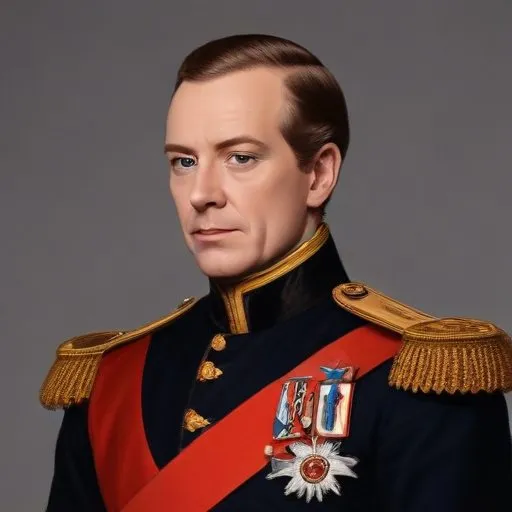
A prominent English noble who served as Prime Minister of the United Kingdom three times during the 19th century, known for his efforts to reform the British electoral system.
Best known for his tumultuous journey through the English Civil War, Charles Stanley, 8th Earl of Derby, navigated the treacherous waters of 17th-century politics with a quiet determination that belied his noble standing. Through strategic marriages, shrewd alliances, and calculated risks, Stanley forged a path that would shape the course of his family's legacy for generations to come.
Born on January 19, 1628, to James Stanley, 7th Earl of Derby, and Charlotte de La Trémouille, Charles was the eldest son of a proud and storied lineage. His mother, a member of the powerful French noble family of La Trémouille, brought a wealth of connections and influence to the Stanley clan.
As Lord Strange, Charles took a cautious approach to the English Civil War, refraining from taking an active role in the conflict. Instead, he opted to observe from the safety of France, where he petitioned for his father's life following James' condemnation in 1651. Though his efforts were ultimately unsuccessful, Charles' decision to distance himself from the conflict would serve him well in the years to come.
Following the death of his father, Charles succeeded to the Earldom and retreated to Bidston Hall in Cheshire, where he lived a quiet life, emerging only to support Booth's unsuccessful rising in 1659. Attainted for his involvement, he was restored to his titles and lands the following year, including the family's holdings in the Isle of Man.
Stanley's commitment to public service was evident in his tenure as mayor of Liverpool between 1666 and 1667. This brief but significant stint in local politics demonstrated his ability to navigate the complexities of governance, a skill that would serve him well throughout his life.
In 1650, Charles married Dorothea Helena Kirkhoven, daughter of Jehan, Lord of Heenvliet of Holland. The union was a strategic one, with Dorothea's family connections playing a crucial role in negotiating the marriage between William II, Prince of Orange, and Mary, Princess Royal, daughter of King Charles I. The couple had two sons, William and James, who would go on to shape the future of the Stanley family.
Charles Stanley, 8th Earl of Derby, died on December 21, 1672, leaving behind a legacy marked by strategic maneuvering, calculated risk-taking, and a deep commitment to family and public service. Though his life was marked by turmoil and uncertainty, Stanley's quiet determination and noblesse oblige ensured that his family's name would endure for generations to come.
Through his marriage, his children, and his quiet dedication to public service, Charles Stanley, 8th Earl of Derby, left an indelible mark on the tapestry of English history. His legacy, though sometimes overshadowed by the tumult of his times, remains a testament to the enduring power of quiet determination and noble character.
Born in 1712
A renowned Baroque-era composer and organist, he wrote over 300 works, including concertos, operas, and oratorios, and was a prominent figure in London's musical scene.
Born in 1829
Invented the first practical vacuum bottle, revolutionizing food and drink storage, and supported various charitable causes.
