


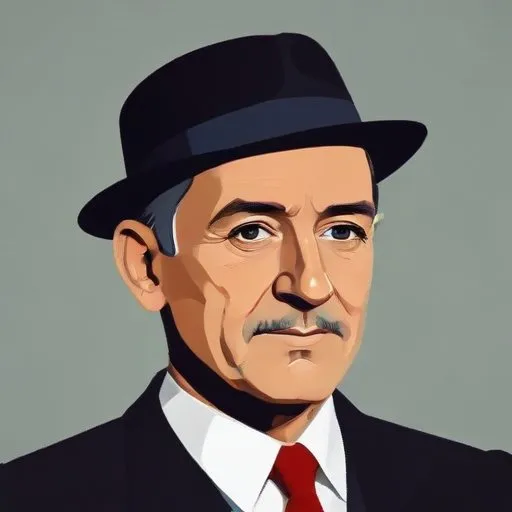
Invented the first practical vacuum bottle, revolutionizing food and drink storage, and supported various charitable causes.
William Stanley, a British inventor with 78 patents to his name, was a trailblazer in the world of precision drawing, mathematics, and astronomy. His contributions to science and education continue to inspire generations, making him a beacon of innovation and humanitarianism.
Born on February 2, 1829, in Islington, London, William Stanley was the son of John Stanley, a mechanic and builder, and Selina Hickman. He was the direct descendant of Thomas Stanley, a 17th-century author of the "History of Philosophy." From a young age, Stanley demonstrated a keen interest in science and mathematics, which would later become the foundation of his groundbreaking work.
Stanley's inventive spirit led to the creation of precision drawing and mathematical instruments, telescopes, and surveying instruments. His company, William Ford Stanley and Co. Ltd., became a premier manufacturer of these instruments, earning him international recognition. His innovative designs revolutionized various fields, including astronomy, engineering, and architecture.
Stanley's philanthropic efforts had a profound impact on education. He designed and founded the UK's first Trades school, Stanley Technical Trades School (now Harris Academy South Norwood), which provided vocational training to students. He also established the Stanley Halls in South Norwood, a testament to his commitment to education and community development.
During the last 15 years of his life, Stanley donated over £80,000 to education projects, a staggering amount at the time. In his will, he bequeathed the majority of his estate, valued at £59,000, to trade schools and students in south London. One of his homes was even converted into a children's home after his death, fulfilling his wish to provide a safe haven for the less fortunate.
Stanley's work earned him membership in several esteemed organizations, including:
Stanley's talents extended beyond science and education. He was an accomplished:
William Stanley's impact on modern society is undeniable. His contributions to science, education, and philanthropy have left an indelible mark on human progress. His legacy serves as a testament to the power of innovation, compassion, and dedication to the betterment of humanity.
As we reflect on Stanley's remarkable life, we are reminded that even the most seemingly ordinary individuals can achieve extraordinary things with passion, perseverance, and a commitment to making a difference.
In the words of Stanley himself, "The pursuit of knowledge is the pursuit of happiness." His remarkable story inspires us to continue striving for excellence, to push the boundaries of human knowledge, and to leave a lasting impact on the world.
Born in 1791
Pioneering scientist who discovered electromagnetic induction, formulated the laws of electrolysis, and invented the first electrical generator, revolutionizing our understanding of electricity and its applications.
Born in 1831
Developed groundbreaking theories that unified electricity and magnetism, and predicted the existence of radio waves, revolutionizing our understanding of the physical world.
Born in 1778
Pioneering chemist and physicist who discovered several elements, including potassium and sodium, and invented the Davy lamp, a safety lamp for miners. His groundbreaking work laid the foundation for modern chemistry and electrochemistry.
Born in 1775
A pioneer in the field of electromagnetism, he formulated fundamental laws that describe the relationship between electric currents and magnetic fields. His work laid the foundation for many modern technologies, including electric motors and generators.
Born in 1789
Formulated laws governing the relationship between voltage, current, and resistance in electric circuits, revolutionizing the field of electrical engineering.
Born in 1745
Italian physicist who invented the first electrical battery, revolutionizing the field of electricity and paving the way for countless technological advancements.
Born in 1856
A pioneering engineer who harnessed the power of alternating current (AC) to transform the world's electrical systems, and is credited with developing groundbreaking technologies like radio communication and X-ray imaging.
Born in 1846
Developed innovative braking systems for trains, revolutionizing rail safety and transforming the industry. Founded a company that dominated the market for over a century.
