


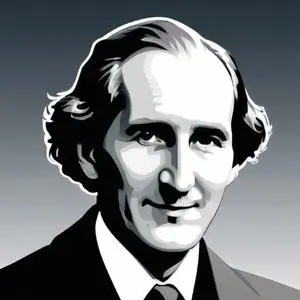
Developed groundbreaking theories that unified electricity and magnetism, and predicted the existence of radio waves, revolutionizing our understanding of the physical world.
James Clerk Maxwell, a Scottish physicist, is renowned for his groundbreaking work in unifying the forces of electricity and magnetism, henceforth known as electromagnetism. His pioneering research led to the development of Maxwell's equations, a set of four partial differential equations that describe how electrical and magnetic fields interact with matter.
Born on June 13, 1831, in Edinburgh, Scotland, Maxwell was the only child of John Clerk Maxwell and Frances Cay. He showed an early interest in science and mathematics, which was encouraged by his parents. Maxwell attended the University of Edinburgh and later Cambridge University, where he graduated with a degree in mathematics in 1854.
In 1865, Maxwell published A Dynamical Theory of the Electromagnetic Field, a seminal work that presented his theory of electromagnetic radiation. He demonstrated that electric and magnetic fields travel through space as waves moving at the speed of light, thereby unifying the previously separate fields of electricity and magnetism. This breakthrough led to the prediction of the existence of radio waves.
Maxwell's work on the kinetic theory of gases led to the development of the Maxwell-Boltzmann distribution, a statistical means of describing gas behavior.
He was the first to present a durable color photograph in 1861, paving the way for modern color photography.
Maxwell's research on the rigidity of rod-and-joint frameworks laid the foundation for the modern field of structural engineering.
He pioneered the field of dimensional analysis, which is still widely used today.
Maxwell's work on chaos theory and the behavior of complex systems has had a lasting impact on modern physics.
Maxwell's discoveries helped usher in the era of modern physics, laying the foundation for such fields as special relativity and quantum mechanics. Many physicists regard Maxwell as the 19th-century scientist having the greatest influence on 20th-century physics. His contributions are considered by many to be of the same magnitude as those of Isaac Newton and Albert Einstein.
Maxwell was elected a Fellow of the Royal Society in 1861 and served as the Society's President from 1871 to 1879. He was also awarded the Adams Prize in 1857 for his work on the stability of Saturn's rings.
Maxwell was a devout Christian and saw his work as a way to understand the natural world and glorify God. He was known for his humility and kindness, and his love for poetry and music. One of his famous quotes is, "The only laws of matter are those which our minds must fabricate, and the only laws of mind are fabricated for it by matter."
Maxwell's work has inspired countless scientists, engineers, and inventors. He has been featured in various forms of media, including films, books, and documentaries. His legacy continues to shape our understanding of the universe and inspire new generations of researchers.
James Clerk Maxwell's groundbreaking work has left an indelible mark on the world of physics and beyond. His unification of electromagnetism paved the way for numerous technological advancements and continues to influence modern science. As we look to the future, we can draw inspiration from Maxwell's passion for discovery and his commitment to understanding the intricacies of the universe.
Born in 1791
Pioneering scientist who discovered electromagnetic induction, formulated the laws of electrolysis, and invented the first electrical generator, revolutionizing our understanding of electricity and its applications.
Born in 1818
A pioneer in thermodynamics, he discovered the relationship between mechanical work and heat, leading to the development of the laws of thermodynamics. His work laid the foundation for modern physics and engineering.
Born in 1822
Developed the theory of thermodynamics, introducing the concept of entropy, and made significant contributions to the fields of electricity and magnetism.
Born in 1844
Developed the theory of statistical mechanics, which explains the behavior of gases and is a fundamental concept in modern physics.
Born in 1850
Developed groundbreaking theories in electromagnetism and telecommunication, and is credited with reformulating Maxwell's equations into their modern form. His work laid the foundation for modern electrical engineering and communication systems.
