


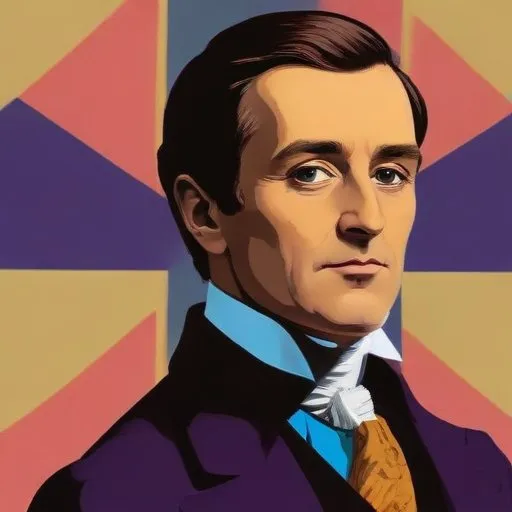
A prominent English politician who served as Lord High Treasurer and played a key role in the Glorious Revolution, known for his diplomatic skills and influence in shaping British history.
Charles Talbot, 1st Duke of Shrewsbury, is prominently remembered as a key figure in the Glorious Revolution, which saw the overthrow of King James II of England in 1688. As one of the Immortal Seven, a group of influential English politicians, Shrewsbury played a pivotal role in inviting William of Orange to depose James II, ushering in a new era of Protestant rule in England.
Born on July 15, 1660, to Roman Catholic parents, Shrewsbury remained a Catholic until 1679, when he converted to the Church of England during the Popish Plot. This conversion, influenced by the divine John Tillotson, marked a significant turning point in Shrewsbury's life and would later shape his political leanings.
Shrewsbury took his seat in the House of Lords in 1680 and was appointed Gentleman-Extraordinary of the Bedchamber three years later, indicating his growing influence at the court of Charles II. However, with the accession of James II in 1685, Shrewsbury's loyalties were tested when he was appointed a captain to defeat the Monmouth rebellion. He resigned his commission in 1687, refusing to succumb to James' pressure to convert back to Catholicism.
Shrewsbury's defiant stance against James II led him to make contact with William of Orange, and his home became a hub for opposition to the monarch. In June 1688, Shrewsbury was one of seven English statesmen to sign the invitation to William to invade England, marking the beginning of the Glorious Revolution. After fleeing to Holland, Shrewsbury returned with William to England in November 1688, playing a crucial role in the king's successful campaign.
Under William's government, Shrewsbury was instrumental in shaping the Revolution Settlement, advocating strongly for the recognition of William and Mary as sovereigns. Although he resigned from government in 1690 due to ill health and disagreements over the dissolution of Parliament, Shrewsbury returned to government in 1694 and successfully persuaded the House of Commons to vote for the funds needed for William's war against France.
Shrewsbury's contributions to the Glorious Revolution had far-reaching consequences, cementing the Protestant ascendancy in England and paving the way for the Bill of Rights in 1689. His influence extended beyond his own lifetime, shaping the course of English history and earning him a place among the most notable figures of the 17th century.
Despite his significant achievements, Shrewsbury's actions were not without controversy. His conversion to the Church of England and his role in the Glorious Revolution earned him both praise and criticism from his contemporaries. Nevertheless, his bravery and commitment to the Protestant cause have secured his place in history as a champion of English liberties.
Born in 1676
The first Prime Minister of the United Kingdom, serving from 1721 to 1742, known for establishing the office of Prime Minister and setting important precedents for the role. He is also recognized for his skill in managing Parliament and his role in shaping British politics.
Born in 1914
A renowned stage and screen actress, known for her versatility and range in various film and theatre productions, earning her a Tony Award and multiple nominations.
Born in 1643
A Scottish bishop, historian, and theologian who wrote influential works on the English Reformation and served as a close advisor to King William III. He's most known for his historical writings and ecclesiastical reforms.
