


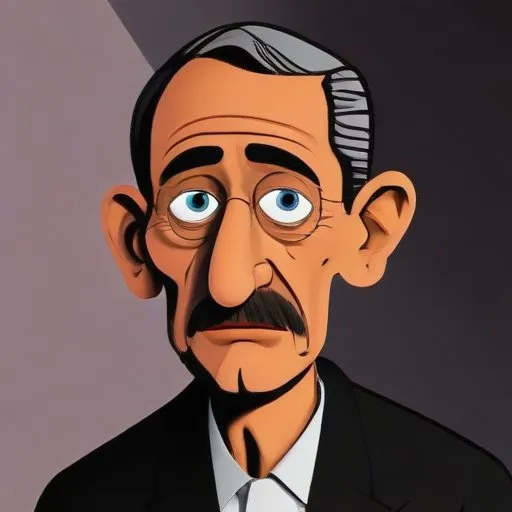
Creator of the popular comic strip "Tulsa Twister," known for his humorous and relatable characters, particularly in the American Midwest.
Charles Werner was a renowned American editorial cartoonist who left an indelible mark on the world of journalism with his thought-provoking and visually stunning cartoons. With a career spanning nearly 60 years, Werner's work was sought after by several U.S. Presidents, and he won numerous accolades, including the prestigious Pulitzer Prize in 1939.
Werner was born on March 23, 1909, in Marshfield, Wisconsin, and developed an interest in art at an early age. Despite having no formal training in art, he attended Oklahoma City University and went on to work as a staff artist and photographer for Springfield, Missouri's Leader and Press from 1930 to 1935.
Werner's big break came when he joined the Daily Oklahoman in 1935, where he eventually became the editorial cartoonist in 1937. His work during this period tackled pressing issues of the time, including the Munich Agreement, which earned him the Pulitzer Prize in 1939.
Werner's career was marked by several milestones, including his stint as Chief Editorial Cartoonist at the Chicago Sun from 1941 to 1947. He then joined the Indianapolis Star, where he worked for an impressive 47 years until his retirement in 1994.
In addition to his work, Werner was also an active member of the Association of American Editorial Cartoonists, serving as its president in 1959. His contributions to the field of editorial cartooning were recognized with several awards, including the Sigma Delta Chi Award for excellence in journalism in 1943, and seven Freedom Foundation Awards between 1951 and 1963.
Werner's work had a significant impact on modern society, with his cartoons influencing public opinion and sparking important conversations. His ability to convey complex ideas through simple yet powerful visuals made him a household name, and his work continues to inspire future generations of editorial cartoonists.
Today, Werner's legacy lives on through his contributions to the world of journalism and his tireless efforts to promote social and political awareness through his art. His cartoons serve as a testament to the power of visual storytelling and the importance of a free press in a democratic society.
Werner's personal life was marked by several milestones, including his request from former President Harry Truman to create an original cartoon for his presidential library. In 1965, Lyndon B. Johnson also requested over a dozen original cartoons for his personal collection.
Werner passed away on July 1, 1997, at the age of 88, leaving behind a legacy of powerful art and a commitment to promoting social and political awareness.
Born in 1883
Creator of intricate, humorous machines that perform simple tasks in overly complex ways, often featured in cartoons and films, showcasing clever engineering and wit.
Born in 1885
Creator of the popular comic strip "Mutt and Jeff," known for its humorous take on everyday life and relatable characters.
Born in 1880
Creator of the influential and innovative comic strip Krazy Kat, known for its surreal and poetic storytelling, and its impact on the development of the medium.
Born in 1894
Creator of the iconic sailor Popeye, known for his spinach-fueled strength and squinty eye, entertaining generations with his adventures in comic strips and cartoons.
Born in 1900
Creator of the iconic comic strip Dick Tracy, known for its gritty crime-fighting storylines and pioneering use of forensic science. This innovative work has left a lasting impact on the crime fiction genre.
Born in 1907
Creator of iconic adventure comic strips, including Terry and the Pirates and Steve Canyon, known for his innovative storytelling and dynamic artwork.
Born in 1923
Creator of the popular comic strip Beetle Bailey, known for his humorous and relatable portrayal of military life.
