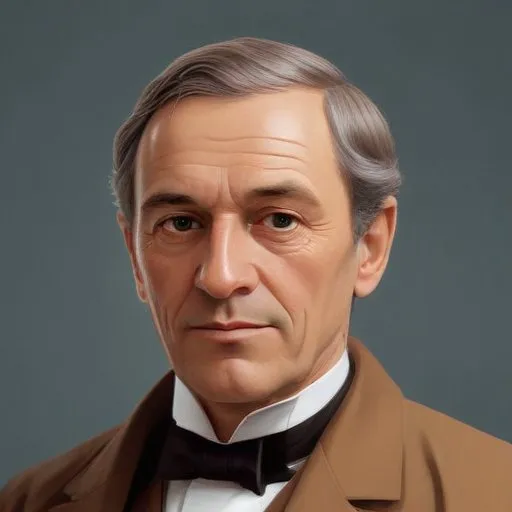
Charles Étienne Brasseur de Bourbourg: Unveiling the Secrets of Mesoamerica
A Pioneer in Mesoamerican Studies
Charles Étienne Brasseur de Bourbourg was a French writer, ethnographer, historian, archaeologist, and Catholic priest who left an indelible mark on the realm of Mesoamerican studies. Renowned for his extensive travels and meticulous documentation, Brasseur de Bourbourg's contributions to the understanding of the Maya and Aztec civilizations are unparalleled.
Early Life and Writing
Born on September 8, 1814, in Bourbourg, France, Brasseur de Bourbourg was drawn to theology and philosophy from a young age. He pursued his studies in Ghent, Belgium, where he developed a passion for writing and local folklore. His early essays on Flemish history earned him recognition in literary circles, paving the way for his future endeavors.
The Parisian Chapter
In 1837, Brasseur de Bourbourg traveled to Paris, where he became involved with political newspapers advocating for democratic reforms. Under the patronage of French poet Alphonse-Marie-Louis de Prat de Lamartine, he began contributing to Parisian journals and publishing novels in the Romantic style. Although his work was not without controversy, with allegations of plagiarism and inaccuracies, his reputation as a rising intellectual continued to grow.
The Mesoamerican Odyssey
Brasseur de Bourbourg's fascination with Mesoamerica led him to travel extensively throughout the region, unearthing historical documents and artifacts that shed new light on the Maya and Aztec cultures. His writings, infused with a sense of wonder and curiosity, transported readers to the heart of Mesoamerica, revealing the richness and complexity of these ancient civilizations.
Legacy and Influence
Brasseur de Bourbourg's work has had a profound impact on modern understanding of Mesoamerican studies. His speculations about the relationship between the ancient Maya and the lost continent of Atlantis inspired Ignatius L. Donnelly, laying the groundwork for the pseudoscience of Mayanism. While some of his theories have been disputed, his contributions to the field remain invaluable.
Awards and Honors
Throughout his career, Brasseur de Bourbourg received numerous awards and honors for his contributions to literature and Mesoamerican studies.
- Prix Montyon from the Académie française (1842)
- Member of the Société des Antiquaires de France (1844)
- Correspondent of the Institut de France (1856)
Philosophical Contributions and Beliefs
Brasseur de Bourbourg's work was guided by a deep respect for the cultures he studied. He believed in the importance of understanding the past to inform the present, and his writings reflect a sense of empathy and reverence for the indigenous peoples of Mesoamerica.
Influence on Modern Society
Brasseur de Bourbourg's legacy extends beyond the realm of academia, influencing modern artists, writers, and thinkers. His work has inspired a new generation of researchers, sparking a renewed interest in Mesoamerican studies and the rich cultural heritage of the region.
Personal Milestones and Key Life Events
- Born in Bourbourg, France (September 8, 1814)
- Traveled to Ghent, Belgium, to study theology and philosophy (1830s)
- Traveled to Paris, France, to pursue writing and intellectual pursuits (1837)
- Visited Mesoamerica, gathering documents and artifacts for his research (1840s-1850s)
- Died on January 8, 1874, in Nice, France
Brasseur de Bourbourg's remarkable journey, marked by curiosity, passion, and dedication, has left an indelible mark on our understanding of Mesoamerica. His contributions continue to inspire and educate, a testament to the power of human curiosity and intellectual pursuit.
FAQ
What are Charles Étienne Brasseur de Bourbourgs contributions to Mesoamerican studies?
As a French archaeologist, Brasseur de Bourbourg is credited with deciphering Mayan hieroglyphs and making significant contributions to Mesoamerican studies. He also wrote extensively on the subject, publishing several books and papers.
What did Charles Étienne Brasseur de Bourbourg discover in Mexico?
During his expeditions to Mexico, Brasseur de Bourbourg discovered several important artifacts, including Mayan codices and ancient texts. He also explored the ruins of Palenque and other Mesoamerican sites.
How did Brasseur de Bourbourgs work influence later archaeologists?
Brasseur de Bourbourgs work laid the foundation for later archaeologists to build upon. He is considered a pioneer in the field of Mesoamerican studies, and his discoveries paved the way for future researchers.
What is Charles Étienne Brasseur de Bourbourgs significance in the history of archaeology?
Brasseur de Bourbourg is significant in the history of archaeology because he was one of the first Europeans to study Mesoamerican cultures extensively. His work helped to establish the field of Mesoamerican studies and paved the way for future research.
Where did Charles Étienne Brasseur de Bourbourg conduct his expeditions?
Brasseur de Bourbourg conducted his expeditions primarily in Mexico and Central America, where he explored Mayan and Aztec ruins and studied the local cultures.