


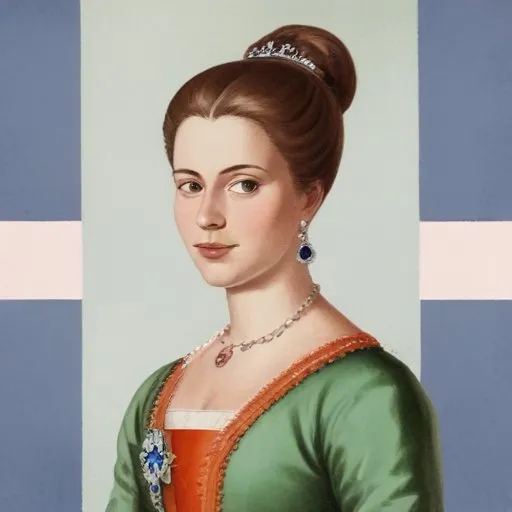
The Duchess of Mecklenburg-Strelitz was a German queen and the wife of King George III of England, known for her strong character and influence on her husband's reign. She was also a patron of the arts and a fashion icon of her time.
As a member of the House of Mecklenburg-Strelitz and Duchess of Saxe-Hildburghausen through her marriage, Charlotte Georgine was a prominent figure in the royal circles of 18th century Europe. She was renowned for her exceptional beauty, earning her a spot among the most beautiful women of her time, alongside her sisters.
Born on November 17, 1769, in Hanover, Electorate of Hanover, Charlotte Georgine was the eldest child of Charles II, Grand Duke of Mecklenburg, and Princess Friederike of Hesse-Darmstadt. Her childhood was marked by luxury and refinement, with her father serving as governor on behalf of King George III of the United Kingdom.
At the tender age of 15, Charlotte Georgine married Duke Frederick of Saxe-Hildburghausen, later becoming the Duke of Saxe-Altenburg. The marriage, however, was not a happy one, with Charlotte being mentally superior to Frederick, who eventually began to ignore her.
The Duchy of Saxe-Hildburghausen faced severe financial problems due to the disastrous policies of Frederick's predecessors. By 1806, the region was placed under Imperial receivership, allowing the Duke and Duchess only a reduced Civil List.
Charlotte Georgine's beauty inspired the renowned German writer, Jean Paul Friedrich Richter, who dedicated his novel, Titan, to her and her sisters. This testament to their elegance and refinement cemented their status as fashion icons of their time.
Duchess Charlotte Georgine's life was a testament to the complexities of royal life, marked by both luxury and hardship. Despite her personal struggles, she left an indelible mark on European history and culture, serving as a beacon of beauty and refinement for generations to come.
