


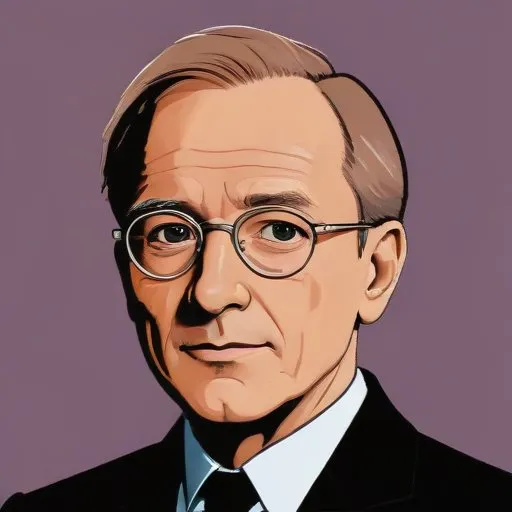
A prominent literary figure of the German Romantic era, known for his humorous and satirical writings that often explored the human condition. His works are still widely read and studied today.
Jean Paul, born Johann Paul Friedrich Richter, was a German Romantic writer, best known for his humorous novels and stories that captivated the hearts of many with their wit, satire, and philosophical undertones. His contributions to literature are still celebrated today, with his works being considered some of the most important in the German Romantic movement.
Jean Paul was born on March 21, 1763, in Wunsiedel, in the Fichtel Mountains of Franconia, Germany. His father, Johann Christian Richter, was an organist and later became a pastor, which exposed Jean Paul to the world of music and spirituality from a young age. After his father's death in 1779, Jean Paul's family struggled financially, but his mother encouraged his love for reading and writing.
He attended the Gymnasium at Hof and later studied at the University of Leipzig, where he initially intended to follow in his father's footsteps and become a pastor. However, his true passion lay in literature, and he soon devoted himself to studying the works of great writers.
Jean Paul began his writing career with Grnlndische Prozesse (Greenland Lawsuits) published anonymously in Berlin in 1783-1784, and Auswahl aus des Teufels Papieren (Selections from the Devil's Papers) signed J. P. F. Hasus, published in 1789. These early works were not well received, but they laid the foundation for his later success.
In 1790, Jean Paul experienced a spiritual crisis that changed the course of his life and writing. He had a vision of his own death, which led him to reevaluate his priorities and focus on creating works that would bring joy and inspiration to others.
His breakthrough came with the publication of Die unsichtbare Loge (The Invisible Lodge) in 1793, a romance that showcased his wit, humor, and philosophical insights. This work was followed by a string of successful novels and stories, including Titan, Flegeljahre, and Des Feldpredigers Schmelzle Reise nach Flätz.
Jean Paul's writing was deeply rooted in his philosophical beliefs, which emphasized the importance of empathy, compassion, and individual freedom. He believed in the power of literature to inspire and educate, and his works often explored themes of morality, ethics, and the human condition.
He was deeply influenced by the works of Jean-Jacques Rousseau and Immanuel Kant, and his own writings reflect a mix of rationalism, sentimentalism, and romanticism. Jean Paul's philosophy was characterized by its emphasis on the importance of feeling and intuition in understanding the world.
Jean Paul's impact on German literature is immeasurable. He is considered one of the most important writers of the German Romantic movement, and his works have influenced generations of writers, including E.T.A. Hoffmann, Ludwig Tieck, and Friedrich Nietzsche.
His legacy extends beyond literature to the world of music, where his works have inspired composers such as Robert Schumann and Franz Liszt. Today, Jean Paul is celebrated as a literary giant, and his works continue to inspire and delight readers around the world.
This quote, from Jean Paul's own writing, captures the essence of his philosophy and his legacy. His works continue to whisper gallery-style, inspiring and educating generations to come.
Born in 1749
A German literary giant who penned iconic works like "Faust" and "The Sorrows of Young Werther", shaping the Romantic movement and influencing countless writers.
Born in 1759
A renowned poet and playwright who crafted influential works that explored the human condition, morality, and the struggle for freedom, leaving a lasting impact on German literature.
Born in 1729
A prominent Enlightenment thinker, he's known for his influential writings on philosophy, literature, and theology, which helped shape modern German culture. He's also credited with developing the concept of dramatic irony in literature.
Born in 1797
A 19th-century literary mastermind who penned poignant poetry and biting social commentary, known for his witty satire and romantic verses that still resonate today.
Born in 1776
A German Romantic-era mastermind who crafted dark, fantastical tales and composed mesmerizing music, leaving an indelible mark on literature and classical music.
Born in 1773
A German Romantic poet, author, and critic who wrote influential works of fantasy and horror, shaping the genre and inspiring later writers like Edgar Allan Poe.
Born in 1767
A leading figure in the German Romantic movement, he was a poet, translator, and critic who played a key role in shaping the country's literary scene. His translations of Shakespeare's works into German are still widely read today.
