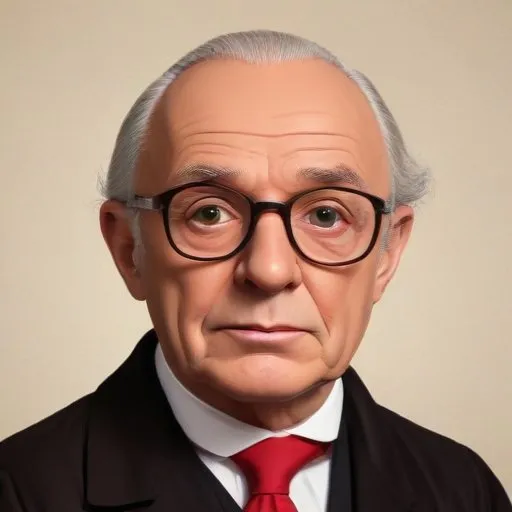
E. T. A. Hoffmann: The Visionary of German Romanticism
A Master of Fantasy and Horror
E. T. A. Hoffmann is celebrated as a pioneering German Romantic author, renowned for his captivating tales of fantasy and Gothic horror. His works have not only shaped the literary landscape of the 19th century but also continue to inspire artists, composers, and writers to this day.
Early Life and Influences
Born on January 24, 1776, in Königsberg, Prussia (now Kaliningrad, Russia), Hoffmann was the youngest of three children to Christoph Ludwig Hoffmann, a barrister and amateur musician, and Lovisa Albertina Doerffer. Following his parents' separation in 1778, Hoffmann was raised by his mother and her relatives, including his aunts, Johanna Sophie and Charlotte Wilhelmine Doerffer, and their brother, Otto Wilhelm Doerffer.
Literary Contributions
Hoffmann's writing career spanned across various genres, from fantasy and horror to music criticism and satirical essays. His most notable works include:
- The Nutcracker and the Mouse King, a novella that inspired Pyotr Ilyich Tchaikovsky's iconic ballet
- The Tales of Hoffmann, a collection of stories that formed the basis for Jacques Offenbach's opera
- Kreisleriana, a series of character sketches that influenced Robert Schumann's piano work of the same name
Musical Pursuits
In addition to his literary achievements, Hoffmann was a skilled composer and music critic. He wrote numerous musical compositions, including operas, symphonies, and piano pieces. As a music critic, he advocated for the works of
Ludwig van Beethoven,
Franz Schubert, and Carl Maria von Weber.
Artistic and Cultural Impact
Hoffmann's creative output has had a profound impact on modern society. His stories have inspired numerous adaptations, including films, ballets, and operas. His character, Johannes Kreisler, has become an archetype for the romantic artist. The ballet
Coppélia is based on two of his stories, while his music criticism has influenced the development of Romantic music.
Personal Milestones and Key Life Events
Despite his many achievements, Hoffmann's life was marked by personal struggles. He grappled with depression and struggled to secure a stable income. Nonetheless, he continued to write and compose, driven by his passion for art and his desire to leave a lasting legacy.
Philosophical Contributions and Beliefs
Hoffmann's work is characterized by a deep sense of romanticism and a fascination with the irrational and the unknown. He believed in the power of art to transcend the mundane and to reveal the hidden truths of the human experience.
Influence on Modern Society
E. T. A. Hoffmann's influence extends far beyond his literary and musical contributions. He has inspired generations of artists, writers, and composers, and continues to be celebrated as a visionary of German Romanticism. His work remains a testament to the power of imagination and creativity, inspiring us to explore the complexities of the human experience.
Legacy and Historical Context
Hoffmann's legacy is a testament to the enduring power of art to shape our understanding of the world and ourselves. As a pioneer of German Romanticism, he has left an indelible mark on the literary and cultural landscape of the 19th century. His work continues to captivate audiences, inspiring new adaptations, interpretations, and creative endeavors.
Trivia and Fun Facts
- Hoffmann was a skilled draftsman and created many illustrations for his stories.
- He was known for his fascination with the supernatural and the occult.
- Hoffmann's character, Johannes Kreisler, was inspired by his own life and struggles as an artist.
Conclusion
E. T. A. Hoffmann's boundless imagination, creative vision, and artistic genius have left an indelible mark on literature, music, and art. As we continue to explore the complexities of the human experience, Hoffmann's work remains a beacon of inspiration, reminding us of the transformative power of art to shape our understanding of the world and ourselves.
FAQ
What literary movements was E. T. A. Hoffmann associated with?
E. T. A. Hoffmann was a key figure in the German Romantic movement and a pioneer of the fantasy genre. His works, such as The Nutcracker and the Mouse King, are still widely read and adapted today.
What was E. T. A. Hoffmanns role in the development of the genre of fantasy literature?
Hoffmanns works helped to shape the fantasy genre, exploring themes of the supernatural, the bizarre, and the uncanny. His stories often blurred the lines between reality and fantasy, creating a sense of unease and uncertainty.
How did E. T. A. Hoffmanns music influence his literary career?
As a composer and music critic, Hoffmanns musical background informed his literary style. He often incorporated musical themes and motifs into his stories, creating a unique fusion of art forms.
What were the key themes and motifs in E. T. A. Hoffmanns literary works?
Hoffmanns works often explored themes of love, death, and the human psyche. He was fascinated by the darker aspects of life, and his stories frequently featured mysterious, often macabre, elements.
How did E. T. A. Hoffmanns life and career reflect the cultural and intellectual trends of his time?
Hoffmanns life and career reflected the cultural and intellectual trends of the early 19th century, including the rise of Romanticism and the increasing interest in folklore and mythology.