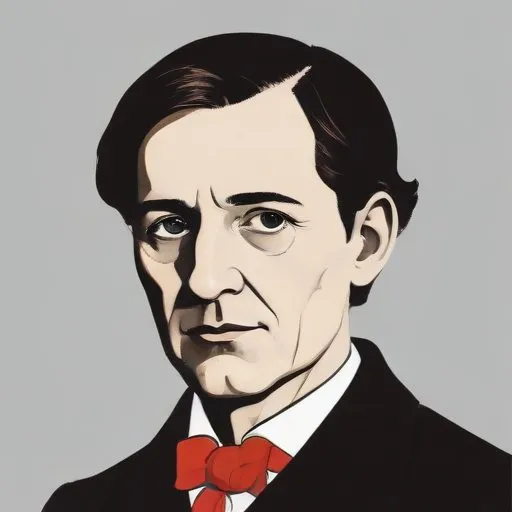
Ludwig Tieck: The Pioneering Romanticist
A Founder of the Romantic Movement
Ludwig Tieck, a German poet, fiction writer, translator, and critic, is renowned for being one of the founding fathers of the Romantic movement in the late 18th and early 19th centuries. His works, marked by a blend of fantasy, folklore, and philosophical introspection, have had a profound impact on the literary landscape of his time.
Early Life and Education
Born on May 31, 1773, in Berlin, Germany, Tieck was the son of a ropemaker. His siblings, Christian Friedrich Tieck and Sophie Tieck, would also go on to become accomplished artists in their own right. Tieck's early education at the Friedrichswerdersches Gymnasium laid the foundation for his later literary pursuits, where he studied Greek and Latin, as well as Italian, which he learned from a grenadier friend. This unique friendship provided Tieck with a glimpse into the lives of the poor, a theme that would later resurface in his Romanticist works.
Literary Career and Contributions
Tieck's literary career began in earnest when he contributed to the series Straussfedern, published by C. F. Nicolai, and edited by J. K. A. Musus. His early works, such as Abdallah (1796) and William Lovell (1795-1796), showcased his talent for crafting engaging narratives. However, it was his adoption of Romanticism that truly cemented his place in literary history.
Transition to Romanticism
Tieck's transition to Romanticism is exemplified in his series of plays and stories, published under the title Volksmrchen von Peter Lebrecht (1797). This collection features the fairy tale Der blonde Eckbert, which masterfully blends the exploration of the paranoiac mind with the realm of the supernatural. Additionally, the witty dramatic satire on Berlin literary taste, Der gestiefelte Kater, solidified Tieck's reputation as a bold and innovative writer.
Collaborations and Influences
Tieck's collaboration with his school and college friend Wilhelm Heinrich Wackenroder led to the creation of the novel Franz Sternbalds Wanderungen (1798). This work, along with Wackenroder's Herzensergiessungen (1796), marked the first expression of the Romantic enthusiasm for old German art.
Personal Life and Legacy
In 1798, Tieck married and settled in Jena, where he continued to write and contribute to the literary scene. His legacy as a pioneering Romanticist has endured, inspiring generations of writers and artists.
Philosophical Contributions and Beliefs
Tieck's works often explored the intersection of fantasy and reality, delving into the human psyche and the power of the imagination. His writing reflects a deep-seated fascination with the mysteries of life and the human condition.
Quote and Memorable Sayings
"I do not write to be understood, but to understand." - Ludwig Tieck
This quote encapsulates Tieck's commitment to exploring the depths of human experience through his writing, and his willingness to push boundaries and challenge conventions.
Historical Context and Legacy
Tieck's contributions to the Romantic movement have had a lasting impact on literature and art. His pioneering work paved the way for future generations of Romantic writers, influencing the development of literature and art in the centuries that followed.
Comparative Analysis with Contemporaries
Tieck's unique blend of fantasy, folklore, and philosophical introspection sets him apart from his contemporaries. While writers like Novalis and Friedrich Schlegel were also associated with the Romantic movement, Tieck's distinctive style and thematic concerns have earned him a place as one of the most important figures of the genre.
FAQ
What was Ludwig Tiecks contribution to the development of German Romanticism?
Ludwig Tieck was a key figure in the development of German Romanticism, which emphasized emotion, imagination, and individualism. He was a prolific writer, publishing works in various genres, including poetry, drama, and fiction, and his writing often explored themes of love, nature, and the human condition.
What were the characteristic features of Ludwig Tiecks writing style?
Ludwig Tiecks writing style was characterized by its lyricism, imagination, and emphasis on emotion and feeling. He was known for his use of rich, evocative language and his exploration of the fantastical and the irrational.
What were the key themes in Ludwig Tiecks works?
Ludwig Tiecks works often explored themes of love, nature, the human condition, and the role of the artist in society. He was fascinated by the supernatural and the irrational, and his writing often featured elements of the fantastical and the bizarre.
How did Ludwig Tieck respond to the changing literary landscape of his time?
Ludwig Tieck was an innovator who responded to the changing literary landscape of his time by experimenting with new forms and styles. He was influenced by the works of Shakespeare, Goethe, and other literary giants, and his own writing helped to shape the development of German Romanticism.
What is Ludwig Tiecks legacy in German literature?
Ludwig Tiecks legacy in German literature is that of a pioneer of Romanticism, who helped to shape the movements aesthetic and ideals. His writing continues to be celebrated for its lyricism, imagination, and exploration of the human condition, and his influence can be seen in the works of later German writers and poets.