


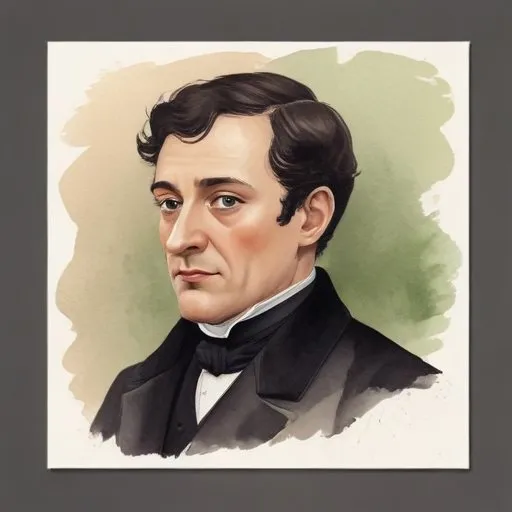
A leading figure in the German Romantic movement, he was a poet, translator, and critic who played a key role in shaping the country's literary scene. His translations of Shakespeare's works into German are still widely read today.
As the leading figure of Jena Romanticism, August Wilhelm Schlegel left an indelible mark on the world of literature, poetry, and Indology. He is best known for his monumental translations of Shakespeare's works into German, elevating the English dramatist to new heights in the European literary scene.
Schlegel was born on September 8, 1767, in Hanover, Germany, to a Lutheran pastor father. His early education at the Hanover gymnasium and the University of Göttingen laid the foundation for his future endeavors. Initially, he studied theology, but soon shifted his focus to philology under the guidance of renowned scholars like Heyne and Bürger. This period also saw the blossoming of his friendship with the poet and literary critic, Friedrich Schiller.
Schlegel's translations of Shakespeare's works into German not only preserved the essence of the original texts but also introduced the Bard's masterpieces to a wider audience. His efforts ensured that Shakespeare's plays became an integral part of German literary heritage. Additionally, his translations of Indian classics like the Bhagavad Gita further solidified his reputation as a master translator and scholar.
Schlegel's own poetry and literary writings demonstrated his deep understanding of aesthetics, history, and cultural nuances. His essays and reviews in journals like Horen and Jenaer Allgemeine LitteraturZeitung showcased his critical acumen and in-depth knowledge of literature, art, and culture.
Schlegel's personal life was marked by intense relationships and intellectual camaraderie. His marriage to Caroline Schelling, a celebrated German letter writer, was a union of minds and hearts. Although their marriage ended in separation, Caroline continued to assist Schlegel in his literary pursuits. Her subsequent marriage to the philosopher Schelling only strengthened their bond, fostering a thriving community of thinkers and artists.
August Wilhelm Schlegel's contributions to literature, poetry, and Indology have left a lasting impact on German Romanticism and beyond. His translations of Shakespeare and Indian classics paved the way for cross-cultural exchange and enriched the European literary landscape. As a professor of Sanskrit in Continental Europe, he inspired future generations of scholars and Indologists.
Schlegel's legacy extends beyond his literary achievements. He embodied the spirit of intellectual curiosity, fostering a community of thinkers and artists who valued knowledge, innovation, and creative expression. In the realm of German Romanticism, Schlegel's influence continues to resonate, inspiring new waves of writers, poets, and scholars.
Through his remarkable life and achievements, August Wilhelm Schlegel continues to inspire generations of scholars, writers, and artists, leaving behind a rich cultural heritage that transcends linguistic and geographical boundaries.
Born in 1749
A German literary giant who penned iconic works like "Faust" and "The Sorrows of Young Werther", shaping the Romantic movement and influencing countless writers.
Born in 1773
A German Romantic poet, author, and critic who wrote influential works of fantasy and horror, shaping the genre and inspiring later writers like Edgar Allan Poe.
Born in 1772
A key figure in German Romanticism, this poet and philosopher explored the mysteries of nature, the human condition, and the power of the imagination through lyrical and dreamlike writings.
Born in 1724
Developed influential philosophical frameworks, such as the Critique of Pure Reason, that shaped modern Western thought on ethics, morality, and human understanding.
Born in 1762
A German philosopher and academic who developed the concept of German idealism, emphasizing the role of the individual and the nation in shaping reality. He's known for his influence on German philosophy and the development of existentialism.
Born in 1788
A pessimistic philosopher who wrote about the human condition, emphasizing the struggles and sufferings of life, and is famous for his concept of the "will to life".
Born in 1770
A German philosopher and academic who developed a comprehensive and systematic philosophy that emphasized the unity of all things and the dialectical process of thesis, antithesis, and synthesis. His ideas have had a profound impact on modern thought, influencing fields such as philosophy, politics, and art.
