


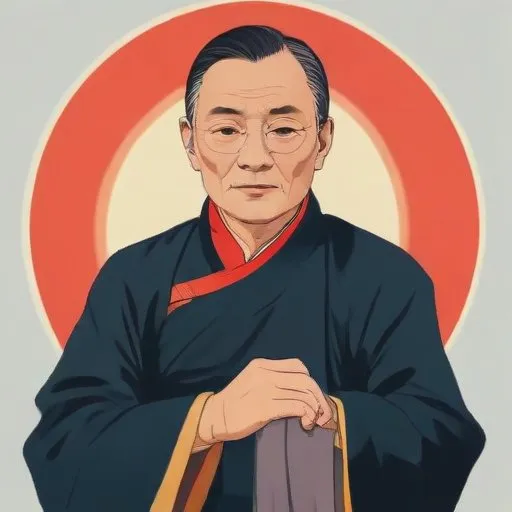
A pioneering figure in Chinese theatre, known for blending traditional and modern elements in his plays, and exploring themes of social change and cultural identity.
Chen Liting is renowned for his contributions to Chinese cinema, particularly in the pre-communist era, as a distinguished playwright, drama and film director, screenwriter, and film theorist. His most celebrated film, Women Side by Side (1949), remains a landmark in Chinese cinematic history.
Chen Liting was born on October 20, 1910, in Shanghai, China. Abandoned as an infant, he was adopted by foster parents, only to lose them during his early childhood. Despite these challenges, Chen's passion for the arts was ignited during his high school years at Chengzhong Middle School in Shanghai, where he was influenced by the post-May Fourth surge of modern drama.
Chen's dedication to the arts led him to translate, direct, and act in The Rising of the Moon, a play by Lady Gregory, at Daxia University (now East China Normal University) in 1928. This marked the first Chinese production of the play, showcasing Chen's innovative spirit. His subsequent patriotic play, Put Down Your Whip, gained immense popularity during the Japanese invasion of China, solidifying his reputation as a playwright.
Chen Liting's work in film direction and screenwriting earned him recognition alongside acclaimed directors Shi Dongshan, Cai Chusheng, and Zheng Junli. His film Women Side by Side, released in 1949, remains a masterpiece of Chinese cinema, showcasing his expertise in storytelling and character development.
Chen Liting was one of the first Chinese theorists to write about film theory. His book on the subject, published during the war, demonstrated his grasp of cinematic principles. As a film director, he continued to push boundaries, experimenting with new techniques and styles.
Following the early 1950s, Chen's filmmaking endeavors faced repeated obstruction due to political reasons. He served as general manager of Tianma Film Studio before being imprisoned during the Cultural Revolution. After his rehabilitation, Chen devoted three years to the historical film Da Feng Ge, only to have it canceled due to political interference. Despite these setbacks, Chen Liting continued to contribute to Chinese cinema, leaving behind a lasting legacy.
Chen Liting's contributions to Chinese cinema, drama, and film theory have inspired generations of artists and filmmakers. His pioneering work has paved the way for future generations, solidifying his place as one of the most influential figures in Chinese cinematic history.
Chen Liting's remarkable journey serves as a testament to the power of perseverance, creativity, and innovation, continuing to inspire those who follow in his footsteps.
Born in 1898
A pioneering figure in Chinese spoken drama, known for blending traditional and Western theatrical styles to create a unique form of Chinese opera.
