


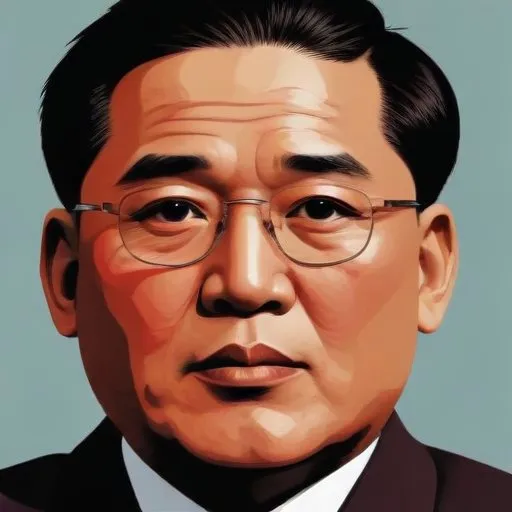
The Premier of North Korea from 2010 to 2013, known for implementing economic reforms and improving relations with South Korea. Held significant power in the isolated nation's government.
Choe Yongrim is a prominent North Korean politician who served as the Premier of North Korea from June 2010 to April 2013, making him one of the most influential figures in the country's government. He is known for his vast experience in the Korean People's Army and his various high-ranking positions within the Workers' Party of Korea.
Choe Yongrim was born on November 20, 1930, in North Korea. He attended Mangyongdae Revolutionary School, Kim Il-sung University, and later pursued his studies at Moscow University, where he qualified as an electrical engineer.
Choe Yongrim's career in politics began when he joined the Korean People's Army in July 1950. He has since held various offices, including instructor, section chief, vice-department director, first vice-department director, and department director of the Central Committee of the Workers' Party of Korea.
Choe Yongrim was elected as the Premier of North Korea on June 7, 2010, at the 3rd Session of the 12th Supreme People's Assembly. During his tenure, he worked closely with the Supreme Leader Kim Jong-il and later with Kim Jong-un.
Choe Yongrim has been awarded several honors for his contributions to the North Korean government, including his position as honorary vice-president of the Presidium of the Supreme People's Assembly.
Choe Yongrim's adoptive daughter, Choe Sonhui, is the current Minister of Foreign Affairs of North Korea.
Choe Yongrim's legacy in North Korean politics is marked by his dedication to the Workers' Party of Korea and his commitment to the country's development. His experience and influence have made him a respected figure in the country's government.
Through his various positions, Choe Yongrim has played a significant role in shaping North Korea's politics and economy. His legacy continues to be felt in the country, even after his retirement as Premier.
Born in 1926
A South Korean politician who served as Prime Minister and played a key role in the country's economic development and democratization. He's also known for his involvement in the Gwangju Democratization Movement.
