


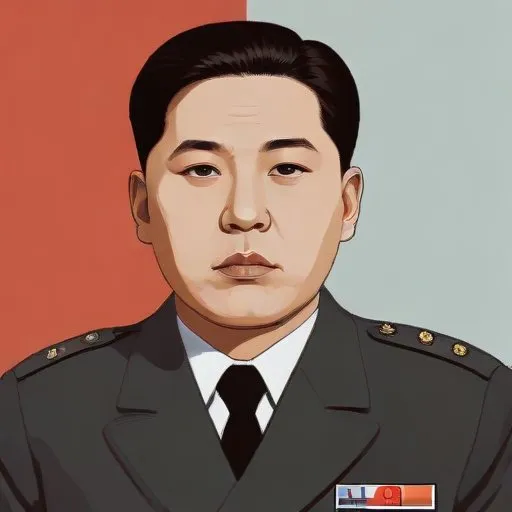
A South Korean politician who served as Prime Minister and played a key role in the country's economic development and democratization. He's also known for his involvement in the Gwangju Democratization Movement.
Kim Jongpil, affectionately known as JP, is renowned for his pivotal role in shaping South Korea's modern landscape as the founder of the Korean Central Intelligence Agency (KCIA) and a two-time Prime Minister. His visionary leadership and strategic partnerships catapulted South Korea from a poverty-stricken nation to a thriving economy, earning him the moniker "Miracle on the Han River."
Born on January 7, 1926, in Buyeo County, South Chungcheong Province, Kim Jongpil's early life was marked by academic excellence. He initially attended Seoul National University's College of Education before graduating from the prestigious Korea Military Academy (KMA) in 1949. His education was further enriched by a stint at the U.S. Infantry School at Fort Benning, Georgia, from September 1951 to March 1952.
During the Korean War, Kim Jongpil served as an intelligence officer in the Republic of Korea Army, eventually retiring as a brigadier general. His military background would later prove instrumental in his political career, particularly in his role as the mastermind behind the May 16 coup in 1961, alongside his uncle-in-law, Park Chung Hee. This pivotal event marked the beginning of Park's 18-year presidency, during which Kim Jongpil played a crucial role as chairman of the ruling Democratic Republican Party.
In 1965, Kim Jongpil spearheaded the establishment of diplomatic relations with Japan, leveraging the 'Normalization Treaty' to secure crucial economic aid. He wisely utilized the reparations to fuel South Korea's economic growth, investing in key infrastructure projects such as the Pohang Steel plant and the Gyeongbu Expressway. This strategic move paved the way for South Korea's remarkable transformation from a poverty-stricken nation to a thriving economy, with per capita income soaring from 60 South Korean Won to 30,000 South Korean Won.
Kim Jongpil's political career was marked by two terms as Prime Minister, from 1971 to 1975 and again from 1998 to 2000. Throughout his nine terms as a National Assembly member, he continued to shape South Korea's political landscape, fostering stronger ties with Japan and driving economic growth. His legacy is a testament to his unwavering dedication to South Korea's development, earning him a place in the annals of Korean history as the architect of the "Miracle on the Han River."
Kim Jongpil's personal life was closely intertwined with his political career. His marriage to Park Youngok, niece of Park Chung Hee, further solidified his connection to the influential Park family. Despite the turmoil surrounding his political life, Kim Jongpil remained committed to his family, leaving behind a lasting legacy that continues to inspire generations.
"The economic growth of a nation is not just about numbers, it's about the people. It's about creating a better life for our citizens, and that's what drives me."
In conclusion, Kim Jongpil's remarkable life was a testament to his unwavering dedication to South Korea's development. His visionary leadership, strategic partnerships, and pivotal contributions have left an indelible mark on the nation's history, cementing his place as the architect of the "Miracle on the Han River."
Born in 1926
A South Korean politician who served as Prime Minister and played a key role in the country's economic development and democratization. He's also known for his involvement in the Gwangju Democratization Movement.
95 Years Old
A South Korean general and politician who served as the 5th President of South Korea, known for his military coup and subsequent authoritarian rule. He's infamous for his role in the Gwangju Democratization Movement's brutal suppression.
93 Years Old
South Korea's first democratically elected president, known for his role in the country's transition to democracy and his key role in the 1988 Seoul Olympics. He's also infamous for his involvement in a military coup and human rights abuses.
98 Years Old
The 7th President of South Korea, a key figure in the country's democratization, known for his efforts to reform the government and economy. He's also remembered for his "New Economy" plan and anti-corruption initiatives.
Born in 1924
A South Korean politician and Nobel laureate who served as the country's 8th president, known for his Sunshine Policy towards North Korea and efforts to promote democracy and human rights. He is a symbol of South Korea's transition from dictatorship to democracy.
80 Years Old
A South Korean soldier-turned-politician who served as the country's 9th President, known for his progressive reforms and efforts to reduce corruption. He's also remembered for his tragic death by suicide in 2009.
