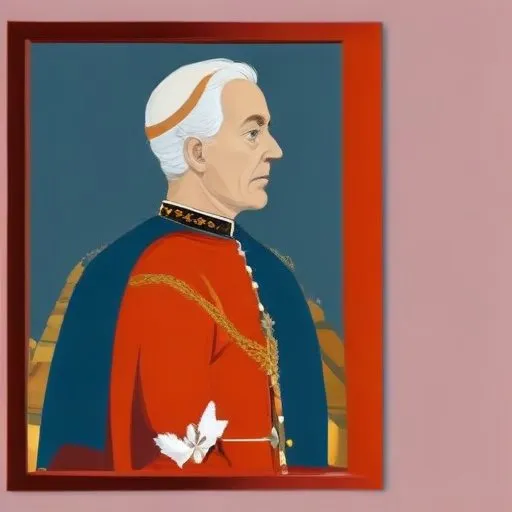
Christian VII of Denmark: A King Marked by Mental Illness and Power Struggles
Biographical Overview
Christian VII of Denmark, born on January 29, 1749, was the King of Denmark and Norway, as well as the Duke of Schleswig and Holstein, from 1766 until his death in 1808. His reign was marked by mental illness, rendering him a nominal king, with various royal advisers and power brokers vying for control throughout his life.
Mental Health and Royal Insignificance
Christian VII's mental health issues began to manifest in the early years of his reign, making him increasingly unable to perform his royal duties. This led to a series of power struggles, with different factions and individuals seeking to gain control of the kingdom. As a result, Christian VII's reign was marked by a lack of significant accomplishments, with most of his decisions being made by his advisers and regents.
Rise and Fall of Johann Friedrich Struensee
One of the most significant figures to shape Christian VII's reign was
Johann Friedrich Struensee, his court physician. From 1770 to 1772, Struensee wielded significant power, introducing progressive reforms that were signed into law by Christian VII. However, Struensee's influence was short-lived, as he was deposed in a coup in 1772, and subsequently executed.
Regency and Power Brokers
Following Struensee's downfall, Christian VII's stepmother, Juliane Marie of Brunswick-Wolfenbüttel, his half-brother Frederick, and the Danish politician Ove Høegh-Guldberg, took turns in exerting control over the kingdom. From 1784 until Christian VII's death, his son, the future Frederick VI, acted as unofficial regent, effectively governing the kingdom.
Early Life and Family
Christian VII was born in the Queens Bedchamber at Christiansborg Palace, the royal residence in Copenhagen. He was the fourth child and second son of King Frederick V and his first wife, Louise of Great Britain. Christian's godparents included his father, Queen Dowager Sophie Magdalene, Princess Louise, and Princess Charlotte Amalie.
Historical Context and Legacy
Christian VII's reign was marked by significant events, including the introduction of progressive reforms by Struensee, which, although short-lived, had a lasting impact on Danish society. Despite his mental health issues and lack of direct involvement in governing, Christian VII's reign had a profound impact on the course of Danish history. His legacy serves as a testament to the complexities of power and governance during the 18th century.
Personal Milestones and Key Life Events
- 1749: Born on January 29
- 1766: Ascended to the throne following the death of his father, Frederick V
- 1770-1772: Struensee's rise to power and introduction of progressive reforms
- 1772: Struensee's downfall and execution
- 1784: Son, Frederick VI, begins acting as unofficial regent
- 1808: Death on March 13
Philosophical Contributions and Beliefs
Christian VII's philosophical contributions are largely overshadowed by his mental health issues and lack of direct involvement in governing. However, his reign did see the introduction of progressive reforms, which were shaped by Enlightenment ideals and the influences of Struensee. These reforms, although short-lived, had a lasting impact on Danish society and reflect the complexities of 18th-century European thought.
FAQ
What were the key events of Christian VII of Denmarks reign?
Christian VII of Denmarks reign was marked by several key events, including the formation of the Danish-Norwegian union and the countrys involvement in the Napoleonic Wars.
What was Christian VII of Denmarks relationship with his wife, Caroline Matilda?
Christian VII of Denmarks marriage to Caroline Matilda was tumultuous. The couples strained relationship was marked by infidelity and power struggles.
How did Christian VII of Denmarks mental health issues impact his reign?
Christian VII of Denmarks mental health issues significantly impacted his reign. His illness led to a period of regency, during which his son, Frederick VI, took control of the government.
What were Christian VII of Denmarks contributions to Danish culture?
Christian VII of Denmark was a patron of the arts and sciences. During his reign, he supported the development of institutions such as the Royal Danish Theatre and the Royal Academy of Fine Arts.
What is Christian VII of Denmarks legacy in Danish history?
Christian VII of Denmarks legacy in Danish history is complex. While he faced significant challenges during his reign, he also oversaw a period of cultural and economic growth in Denmark.