


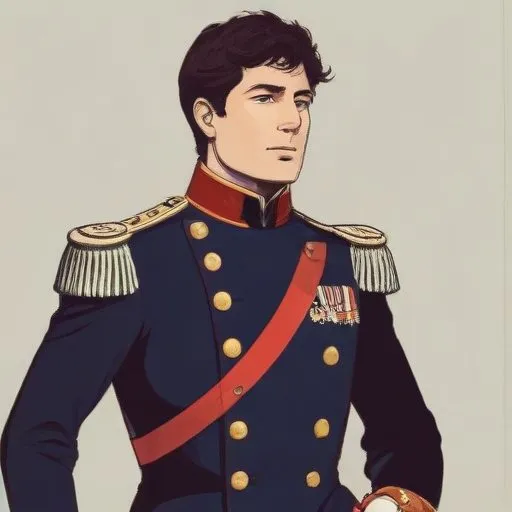
French general who led the defense of Dien Bien Phu during the First Indochina War, ultimately surrendering to the Viet Minh forces in 1954. He is remembered for his bravery and tactical skills despite the defeat.
Christian de Castries, the French commander of the ill-fated Battle of Dien Bien Phu in 1954, is remembered as a brave and chivalrous military leader who fought valiantly against the Viet Minh forces in Indochina. His name is synonymous with the last stand of the French colonial empire in Southeast Asia, a battle that would later become a symbol of French resistance and a turning point in the First Indochina War.
Christian de Castries was born on August 11, 1902, into the noble House of Castries, a family with a long and distinguished military tradition. He enlisted in the army at the age of 19 and attended the prestigious Saumur Cavalry School. Commissioned as a cavalry officer in 1926, de Castries later resigned to pursue his passion for equestrian sports, only to rejoin the army at the outbreak of World War II.
Captured by the Germans in 1940, de Castries made a daring escape from a prisoner-of-war camp in 1941 and joined the Allied forces in North Africa, Italy, and southern France. He fought bravely throughout the war, commanding the 3rd Moroccan Spahis mechanized cavalry and earning a reputation for his fearlessness and tactical brilliance. By the end of the war, he had risen to the rank of lieutenant colonel.
In 1946, de Castries was sent to Indochina, where he commanded a tabor battalion of Moroccan goumiers. Wounded in combat, he spent a year recuperating in France before returning to Vietnam as a full colonel. In December 1953, he was tasked with defending the fortress of Dien Bien Phu against the Viet Minh forces. Despite being vastly outnumbered and outgunned, de Castries led his troops with courage and determination, earning the respect of his opponents and the admiration of his countrymen.
After an eight-week siege, the garrison was finally overwhelmed, and de Castries was taken prisoner on May 7, 1954. He spent four months in captivity while an armistice agreement was negotiated in Geneva. The fall of Dien Bien Phu marked the effective end of the First Indochina War and French presence in Southeast Asia.
Upon his return to France, de Castries was appointed to command the 5th Armored Division in West Germany. After a car accident in 1959, he retired from the military and went on to head a recycling firm. Christian de Castries passed away on July 29, 1991, in Paris, leaving behind a legacy of bravery, honor, and duty.
The Battle of Dien Bien Phu marked a turning point in the First Indochina War and a significant shift in the global balance of power. De Castries' bravery and leadership during the siege inspired a generation of French officers and cemented his place in military history. Today, his legacy serves as a reminder of the importance of courage, duty, and sacrifice in the face of overwhelming odds.
Born in 1890
A French military leader who led the Free French Forces during WWII and later became President of France, known for his strong leadership and vision for a unified Europe.
Born in 1902
Led the Free French Forces during WWII, playing a crucial role in the liberation of Paris and ultimately contributing to the Allied victory.
Born in 1889
A French general who led the First Army to victory in World War II, liberating Marseille and playing a key role in the Allied invasion of Germany. He's also known for his post-war efforts to modernize the French military.
Born in 1888
A highly decorated military leader who played a crucial role in World War II, particularly in the Italian Campaign, and later became a prominent figure in French politics.
