


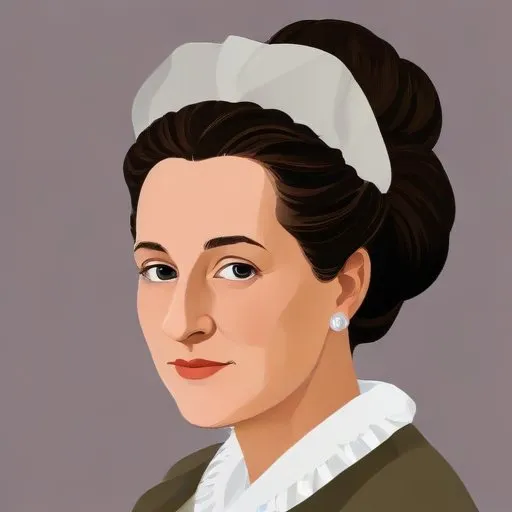
A renowned German writer's partner, known for her humble beginnings as a mistress and later becoming his wife, influencing his literary works and personal life. She was a strong, independent woman who managed the household and raised their son.
Christiane Vulpius von Goethe, born on June 1, 1765, is renowned for being the longtime lover and later wife of the celebrated German writer Johann Wolfgang von Goethe. Her remarkable relationship with Goethe inspired some of his most iconic works, including the Roman Elegies, which showcase his passion and admiration for her.
Vulpius spent her childhood in Luthergasse, one of the oldest parts of Weimar. Her family faced financial difficulties, with her father, Johann Friedrich Vulpius, working as a poorly paid archivist. Despite their struggles, her father sacrificed everything to enable her older brother, Christian August, to pursue his education, which would eventually lead him to become a successful writer.
After her father's dismissal from his job, Vulpius was forced to work as a maid in a small Weimar cleaning workshop owned by Caroline Bertuch. It was during this time that she came to the attention of Johann Wolfgang von Goethe, who would later become her lifelong partner.
The 39-year-old Goethe met the 23-year-old Vulpius on July 13, 1788, in the Park an der Ilm, where she handed him a petition on behalf of her brother. This chance encounter marked the beginning of a passionate love affair that would last for over 25 years.
Their romance inspired some of Goethe's most celebrated works, including the Roman Elegies, which reflect not only his Italian Journey from 1786 to 1788 but also his relationship with Vulpius. The poems showcase his admiration for her beauty, intellect, and passion.
On December 25, 1789, Vulpius gave birth to their first child, Julius August Walther von Goethe. The couple would go on to have five more children together, with only two surviving to adulthood.
Despite facing societal scrutiny and criticism for her unconventional relationship with Goethe, Vulpius remained devoted to him and their family. Her love and support played a crucial role in his creative endeavors, and she became an integral part of his life's work.
Christiane Vulpius von Goethe's legacy extends beyond her role as Goethe's lover and wife. She inspired some of the greatest works of German literature, and her own story serves as a testament to the power of love and devotion.
In her later years, Vulpius continued to support Goethe's work, even as her health began to decline. She passed away on June 6, 1816, leaving behind a legacy that continues to captivate artists, writers, and historians to this day.
Born in 1759
A renowned poet and playwright who crafted influential works that explored the human condition, morality, and the struggle for freedom, leaving a lasting impact on German literature.
Born in 1762
A German philosopher and academic who developed the concept of German idealism, emphasizing the role of the individual and the nation in shaping reality. He's known for his influence on German philosophy and the development of existentialism.
Born in 1724
Developed influential philosophical frameworks, such as the Critique of Pure Reason, that shaped modern Western thought on ethics, morality, and human understanding.
Born in 1772
A key figure in German Romanticism, this poet and philosopher explored the mysteries of nature, the human condition, and the power of the imagination through lyrical and dreamlike writings.
Born in 1788
A pessimistic philosopher who wrote about the human condition, emphasizing the struggles and sufferings of life, and is famous for his concept of the "will to life".
