


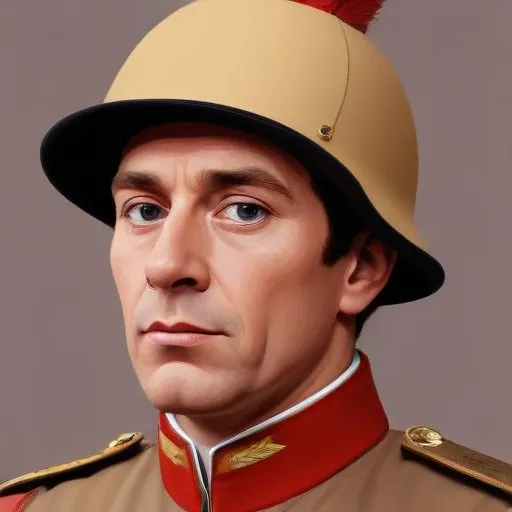
A British army officer turned Labour Party politician, he served as a Member of Parliament and Minister of Defence, known for his advocacy of nuclear disarmament and social reform.
Christopher Paget Mayhew, Baron Mayhew, was a British politician who left an indelible mark on the world of politics and espionage. He is most notable for his instrumental role in founding the Information Research Department (IRD), a secret wing of the UK Foreign Office dedicated to Cold War propaganda.
Mayhew was born on June 12, 1915, to Sir Basil Mayhew of Felthorpe Hall, Norwich. He attended Haileybury and Christ Church, Oxford, as an exhibitioner. During his time at Oxford, he became the President of the Oxford Union, a testament to his exceptional leadership skills. In 1934, he ventured to Moscow, an experience that would shape his views on international relations.
Mayhew's political career spanned over three decades, starting with his election to Parliament for the constituency of South Norfolk in 1945. He served as Under-Secretary of State at the Foreign Office, working closely with Ernest Bevin. Despite losing his seat in 1950, he returned to Parliament in 1951, winning the by-election for Woolwich East, a seat previously held by Bevin.
During Labour's 13 years in opposition, from 1951 to 1964, Mayhew became a household name, presenting the Labour Party on television. He was a commentator on the BBC and a presenter on Party Political Broadcasts, introducing the first Labour broadcast in 1951.
Mayhew's most significant contribution to politics was the establishment of the IRD, a secret wing of the UK Foreign Office. The IRD was tasked with countering Soviet propaganda during the Cold War, and Mayhew played a crucial role in shaping its strategy and operations. His work in the IRD earned him a reputation as a mastermind of Cold War propaganda.
When Labour took office in 1964, Mayhew was appointed Minister of Defence for the Royal Navy. He served in this role until 1966, when he resigned due to disagreements with the government's decision to shift British airpower from carrier-based planes to land-based planes and cancel the CVA-01 aircraft carrier program.
In 1981, Mayhew received a life peerage and was raised to the House of Lords as Baron Mayhew. He continued to be involved in politics, serving as a member of the Liberal Party. Mayhew passed away on January 7, 1997, leaving behind a legacy as a skilled politician and a key figure in the world of Cold War espionage.
Mayhew's life and career serve as a testament to his unwavering dedication to public service and his ability to navigate the complex world of politics and espionage. His legacy continues to inspire and intrigue, offering a fascinating glimpse into the world of Cold War politics.
Born in 1871
Prolific writer of historical novels and adventure stories, also a talented landscape painter.
Born in 1883
Led the Labour Party to a landslide victory in 1945, implementing significant social and economic reforms, including the creation of the National Health Service. He played a crucial role in shaping post-war Britain.
Born in 1897
A British politician who served as Prime Minister from 1955 to 1957, known for his role in the Suez Crisis and his diplomatic efforts during the Cold War.
Born in 1894
A British politician who served as Prime Minister from 1957 to 1963, known for leading the country through a period of economic prosperity and decolonization.
Born in 1903
A British aristocrat who served as Prime Minister from 1963 to 1964, known for his brief tenure and aristocratic background.
Born in 1885
Won the 1952 Olympic Games marathon in Helsinki, Finland, and held the world record in the marathon from 1952 to 1953.
Born in 1912
A British politician who served as Prime Minister from 1976 to 1979, known for his efforts to stabilize the economy and navigate the country through a period of industrial unrest.
Born in 1925
The first female Prime Minister of the United Kingdom, serving from 1979 to 1990, known for her conservative policies and leadership during the Falklands War.
