


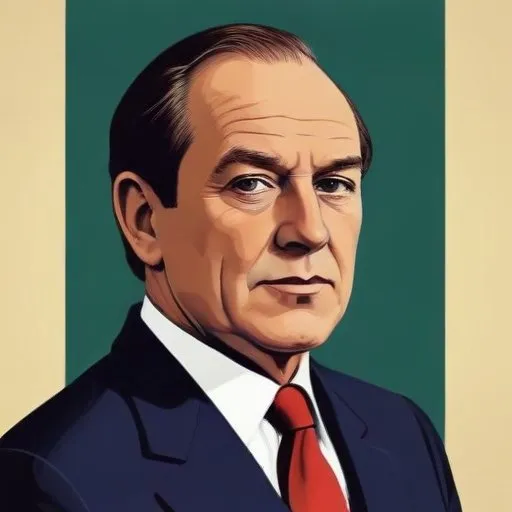
A British politician and diplomat who served as Governor of Southern Rhodesia, playing a key role in the country's transition to independence as Zimbabwe. He's known for his efforts to end white minority rule and establish a multiracial government.
Christopher Soames, the last Governor of Southern Rhodesia, was a British Conservative politician who left an indelible mark on the world of politics. From his early days as a Member of Parliament to his later years as a European Commissioner, Soames' unwavering dedication to public service earned him a reputation as a seasoned statesman.
Born on October 12, 1920, in Penn, Buckinghamshire, England, Soames was the son of Captain Arthur Granville Soames and Hope Mary Woodbine Parish. His parents' divorce during his childhood led to his mother's remarriage to Charles Rhys, later 8th Baron Dynevor, with whom she had further children.
Soames received his education at West Downs School, Eton College, and the Royal Military College at Sandhurst. He obtained a commission as an officer in the Coldstream Guards just before World War II broke out. During the war, he served in France, Italy, and North Africa, earning the French Croix de Guerre for his bravery at the Second Battle of El Alamein in 1942.
After military service, Soames served as the Assistant Military Attaché in Paris. He was elected as the Conservative MP for Bedford in 1950, a seat he held until 1966. His political career spanned several government posts, including Under-Secretary of State for Air, Parliamentary and Financial Secretary to the Admiralty, and Secretary of State for War.
In 1955, Soames was invested as Commander of the Order of the British Empire (CBE). He was sworn of the Privy Council in 1958. He served as Minister of Agriculture, Fisheries, and Food from 1960 to 1964, playing a crucial role in shaping the country's agricultural policies.
In 1979, Soames was appointed as the last Governor of Southern Rhodesia, tasked with overseeing the country's transition to independence. His experience and diplomatic skills helped navigate the complex process, earning him widespread recognition.
Soames' later years saw him serving as a European Commissioner, where he continued to advocate for British interests in the European Community. His contributions to the field of politics were marked by his unwavering commitment to public service and his ability to navigate complex diplomatic situations.
Christopher Soames' life was a testament to his dedication to public service, politics, and diplomacy. His legacy serves as a reminder of the importance of strong leadership and the impact one individual can have on the world stage.
Through his remarkable journey, Soames left behind a rich legacy that continues to inspire generations of politicians, diplomats, and public servants. His unwavering commitment to his country and the world at large remains an enduring tribute to his remarkable life and achievements.
Born in 1871
Prolific writer of historical novels and adventure stories, also a talented landscape painter.
Born in 1897
A British politician who served as Prime Minister from 1955 to 1957, known for his role in the Suez Crisis and his diplomatic efforts during the Cold War.
Born in 1894
A British politician who served as Prime Minister from 1957 to 1963, known for leading the country through a period of economic prosperity and decolonization.
Born in 1903
A British aristocrat who served as Prime Minister from 1963 to 1964, known for his brief tenure and aristocratic background.
Born in 1916
The Prime Minister who led the UK into the European Economic Community (EEC) and navigated the country through a period of economic and industrial turmoil. He's also known for his diplomatic efforts, particularly in regards to the Cold War.
Born in 1912
A British politician who served as Prime Minister from 1976 to 1979, known for his efforts to stabilize the economy and navigate the country through a period of industrial unrest.
Born in 1925
The first female Prime Minister of the United Kingdom, serving from 1979 to 1990, known for her conservative policies and leadership during the Falklands War.
83 Years Old
A former Prime Minister of the United Kingdom, he led the country from 1990 to 1997, playing a key role in shaping the nation's economy and foreign policy during a tumultuous period.
