


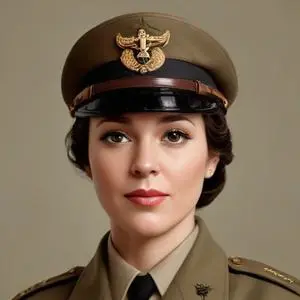
Led a volunteer group of pilots, known as the Flying Tigers, to defend China against Japanese forces before the US entered World War II, earning legendary status as a heroic military leader.
Claire Lee Chennault, a renowned American military aviator, is best known for his exceptional leadership of the Flying Tigers and the Chinese Nationalist Air Force during World War II. Known for his unwavering conviction in the importance of pursuit or fighter-interceptor aircraft, Chennault played a pivotal role in shaping the course of aerial warfare.
Born on September 6, 1893, in Commerce, Texas, Chennault grew up in Louisiana, where he developed a strong passion for flying. After enlisting in the United States Army in 1917, he trained as a pilot and rose through the ranks, becoming a captain in 1933.
Chennault's military career was marked by his advocacy for airpower and his innovative approaches to aerial combat. He served as an instructor, a test pilot, and an operations officer, eventually becoming the chief of pursuit training for the Army Air Corps in 1936.
In 1937, Chennault retired from the Army and went on to work as an aviation advisor and trainer in China. It was during this time that he commanded the 1st American Volunteer Group, better known as the Flying Tigers, starting in early 1941.
The Flying Tigers, with their distinctive shark-mouthed P-40 fighter planes, became legendary for their bravery and combat prowess, playing a crucial role in the Allied effort against the Japanese in the China-Burma-India theater. Chennault's leadership and strategic thinking were instrumental in the Tigers' success, earning him the respect and admiration of his pilots.
Chennault's tenure with the Flying Tigers was marked by his ongoing feud with General Joseph Stilwell, the U.S. Army commander in China. Their disagreements centered on military strategy and tactics, with Chennault advocating for airpower and Stilwell pushing for ground-based operations.
Despite these tensions, Chennault continued to play a vital role in the war effort, eventually becoming the commander of the 14th Air Force in 1943. After the war, he returned to the United States, where he died on July 27, 1958, at the age of 64.
Claire Lee Chennault's legacy extends far beyond his military accomplishments. He revolutionized aerial warfare, emphasizing the importance of fighter-interceptor aircraft and air-to-air combat. His unwavering dedication to his country and his craft has inspired countless pilots and military leaders.
In the realm of education, Chennault's influence can be seen in the development of modern airpower doctrine. His innovative approaches to aerial combat have shaped the course of military aviation, with his ideas still studied and applied today.
"The best defense is a strong offense, and the best offense is a strong air force."
"If I had to do it all over again, I would not change a single thing."
These words, spoken by Chennault, reflect his unshakeable conviction in the power of airpower and his commitment to his country.
Chennault received numerous awards and honors for his service, including the Distinguished Service Medal, the Legion of Merit, and the Chinese Order of the Cloud and Banner.
Today, Claire Lee Chennault is remembered as a pioneering figure in the history of aerial warfare, a true hero of World War II, and an inspiration to generations of military leaders and pilots to come.
Born in 1887
Led the Nationalist Party in China, fighting against the Communist Party and later establishing the government of Taiwan. He's known for his role in shaping modern Chinese history.
Born in 1892
A corporate lawyer who became the Republican presidential nominee in 1940, known for his liberal views and advocacy for international cooperation. He's also famous for being the only major party nominee to concede an election without waiting for the Electoral College results.
Born in 1867
A prominent figure in American politics, serving as Secretary of State and playing a key role in shaping foreign policy during World War II. He's also known for his advocacy of international cooperation and collective security.
Born in 1882
Led the United States through the Great Depression and World War II, implementing a series of reforms known as the New Deal and helping to establish the country as a global superpower.
Born in 1883
Led the Chinese Expeditionary Force in Burma during World War II, earning the nickname "Vinegar Joe" for his acerbic personality and fighting spirit. He played a crucial role in reopening the Burma Road, a vital supply route to China.
Born in 1890
A French military leader who led the Free French Forces during WWII and later became President of France, known for his strong leadership and vision for a unified Europe.
