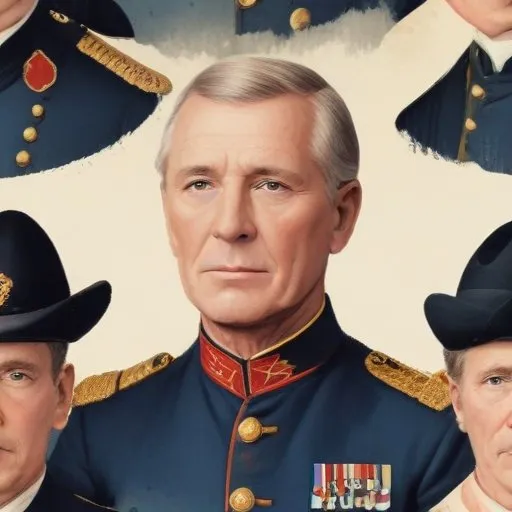
Joseph Stilwell: The Tenacious General of World War II
A Leader in the China-Burma-India Theater
Joseph Stilwell, also known as "Vinegar Joe," was a prominent United States Army general who played a crucial role in the China-Burma-India Theater during World War II. He is best known for his unwavering efforts to train a 90-division army in China, equipped with American lend-lease supplies, and his relentless pursuit to reclaim Burma from the Japanese forces.
Early Life and Military Career
Born on March 19, 1883, in Palatka, Florida, Stilwell graduated from the United States Military Academy at West Point in 1904. He went on to serve in the Philippine-American War and later in World War I. His military career was marked by his bravery, tactical prowess, and strong leadership skills, earning him numerous accolades and promotions.
Chief of Staff to Chiang Kai-shek
In 1942, Stilwell was appointed as the Chief of Staff to Chinese Nationalist Leader
Chiang Kai-shek, a position that would prove to be both challenging and controversial. Stilwell's primary objective was to train and equip the Chinese army to effectively combat the Japanese forces, but he faced resistance from Chiang, who viewed independent military units as a threat to his authority.
The Burma Campaign and the "Walkout"
Stilwell's unwavering determination and leadership were evident during the Burma Campaign, where he led a column of troops on a perilous march out of Burma, pursued by the victorious Japanese army. This heroic act earned him the admiration of the American public and the nickname "Vinegar Joe."
Falling Out with Chiang and the U.S. Government
Stilwell's relationship with Chiang deteriorated further when he refused to compromise on his demands for the Chinese army to engage in combat against the Japanese. The U.S. government, frustrated with the situation, threatened to cut off lend-lease aid to China unless Chiang cooperated with Stilwell. This led to Stilwell's eventual replacement, amidst controversy and tension.
Legacy and Impact on Modern History
Despite the controversies surrounding his tenure, Stilwell's contributions to the Allied efforts in World War II are undeniable. His advocacy for cooperation between the Chinese Nationalists and Communists, though unsuccessful, demonstrated his commitment to defeating the Japanese forces. His experiences and insights also influenced the development of modern military strategies and international relations.
Personal Life and Quotes
Stilwell was known for his dry wit and sarcasm, often expressing his frustrations through humorous quotes and anecdotes. One of his most famous quotes, "I'll get them in there, even if I have to lead them in myself," reflected his tenacious spirit and dedication to his mission.
Awards and Decorations
Throughout his military career, Stilwell received numerous awards and decorations, including the Distinguished Service Medal, the Legion of Merit, and the Bronze Star Medal.
Conclusion
Joseph Stilwell's remarkable life and career serve as a testament to his unwavering dedication to his country and his unshakeable commitment to his mission. Though marred by controversy, his legacy continues to inspire and inform military leaders and historians alike, reminding us of the importance of perseverance, adaptability, and strong leadership in the face of adversity.
FAQ
What was Joseph Stilwells role in World War II?
Stilwell was a prominent American general who served in World War II, commanding the China-Burma-India Theater and playing a key role in the Allied victory in Asia.
What was Joseph Stilwells relationship with Chiang Kai-shek?
Stilwell worked closely with Chiang Kai-shek, the leader of Nationalist China, to coordinate military efforts against Japan, often navigating complex diplomatic issues.
What did Joseph Stilwell do after World War II?
After the war, Stilwell served as the U.S. Armys Deputy Chief of Staff, overseeing the demobilization of troops and the reorganization of the military.
What awards did Joseph Stilwell receive for his service?
Stilwell received numerous awards for his military service, including the Distinguished Service Medal, the Legion of Merit, and the Bronze Star Medal.
How did Joseph Stilwells experience in Asia influence his later career?
Stilwells experience in Asia informed his later diplomatic efforts, as he became a key advisor on Asian affairs and played a role in shaping U.S. foreign policy.