


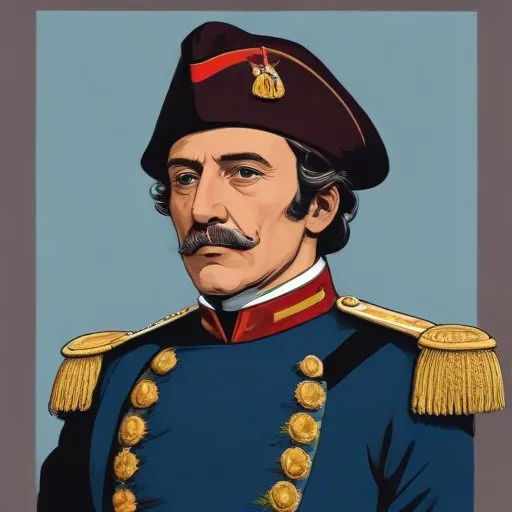
A French general who defected to the Ottoman Empire and modernized their military, introducing European tactics and training methods. He's known for his unusual career shift and military reforms.
Claude Alexandre de Bonneval, a French military engineer and mathematician, is renowned for developing the Bonneval system, a groundbreaking method for constructing wooden bridges. This innovative system, designed in the late 18th century, revolutionized the art of bridge-building, allowing for the construction of longer, more durable, and aesthetically pleasing bridges.
Born on July 13, 1748, in the picturesque town of Valence, France, Bonneval was destined for greatness. He hailed from a family of modest means, but his innate curiosity and passion for mathematics led him to pursue higher education. Bonneval studied at the École Militaire in Paris, where he excelled in his studies, particularly in mathematics and physics.
The Bonneval system, patented in 1787, was a radical departure from traditional bridge-building techniques. By using a combination of wooden arches and iron tie-rods, Bonneval's design enabled the construction of bridges with longer spans, greater stability, and reduced maintenance costs. This innovation not only transformed the field of civil engineering but also had significant economic and social implications.
Bonneval's most notable work is the Pont de la Révolution, built in 1791 over the Seine River in Paris. This magnificent bridge, with its five arches and elegant design, became an iconic symbol of French engineering prowess.
He also worked on the construction of the Canal de Bourgogne, a significant waterway project in eastern France.
Bonneval's expertise extended to other areas, including the design of fortifications, roads, and public buildings.
Bonneval's work was not limited to technical innovations; he was also a proponent of Enlightenment values, emphasizing the importance of reason, science, and progress. He believed that engineers had a social responsibility to use their skills for the betterment of society, and his work reflected this philosophy.
Bonneval's legacy extends far beyond his own time. The Bonneval system paved the way for the development of modern bridge-building technologies, influencing generations of engineers and architects. His work also had a significant impact on urban planning, commerce, and transportation, shaping the modern landscape of cities around the world.
Bonneval's life was marked by significant personal and professional achievements. He was awarded the prestigious Prix de Rome in 1776, recognizing his outstanding contributions to engineering and mathematics. He also received the Ordre de Saint-Michel, one of the highest honors in France, in 1791.
Bonneval's life and work are set against the backdrop of the French Revolution and the Enlightenment. His innovations and ideas were shaped by the intellectual and cultural currents of the time, and in turn, he contributed to the development of modern France. Today, Bonneval is remembered as a visionary engineer, a true pioneer in his field.
As we celebrate the achievements of this remarkable individual, we are reminded of the power of human ingenuity and creativity to shape the world around us. Claude Alexandre de Bonneval's legacy continues to inspire generations of engineers, architects, and innovators, a testament to the enduring impact of his groundbreaking work.
Born in 1710
The monarch who ruled France from 1715 to 1774, known as the "Sun King's" great-grandson, and remembered for his extravagance, absolutism, and the decline of the French monarchy.
Born in 1585
A powerful and cunning statesman who dominated French politics during the 17th century, known for his ruthless suppression of dissent and centralization of power. He was a master strategist and diplomat who shaped the course of European history.
Born in 1619
A 17th-century mastermind who centralized France's economy, creating a powerful and efficient financial system that fueled the country's growth and prosperity. He's renowned for his innovative economic policies and reforms.
Born in 1633
A French noble and military engineer who designed and built numerous fortifications and siege engines, revolutionizing military architecture and warfare.
