


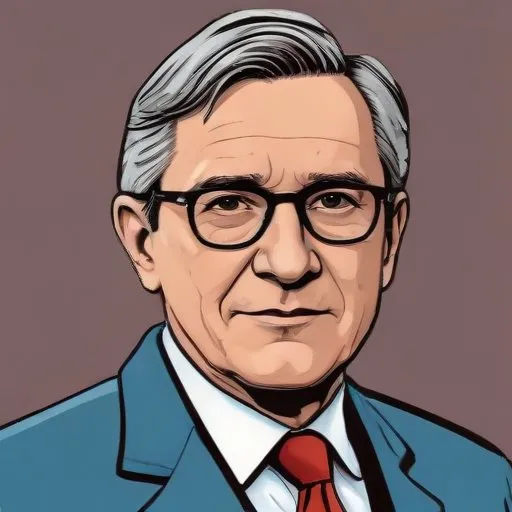
A Quebecois academic and politician who served as a minister in the Quebec government and was a key figure in the province's sovereignty movement, known for his role in shaping Quebec's politics and identity.
Claude Morin is a name that evokes controversy and intrigue in Quebec's political circles. He is best known for his role as a Parti Québécois Member of the National Assembly for the electoral district of Louis-Hébert from 1976 to 1981, and later, for being exposed as a mole for the Royal Canadian Mounted Police (RCMP) within the Parti Québécois (PQ) in 1992.
Born on May 16, 1929, in Montmorency, Quebec, Morin received a bachelor's degree from Université Laval and a master's degree in social welfare from Columbia University in New York City. He went on to work as a professor at the École nationale d'administration publique and served as an economic adviser to the Quebec cabinet from 1961 to 1965, and deputy minister of federal-provincial affairs from 1963 to 1967, and deputy minister of intergovernmental affairs from 1967 to 1971.
Morin first ran for office in the 1973 Quebec general election but was unsuccessful. However, he was elected in 1976 and served as Minister of Intergovernmental Affairs in the cabinet of Premier René Lévesque. He was reelected in 1981 but resigned as MNA on December 29, 1981, and left his position as minister on January 8, 1982.
In 1992, reporter Normand Lester revealed that Morin had been on the payroll of the RCMP from 1974 to 1977, working as a mole within the PQ. This scandal, known as the "Affaire Morin," sent shockwaves through Quebec's political circles and led to widespread outrage and disbelief.
In the aftermath of the scandal, Morin wrote two political autobiographies: Les Choses comme elles étaient in 1994 and L'Affaire Morin: Légendes, sottises et calomnies in 2006. These books provide a unique insight into Morin's life and politics, offering a candid and introspective look at his career and the controversy that surrounded him.
Morin's life has been marked by both achievement and controversy. He was the nephew of Joseph-Octave Morin, a member of the Legislative Assembly of Quebec. Through his life and career, Morin has left an indelible mark on Quebec's political landscape, one that continues to be felt today.
Despite the controversy that has surrounded him, Morin remains a complex and intriguing figure, one whose life and career continue to fascinate and inspire. His legacy serves as a reminder of the complexities and nuances of politics, and the importance of integrity and transparency in public life.
Born in 1922
A charismatic leader who championed Quebec's independence and shaped the province's distinct identity through his passionate politics and journalism. He's revered for his role in Quebec's Quiet Revolution.
Born in 1919
The charismatic leader who championed Canadian unity and implemented progressive policies, known for his iconic style and influential legacy in shaping modern Canada.
92 Years Old
The 20th Prime Minister of Canada, serving from 1993 to 2003, known for his leadership during the Quebec sovereignty movement and his role in shaping Canada's national unity. He implemented policies like the Clarity Act and the National Child Benefit.
87 Years Old
The 27th Premier of Quebec, a key figure in the Quebec sovereignty movement, known for leading the province's separatist government and negotiating with Canada's federal government.
95 Years Old
A Canadian economist and politician who served as the 26th Premier of Quebec, leading the province's sovereignty movement and playing a key role in the 1995 Quebec referendum. He's known for his strong nationalist views and efforts to gain independence for Quebec.
92 Years Old
The 22nd Premier of Quebec, a Canadian lawyer and politician, served from 1970 to 1976 and again from 1985 to 1994, known for his role in shaping Quebec's economy and politics. He implemented significant hydroelectric projects and negotiated with the Canadian government on provincial autonomy.
70 Years Old
A Canadian politician and sociologist who served as Minister of the Environment, known for his advocacy on climate change and implementation of the Kyoto Protocol. He led the Liberal Party of Canada and was a key figure in shaping the country's environmental policies.
