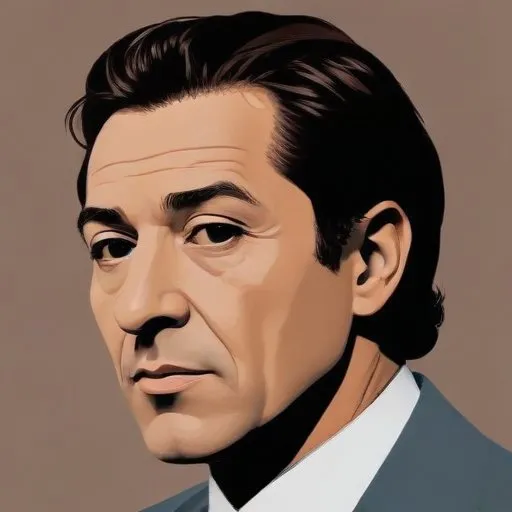
Claudio Casciolini: The Italian Maestro of Sacred Music
A Life Devoted to Sacred Harmony
Claudio Casciolini was a renowned Italian composer, celebrated for his contributions to sacred music in the early 18th century. Born on November 9, 1697, in Rome, Italy, Casciolini dedicated his life to creating exquisite church music, primarily writing in the stile antico, a style reminiscent of Palestrina's a cappella counterpoint.
Early Life and Career
Casciolini was born to Agostino and Veronica Finocchiola, and his earliest musical inclinations led him to become a bass singer at the church of San Lorenzo in Damaso. This position, which he held from April 1726 until his death, not only showcased his vocal talents but also provided an opportunity for him to compose music for the congregation. On January 14, 1724, Casciolini married Maria Teresa Mazza in the basilica of S. Lorenzo in Damaso, with whom he had numerous children and lived a humble life in a small house near the Piazza della Chiesa Nuova.
Compositions and Legacy
Casciolini's compositional focus was solely on sacred music, creating works that resonated with the faithful. His oeuvre includes a three-part
Missa pro defunctis, a
Missa brevissima, and various compositions for four and eight voices, such as
Veni Creator Spiritus,
Responsoria per il Mercoledi, Giovedi, Venerdi Santo, and
Vexilla Christe cum sit Istorum est. These works demonstrate his mastery of the stile antico, evoking the harmonious grandeur of ancient church music.
A Commitment to Tradition
Living during the Baroque period, Casciolini's compositional style defied the prevailing trend, opting instead for a more traditional approach. His adherence to the stile antico, characterized by a cappella counterpoint, set him apart from his contemporaries. This distinct approach earned him recognition as a master of sacred music, particularly among the Congregation of S. Cecilia, for which he wrote numerous compositions.
Influence and Impact
Casciolini's contributions to sacred music have left an indelible mark on the history of Italian music. His compositions, though rooted in tradition, continue to inspire and move audiences today. His dedication to the stile antico has preserved a vital part of Italy's rich cultural heritage, ensuring the continuation of a centuries-old musical tradition.
Remembering Claudio Casciolini
Claudio Casciolini's life and legacy serve as a testament to the power of artistic dedication. Through his music, he has left an enduring legacy, a synthesis of faith, tradition, and artistry. As we reflect on his life and works, we are reminded of the significance of preserving cultural heritage and the importance of honoring the masters who have shaped the course of musical history.
- Free scores by Claudio Casciolini can be found in the Choral Public Domain Library and the International Music Score Library Project.
FAQ
What kind of music did Claudio Casciolini compose?
Claudio Casciolini was an Italian singer and composer who wrote primarily sacred music, including masses, motets, and oratorios, showcasing his mastery of Baroque composition techniques.
What was Claudio Casciolinis role in Italian Baroque music?
Claudio Casciolini played a significant role in shaping Italian Baroque music, contributing to the development of new musical forms and styles that characterized the era.
How did Claudio Casciolini influence later composers?
Claudio Casciolinis works and ideas had a profound impact on later composers, including notable figures like Antonio Vivaldi, who built upon his legacy and developed new musical innovations.
What is Claudio Casciolinis most famous composition?
Claudio Casciolini is perhaps best known for his composition Missa Sancti Cassiani, a beloved mass setting that showcases his mastery of vocal and instrumental music.
What is Claudio Casciolinis legacy in modern music?
Claudio Casciolini is remembered as a pioneering composer who helped shape the course of Italian Baroque music, influencing generations of composers and shaping the musical landscape of Europe.