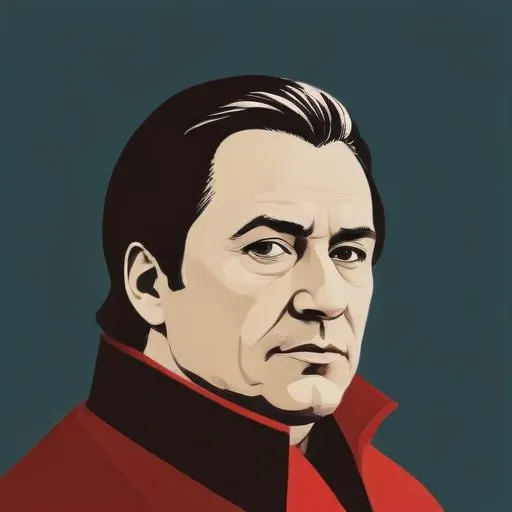
Mikhail Glinka

Mikhail Glinka

Mikhail Glinka was born on June 1st, 1804

Full Name: Mikhail Glinka
Occupation: Composer
Nationality: Russian
Birthplace: Novospasskoye, Russia
Notable Work: A Life for the Tsar
Style: Romanticism
Influenced By: Russian folk music
Deathplace: Berlin, Germany

A Russian composer who is often considered the father of Russian classical music, known for his operas and orchestral works that blended Russian folk melodies with Western classical music traditions.

Timeline
1804
Born in Novospasskoye
Mikhail Glinka was born on June 1, 1804, in Novospasskoye, Russia, to a noble family.
1824
Composes Jota Aragonesa
Glinka composed his first major work, Jota Aragonesa, a orchestral piece inspired by Spanish folk music.
1836
Premieres A Life for the Tsar
Glinkas opera A Life for the Tsar premiered in St. Petersburg, marking the beginning of Russian opera.
1852
Composes Ruslan and Ludmila
Glinka composed his most famous opera, Ruslan and Ludmila, based on a medieval Russian epic poem.
1857
Dies in Berlin
Glinka died on February 15, 1857, in Berlin, Germany, at the age of 52.
Mikhail Glinka

Mikhail Glinka Quiz

What is Mikhail Glinka's significance in Russian classical music?

Score: 0/5
FAQ
What was Mikhail Glinkas most significant contribution to Russian music?
Mikhail Glinkas most significant contribution to Russian music was his development of a national style that drew on folk traditions and mythology. His operas, such as A Life for the Tsar and Ruslan and Ludmila, are considered classics of Russian music.
What influenced Mikhail Glinkas compositional style?
Mikhail Glinkas compositional style was influenced by his studies in Italy and his exposure to European classical music. However, he was also drawn to Russian folk music and sought to incorporate its melodies and rhythms into his works.
What was Mikhail Glinkas relationship like with other Russian composers?
Mikhail Glinka was a pioneering figure in Russian music, and his work influenced many later composers, including Modest Mussorgsky, Nikolai Rimsky-Korsakov, and Pyotr Ilyich Tchaikovsky. He was a mentor and inspiration to many younger composers, and his legacy continues to shape Russian music today.
What are some of Mikhail Glinkas most famous compositions?
Mikhail Glinkas most famous compositions include his operas A Life for the Tsar and Ruslan and Ludmila, as well as his orchestral works, such as the Jota Aragonesa and the Spanish Overture.
What is Mikhail Glinkas legacy today?
Today, Mikhail Glinka is recognized as one of the founders of Russian classical music. His work continues to be performed and admired around the world, and his legacy can be seen in the many Russian composers who followed in his footsteps.

Related People:

Pyotr Ilyich Tchaikovsky

Born in 1840

A renowned Russian composer and educator, he is best known for his iconic and beloved ballets, such as Swan Lake and The Nutcracker, which continue to enchant audiences worldwide.

Modest Mussorgsky

Born in 1839

A Russian master of evocative and dramatic music, famous for his vivid orchestral works, including the iconic "Night on Bald Mountain" and "Pictures at an Exhibition".

Nikolai Rimsky-Korsakov

Born in 1844

A Russian master of orchestration, known for his vibrant and exotic compositions, such as "Scheherazade" and "Flight of the Bumblebee", that evoke fantastical worlds and mythical creatures.

Alexander Borodin

Born in 1833

A Russian mastermind who composed iconic symphonies and operas, while also making significant contributions to organic chemistry, synthesizing new compounds and discovering chemical reactions.

Mily Balakirev

Born in 1837

A Russian pianist and composer who founded the Mighty Handful, a group of composers who sought to create a distinctly Russian style of classical music, known for his orchestral works and piano pieces.

Franz Liszt

Born in 1811

A virtuosic pianist and composer who revolutionized classical music with his technically demanding and emotionally expressive works, blending Hungarian folk influences with Romantic-era drama.

Frédéric Chopin

Born in 1810

A Polish pianist and composer renowned for his delicate, expressive, and technically demanding piano music that evokes deep emotions and continues to inspire generations of musicians and music lovers. His nocturnes, waltzes, and preludes are staples of classical music.

Robert Schumann

Born in 1810

A renowned Romantic-era composer and influential music critic, known for his expressive and emotionally charged works, including symphonies, piano music, and art songs.