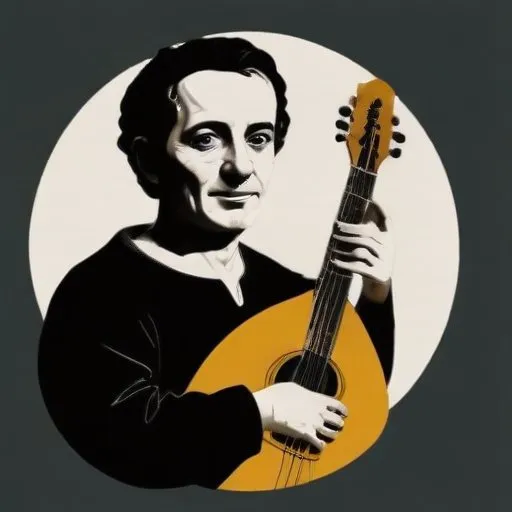
Claudio Saracini: The Illustrious Composer of the Early Baroque Era
A Master of Monody
Claudio Saracini, born on July 1, 1586, was an Italian composer, lutenist, and singer of the early Baroque era, renowned for his exquisite contributions to the realm of monody. With 133 surviving songs, Saracini's oeuvre showcases his mastery of secular compositions for solo voice, characterized by intricate ornamentation and instrumental accompaniment.
Early Life and Education
Born into a noble family, likely in Siena, Saracini's early life and education remain shrouded in mystery. However, it is inferred that he traveled extensively during his youth, establishing connections with foreign aristocrats and absorbing diverse musical styles from the lands he visited. This exposure would later manifest in his unique compositional style.
Musical Style and Influence
Saracini's compositions are distinguished by their experimentation with folk music, a rarity in early Italian Baroque music. His songs often incorporate elements of Balkan folk music, which he likely encountered during his travels. This fusion of styles resulted in a distinctive sound, characterized by asymmetrical meters and a blend of diatonic and chromatic harmonies. His style is comparable to that of contemporaneous monodist Sigismondo d'India, with whom he shared an affinity for innovation.
Publishing and Legacy
Between 1614 and 1624, Saracini's music was published in Venice, cementing his reputation as a prominent composer of his time. Although his music fell into relative obscurity, it experienced a resurgence in the 20th century, with his unique style and contributions garnering renewed interest.
Influence on Modern Society
Saracini's compositions have had a lasting impact on the development of Western classical music. His innovative approach to monody paved the way for future generations of composers, influencing the course of musical evolution. Today, his music remains a testament to the rich cultural heritage of the early Baroque era.
Personal Milestones and Key Life Events
- 1614: First publication of Saracini's music in Venice
- 1624: Last known publication of Saracini's music
- 1630: Claudio Saracini's death on September 20
Trivia and Fun Facts
- Saracini was known by the nickname "Il Palusi," likely indicating membership in an academy
- He dedicated his music to various foreign aristocrats, reflecting his international connections
- Claudio Monteverdi, a renowned composer, admired Saracini's talent
By delving into the life and works of Claudio Saracini, we uncover a fascinating tale of innovation, cultural exchange, and artistic expression. His enduring legacy serves as a testament to the power of music to transcend time and inspire future generations.
FAQ
What is Claudio Saracinis significance in Italian music?
Claudio Saracini was a renowned Italian lute player and composer, who is known for his contributions to the development of the lute and its repertoire.
What is Claudio Saracinis role in the development of the lute?
Claudio Saracini played a significant role in promoting the lute as a solo instrument, and composed a number of works for the lute, including fantasias, ricercars, and dances.
What are Claudio Saracinis musical achievements?
Claudio Saracinis musical achievements include the composition of a large number of works for the lute, including solo pieces and ensemble works, and the development of new techniques and styles for the instrument.
What is Claudio Saracinis personal life like?
Claudio Saracini was born in 1586 in Naples, Italy, and grew up in a family of musicians. He was known for his virtuosity on the lute and his innovative compositions.
How is Claudio Saracini remembered in Italian music?
Claudio Saracini is remembered as a pioneering figure in Italian music, who promoted the lute as a solo instrument and developed new techniques and styles for the instrument.