


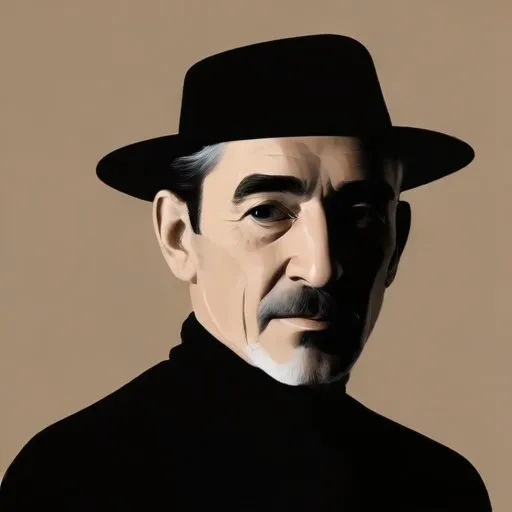
A renowned modernist sculptor celebrated for his sleek, abstract, and geometric metal works that explore the relationship between form and space. His art often blurs the line between sculpture and furniture design.
Clement Meadmore was a renowned Australian-American furniture designer and sculptor, celebrated for his colossal outdoor steel sculptures that combined abstract expressionism and minimalism. His works, often Featuring Corten steel, aluminum, and bronze, can be found in museums, corporate headquarters, and schools around the world, leaving an indelible mark on modern art.
Born on February 9, 1929, in Melbourne, Australia, Meadmore studied aeronautical engineering and industrial design at the Royal Melbourne Institute of Technology. After graduating in 1949, he began his career as a furniture designer, showcasing his talent with the iconic DC601A chair.
In the 1950s, Meadmore's creative trajectory shifted towards sculpture, as he began experimenting with welded steel. His one-man exhibits in Melbourne and Sydney between 1954 and 1962 propelled him to international recognition. The move to New York City in 1963 further solidified his position as a leading artist, earning him American citizenship.
Meadmore's oeuvre is characterized by monumental steel sculptures that exude a sense of fluidity and dynamism. Notable works include Riff (1996), Round Midnight (1996), Stormy Weather (1997), Night and Day (1979), and Perdido (1978), all of which reflect his deep affection for jazz music.
Before devoting himself to sculpture, Meadmore made a significant impact on the world of furniture design. His DC601A chair remains an iconic piece, showcasing his ability to merge functionality with aesthetics.
Meadmore authored two books: How to Make Furniture Without Tools (1975) and The Modern Chair: Classic Designs by Thonet, Breuer, Le Corbusier, Eames and Others (1997). His career was extensively cataloged in The Sculpture of Clement Meadmore (1994) by Eric Gibson.
Clement Meadmore's contributions to the art world are undeniable. His sculptures continue to inspire and awe viewers globally. Meadmore's life was cut short when he passed away on April 19, 2005, at the age of 76, due to complications from Parkinson's disease. However, his artistic legacy lives on, a testament to his innovative spirit and creative vision.
"The simplest forms are the most difficult to achieve." – Clement Meadmore
Born in 1904
A pioneering artist who blended Eastern and Western styles to create innovative sculptures and public spaces that harmonize nature and architecture. Known for iconic designs like the Noguchi coffee table and playgrounds that encourage creative play.
Born in 1898
A pioneer of modern sculpture, creating abstract, biomorphic forms that evoke a sense of primal emotion, and illustrating books with whimsical, dreamlike drawings.
Born in 1903
A pioneering modernist sculptor, creating abstract, biomorphic forms that explore the relationship between nature and the human experience. Her works often feature smooth, curved surfaces and holes, symbolizing a connection to the natural world.
Born in 1901
A pioneer of modern art, creating elongated, abstract human figures that capture the essence of humanity, and exploring the relationship between sculpture and space.
87 Years Old
A pioneering figure in modern sculpture, known for large-scale, site-specific installations that challenge viewers' perceptions of space and materiality.
98 Years Old
A pioneer of Minimalist art, creating simple, industrial-looking sculptures and installations that explore space, materiality, and perception. Known for challenging traditional notions of art and its display.
93 Years Old
This Italian-American artist is renowned for creating large-scale, abstract sculptures that often incorporate found materials and emphasize movement and interactivity. His works blur the line between art and engineering, inviting viewers to engage with them physically and emotionally.
