


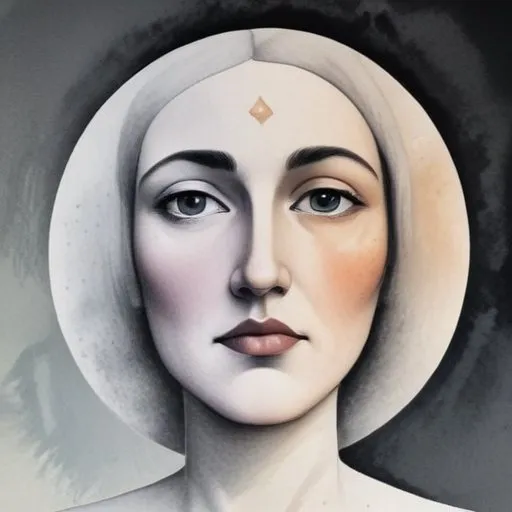
A pioneering modernist sculptor, creating abstract, biomorphic forms that explore the relationship between nature and the human experience. Her works often feature smooth, curved surfaces and holes, symbolizing a connection to the natural world.
Barbara Hepworth, a renowned English artist and sculptor, is celebrated for her innovative and symbolic works that epitomize Modernism in the 20th century. Her pioneering spirit, passion for abstraction, and ingenious use of materials have left an indelible mark on the world of modern art.
Born on January 10, 1903, in Wakefield, Yorkshire, Hepworth was the eldest child of Gertrude and Herbert Hepworth. She developed an early affinity for music and art, which led her to study at the Leeds School of Art from 1920. It was during this period that she befriended Henry Moore, a fellow student who would later become a prominent artist and a friendly rival.
After completing her studies at the Royal College of Art in London, Hepworth married sculptor John Skeaping in 1925. However, her artistic journey truly took off when she fell in love with painter Ben Nicholson in 1931. This tumultuous relationship led to her divorce from Skeaping in 1933, but it also marked the beginning of her association with the art movement Unit One.
In 1939, Hepworth and Nicholson moved to St Ives, Cornwall, where they became integral to the colony of artists who resided there during the Second World War. This period saw the development of her unique style, which blended abstract forms with natural materials. Her work during this time also included a series of sketches of operating rooms, inspired by her daughter's hospitalization in 1944.
Hepworth's sculptures are renowned for their ability to evoke emotions and spark introspection. Her use of materials such as wood, stone, and metal created a sense of tactility, drawing the viewer into a world of abstraction and symbolism. Her work has been exhibited globally, with notable retrospectives at the Tate Britain and the Venice Biennale.
Hepworth's contributions to modern art have paved the way for future generations of artists. Her work has inspired countless sculptors, painters, and printmakers, and continues to influence contemporary art. Her legacy extends beyond the art world, as her pioneering spirit and passion for abstraction have left an indelible mark on modern society.
"I have always been interested in the relationship between the organic and the geometric."
"Sculpture is a three-dimensional materialization of an idea."
Hepworth was appointed Dame Commander of the Order of the British Empire in 1965, recognizing her outstanding contributions to the world of art.
Hepworth's work is often compared to that of her contemporaries, including Ben Nicholson and Henry Moore. However, her unique style and contributions have secured her place as a pioneering figure in modern art.
Hepworth's legacy continues to inspire and influence artists, art historians, and enthusiasts around the world. Her work remains a testament to the power of creativity, innovation, and passion, ensuring her place as one of the most important artists of the 20th century.
Born in 1898
A pioneer of modern sculpture, creating abstract, biomorphic forms that evoke a sense of primal emotion, and illustrating books with whimsical, dreamlike drawings.
Born in 1894
A pioneer of abstract art, he's renowned for his geometric, minimalist paintings and sculptures that blend simplicity with profound emotional depth.
Born in 1890
A pioneer of Constructivist art, creating innovative sculptures that explored space, material, and form, pushing the boundaries of modern art.
Born in 1878
A pioneering modernist architect and designer, celebrated for her innovative, luxurious, and functional furniture pieces, such as the iconic E-1027 adjustable table.
Born in 1876
A pioneer of modernist sculpture, he's renowned for his minimalist, abstract, and avant-garde works that redefined the boundaries of art, pushing the limits of form and materiality.
Born in 1901
A pioneer of modern art, creating elongated, abstract human figures that capture the essence of humanity, and exploring the relationship between sculpture and space.
Born in 1886
A pioneer of Dadaism and Surrealism, this artist created abstract sculptures and paintings that explored the relationship between chance and creativity. Their work continues to inspire artists and designers today.
Born in 1889
A surrealist painter who blended landscapes with abstract forms, creating dreamlike scenes that explored the relationship between nature and the human psyche.
