


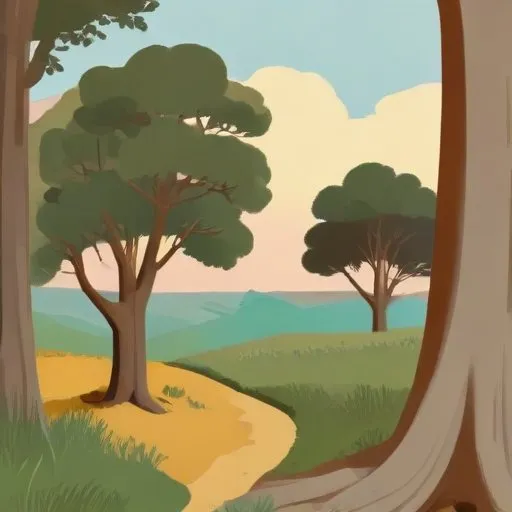
A surrealist painter who blended landscapes with abstract forms, creating dreamlike scenes that explored the relationship between nature and the human psyche.
Paul Nash, a British surrealist painter, war artist, photographer, writer, and designer, is renowned for his monumental contribution to the development of Modernism in English art. With a distinctive style that blended elements of ancient history, mysticism, and symbolism, Nash's artworks continue to captivate audiences with their dreamlike quality and intense emotional resonance.
Born on May 11, 1889, in London, Nash grew up in Buckinghamshire, where the rolling hills and ancient landscapes would later inspire his artistic vision. He trained at the Slade School of Art, but it was his passion for landscape painting that truly defined his artistic identity.
Nash's early work was characterized by a formal, decorative style, but as the 1930s unfolded, he began to experiment with abstraction and surrealism. This shift was prompted, in part, by his experiences during World War I, where he witnessed the devastating effects of war firsthand.
Nash's wartime paintings are among the most iconic images of the conflict. Works like We Are Making a New World (1918) and The Menin Road (1919) captured the devastation and despair of the war-torn landscape, while also conveying the artist's deep sense of emotional turmoil.
The war had a profound impact on Nash's life and art, and he continued to explore themes of destruction, renewal, and the human condition in his subsequent work.
In the 1930s, Nash's artistic style underwent a radical transformation. He began to incorporate everyday objects into his landscapes, imbuing them with symbolic meaning and mystical significance. This fusion of the ordinary and the surreal produced some of his most celebrated works, including The Two Serpents (1936) and Aerial Creatures (1940).
Nash's surrealist vision was not limited to painting; he also experimented with photography, writing, and design. His work in these fields further demonstrated his innovative spirit and his ability to push the boundaries of artistic expression.
Paul Nash's artistic legacy is profound and far-reaching. He played a key role in shaping the development of Modernism in English art, paving the way for future generations of artists. His work continues to inspire artists, writers, and musicians, and his influence can be seen in diverse fields, from literature to music and film.
Today, Nash's artworks are held in high esteem, with many of his paintings and prints exhibited in prominent museums and galleries around the world. His unique vision and artistic innovation have cemented his place as one of the most important landscape artists of the 20th century.
Through his life and art, Paul Nash continues to inspire and fascinate us. His surreal landscapes, infused with mysticism and symbolism, remain a testament to his innovative spirit and his profound contribution to the world of art.
Born in 1898
A pioneer of modern sculpture, creating abstract, biomorphic forms that evoke a sense of primal emotion, and illustrating books with whimsical, dreamlike drawings.
Born in 1894
A pioneer of abstract art, he's renowned for his geometric, minimalist paintings and sculptures that blend simplicity with profound emotional depth.
Born in 1903
A pioneering modernist sculptor, creating abstract, biomorphic forms that explore the relationship between nature and the human experience. Her works often feature smooth, curved surfaces and holes, symbolizing a connection to the natural world.
80 Years Old
A prominent Christian pastor and author, known for his reformed theology and influential writings on Christianity, particularly in the Calvinist tradition.
Born in 1891
A visionary artist who merged realism with fantasy, creating dreamlike scenes that explored the human condition, often blurring the lines between everyday life and mysticism.
