


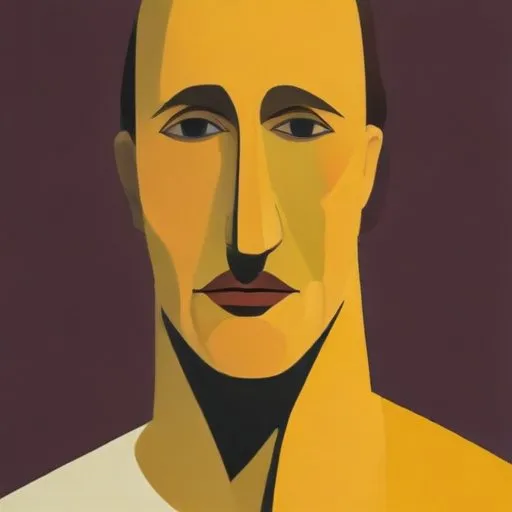
A pioneer of Dadaism and Surrealism, this artist created abstract sculptures and paintings that explored the relationship between chance and creativity. Their work continues to inspire artists and designers today.
Jean Arp, the renowned German-French sculptor, painter, and poet, is widely recognized as a pioneer of the Dada movement and a champion of abstract art. Through his innovative and provocative works, Arp challenged the conventional norms of art, paving the way for a new wave of avant-garde creators.
Born Hans Peter Wilhelm Arp on September 16, 1886, in Strasbourg, Arp's early life was marked by the complexities of identity and nationality. His French mother and German father instilled in him a sense of cultural duality, which would later influence his artistic inclinations. Following World War I, Arp adopted the French name "Jean" to comply with French law, but he continued to refer to himself as "Hans" when speaking German.
In the early 1900s, Arp's artistic career took off in Paris, where he published his poetry for the first time and became acquainted with the city's vibrant artistic community. He then studied at the Weimarer Kunstschule in Germany, where he met his uncle, Carl Arp, a prominent landscape painter. In 1908, he returned to Paris and enrolled in the Académie Julian, further refining his artistic skills.
In 1911, Arp co-founded the Moderne Bund, a pioneering art alliance in Lucerne, Switzerland, which showcased innovative works by European avant-garde artists. He participated in the group's exhibitions from 1911 to 1913, cementing his reputation as a trailblazing artist. During this period, he also met Wassily Kandinsky, the influential Russian painter and art theorist, who encouraged Arp's research and experimentation.
The 1910s were a defining period in Arp's career, marked by his involvement with the Der Blaue Reiter group in Munich and his participation in a landmark exhibition in Zurich, featuring works by Henri Matisse, Robert Delaunay, and Kandinsky. In 1913, he moved to Berlin, where he was championed by Herwarth Walden, a prominent art dealer and magazine editor.
In 1915, Arp relocated to Switzerland to capitalize on the country's neutrality during World War I. This strategic move allowed him to focus on his art, unencumbered by the constraints of war. Arp's cleverness and wit are evident in his anecdote about feigning mental illness to avoid being drafted into the German Army.
Jean Arp's pioneering spirit and innovative artistic vision have left an indelible mark on modern art. His rejection of traditional forms and techniques paved the way for future generations of artists, including the Surrealists and Abstract Expressionists. Today, Arp's works can be found in prominent museums and collections worldwide, a testament to his enduring influence on the art world.
Arp's artistic philosophy was rooted in his rejection of traditional representational art and his pursuit of a more intuitive, expressive form of creativity. He believed in the power of art to transcend language and cultural barriers, and his works often embodied a sense of spontaneity and freedom.
"Art is a fruit that grows in man, like fruit on trees."
Jean Arp's remarkable life and artistic career continue to inspire and influence artists, designers, and thinkers around the world. His groundbreaking works, which blurred the boundaries between art and poetry, remain a testament to his innovative spirit and his enduring legacy in the world of modern art.
Born in 1889
A pioneering abstract artist, she merged Dadaism and Constructivism, creating vibrant, geometric works that blurred boundaries between art and design. Her innovative style influenced modern art movements.
Born in 1881
A pioneering artist who transformed modern art with pioneering Cubist works, creating a new visual language that continues to inspire and influence art, design, and culture.
Born in 1869
A pioneering artist who revolutionized modern art with bold, expressive, and colorful works that blurred the lines between painting and sculpture, creating a new language of form and color.
Born in 1887
A pioneering artist who challenged conventional norms by submitting a urinal as art, sparking a revolution in conceptual art and questioning the very definition of art itself.
Born in 1879
A pioneering Dadaist and Surrealist, known for provocative, abstract artworks that challenged traditional representations of reality. His poetry and writings also explored the intersection of art and language.
Born in 1890
A pioneer of avant-garde photography, this artist experimented with techniques like solarization and rayography, creating surreal, dreamlike images that blurred the line between art and photography.
Born in 1887
A pioneer of Dadaism, creating avant-garde collages and assemblages that blurred the lines between art and everyday life. His innovative approach to art paved the way for future generations of artists .
Born in 1885
A pioneer of Orphism, a style of abstract art that emphasizes geometric shapes and vibrant colors, creating dynamic and expressive works that explore the emotional potential of color. 42
