


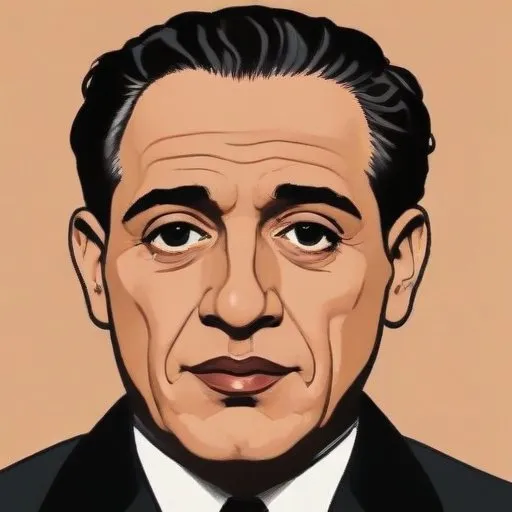
A pioneering Dadaist and Surrealist, known for provocative, abstract artworks that challenged traditional representations of reality. His poetry and writings also explored the intersection of art and language.
Francis Picabia, a French avant-garde painter, writer, filmmaker, and poet, is renowned for his kaleidoscopic career, which spanned multiple art movements, including Dada, Cubism, and Surrealism. His highly abstract and planar compositions, characterized by vibrant colors and rich contrasts, have left an indelible mark on the art world.
Born on January 22, 1879, in Paris, Picabia was the son of a French mother and a Cuban father of Spanish descent. His affluent family encouraged his artistic pursuits from an early age. Following his mother's untimely death from tuberculosis when he was just five, Picabia was raised by his father, who would later serve as attaché at the Cuban legation in Paris.
Picabia's artistic talent was evident from his youth. In 1894, he copied a collection of Spanish paintings that belonged to his grandfather, switching the copies for the originals and selling the originals to finance his stamp collection. This early rebellion against convention set the tone for his future artistic endeavors.
In the late 1890s, Picabia began exploring Impressionism and Pointillism, but it was his association with Cubism that brought him international recognition. His abstract planar compositions, characterized by geometric shapes and vibrant colors, were a radical departure from traditional art forms.
In the early 1920s, Picabia became a key figure in the Dada movement in the United States and France. His work during this period was marked by a rejection of traditional art forms and a focus on the absurd and the irrational.
Later, he briefly associated with Surrealism, but soon turned his back on the art establishment, rejecting the labels and expectations that came with them. This maverick spirit would define his artistic career, as he continuously challenged and subverted the norms of the art world.
Picabia's artistic philosophy was rooted in his belief in the importance of chaos and disorder in the creative process. He saw art as a means of disrupting the status quo and challenging societal norms.
His rejection of traditional art forms and his emphasis on the absurd and the irrational were a reflection of his anarchic worldview, which rejected the notion of a singular truth or narrative.
Francis Picabia's maverick spirit and his rejection of traditional art forms have inspired generations of artists, writers, and thinkers. His work continues to be celebrated for its innovative spirit, its challenge to societal norms, and its emphasis on the importance of chaos and disorder in the creative process.
Picabia's legacy extends beyond the art world, influencing modern thought and culture in profound ways. His emphasis on the absurd and the irrational has inspired writers, philosophers, and musicians, from Marcel Duchamp to Frank Zappa.
Today, Picabia's work remains a testament to the power of creativity and innovation, a reminder that art can be a powerful force for change and transformation.
Born in 1887
A pioneering artist who challenged conventional norms by submitting a urinal as art, sparking a revolution in conceptual art and questioning the very definition of art itself.
Born in 1880
An Italian-French literary genius who pioneered Cubist poetry, blending fragmented images and multiple narratives to create a new kind of lyrical expression. His work influenced the development of Surrealism and modern art.
Born in 1874
A pioneering figure in modernist literature, known for experimental writing styles and influential salons that fostered artistic innovation. 82
Born in 1881
A pioneering artist who transformed modern art with pioneering Cubist works, creating a new visual language that continues to inspire and influence art, design, and culture.
Born in 1884
An Italian artist famous for elongated, emotive portraits and nudes that blended primitivism with cubism, capturing the essence of his subjects with expressive simplicity.
Born in 1881
A pioneer of Cubism, this artist's bold, geometric works blended modernity with ancient forms, influencing generations of artists and designers.
Born in 1890
A pioneer of avant-garde photography, this artist experimented with techniques like solarization and rayography, creating surreal, dreamlike images that blurred the line between art and photography.
