


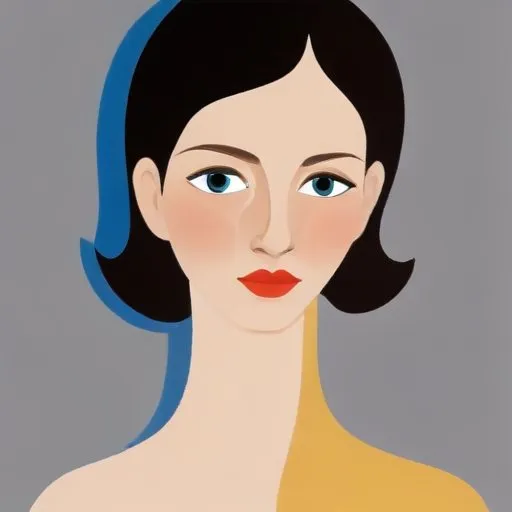
A pioneering abstract artist, she merged Dadaism and Constructivism, creating vibrant, geometric works that blurred boundaries between art and design. Her innovative style influenced modern art movements.
Sophie Taeuber-Arp was a Swiss artist, painter, sculptor, textile designer, furniture and interior designer, architect, and dancer, who is considered one of the most important artists of the 20th century. Her work, characterized by its geometric abstraction and concrete art, has had a profound impact on the art world, influencing generations of artists to come.
Born on January 19, 1889, in Davos, Switzerland, Sophie Henriette Gertrud Taeuber was the fifth child of Prussian pharmacist Emil Taeuber and Swiss Sophie Taeuber-Krsi. After her father's death, her family moved to Trogen, where her mother opened a pension. Taeuber-Arp was taught to sew by her mother and went on to study textile design at the trade school Gewerbeschule in St. Gallen from 1906 to 1910.
She then moved on to the workshop of Wilhelm von Debschitz at his school in Munich, where she studied in 1911 and again in 1913. In between, she studied for a year at the School of Arts and Crafts Kunstgewerbeschule in Hamburg. Due to World War I, she returned to Switzerland in 1914, where she joined the Schweizerischer Werkbund in 1915.
In 1915, Taeuber-Arp met the German-French artist Jean Arp, whom she married shortly after. During this time, they became associated with the Dada movement, which emerged in 1916. Her most famous works, including Dada Head (1920), date from these years.
Taeuber-Arp's work was characterized by its use of geometric shapes, bold colors, and innovative materials. She experimented with textile design, painting, and sculpture, pushing the boundaries of what was considered "art" at the time.
In 1926, Taeuber-Arp and her husband moved to France, where they stayed until the invasion of France during World War II. They returned to Switzerland, where Taeuber-Arp died on January 13, 1943, in an accident with a leaking gas stove.
Despite being overlooked for many years after her death, Taeuber-Arp is now recognized as one of the most important artists of the 20th century. Her work has had a profound impact on concrete art and geometric abstraction, influencing artists such as Bridget Riley and Victor Vasarely.
Taeuber-Arp's work has not only influenced the art world but has also had an impact on modern society. Her use of geometric shapes and bold colors has inspired designers, architects, and musicians.
Her legacy can be seen in the work of contemporary artists, designers, and architects, who continue to push the boundaries of art and design.
In 2019, Taeuber-Arp was posthumously awarded the Ordre des Arts et des Lettres by the French government.
In 2020, the Museum of Modern Art (MoMA) in New York City hosted a retrospective exhibition of her work, solidifying her place as one of the most important artists of the 20th century.
Born in 1887
A pioneering artist who challenged conventional norms by submitting a urinal as art, sparking a revolution in conceptual art and questioning the very definition of art itself.
Born in 1890
A pioneer of avant-garde photography, this artist experimented with techniques like solarization and rayography, creating surreal, dreamlike images that blurred the line between art and photography.
Born in 1887
A pioneer of Dadaism, creating avant-garde collages and assemblages that blurred the lines between art and everyday life. His innovative approach to art paved the way for future generations of artists .
Born in 1883
A Dutch artist who founded the De Stijl art movement, characterized by geometric shapes and primary colors, and is known for his abstract paintings and architectural designs.
Born in 1872
A pioneer of geometric abstraction, creating iconic grid-based paintings that explore harmony and balance. His works have become synonymous with modern art and design.
Born in 1879
A Swiss-German artist and educator who blended fantasy and reality in his vibrant, whimsical paintings, exploring the emotional and expressive qualities of color. His unique style has inspired generations of artists.
Born in 1885
A pioneer of Orphism, a style of abstract art that emphasizes geometric shapes and vibrant colors, creating dynamic and expressive works that explore the emotional potential of color. 42
