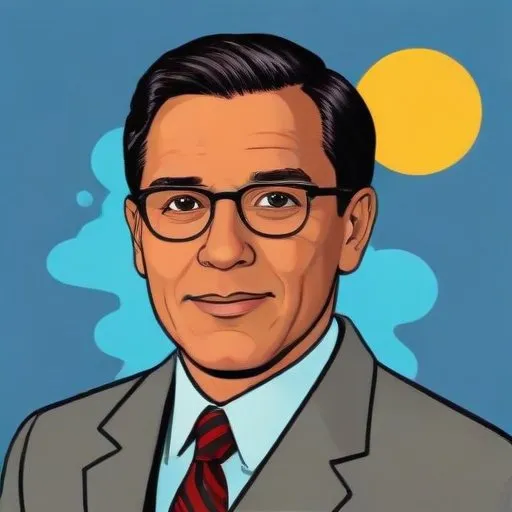
Cleveland Abbe: The Father of American Meteorology
A Legacy of Weather Forecasting and Time Zones
Cleveland Abbe, the renowned American meteorologist, is credited with revolutionizing the field of weather forecasting and advocating for the adoption of time zones. As the director of the Cincinnati Observatory from 1871 to 1916, Abbe developed a system of telegraphic weather reports, daily weather maps, and weather forecasts, earning him the nickname "Old Probability" for the reliability of his forecasts.
Early Life and Education
Born on December 3, 1838, in New York City, Cleveland Abbe grew up in a prosperous merchant family. He excelled in mathematics and chemistry, graduating from the Free Academy with a Bachelor of Arts in 1857. Abbe went on to study under
Oliver Wolcott Gibbs at City College and later taught engineering as an assistant professor at the University of Michigan.
A Journey Through Astronomy and Meteorology
During his stay in Michigan, Abbe studied astronomy under Franz Brnnow from 1858 to 1859. He received his Master of Arts degree from City College in 1860 and later moved to Cambridge, Massachusetts, where he attended Harvard and worked as an assistant to Benjamin Gould, astronomer and head of the Longitude Department of the United States Coast Survey. Abbe received his Bachelor of Science degree from Harvard in 1864.
Advocating for Time Zones and Weather Forecasting
Abbe's work in astronomy and meteorology led him to advocate for the adoption of time zones. He recognized the importance of standardizing time to facilitate communication and commerce. In 1870, Congress established the U.S. Weather Bureau, and Abbe was appointed as its first head, a position he held until 1916. Under his leadership, the Weather Bureau introduced daily weather forecasts, revolutionizing the field of meteorology.
Career Highlights and Major Works
- Developed a system of telegraphic weather reports, daily weather maps, and weather forecasts
- Appointed as the first head of the U.S. Weather Bureau in 1870
- Advocated for the adoption of time zones
- Pioneered the use of weather charts and maps to forecast weather patterns
Personal Milestones and Key Life Events
- Born on December 3, 1838, in New York City
- Graduated from the Free Academy with a Bachelor of Arts in 1857
- Received his Master of Arts degree from City College in 1860
- Received his Bachelor of Science degree from Harvard in 1864
- Died on October 28, 1916, at the age of 77
Legacy and Impact on Modern Society
Cleveland Abbe's contributions to meteorology and time zones have had a lasting impact on modern society. His work has enabled us to better understand and predict weather patterns, saving countless lives and property. The adoption of time zones has facilitated global communication and commerce, connecting people across the world.
Quotes and Memorable Sayings
"The weather is a mighty engine, and it is our duty to learn how to manage it."
Honors and Recognition
- Appointed as the first head of the U.S. Weather Bureau in 1870
- Received the Cullum Geographical Medal from the American Geographical Society in 1896
Cleveland Abbe's remarkable life and contributions have left an indelible mark on the field of meteorology and beyond. His legacy continues to inspire new generations of scientists and researchers, reminding us of the importance of understanding and predicting the weather.
FAQ
What were Cleveland Abbes contributions to the field of meteorology?
Cleveland Abbe was a pioneer in the field of meteorology and made significant contributions to the understanding of weather patterns and forecasting, including the development of the first weather maps.
How did Cleveland Abbes work impact the development of the National Weather Service?
Cleveland Abbes work led to the establishment of the National Weather Service, and he served as its first chief meteorologist, developing the first weather forecasting system in the United States.
What were Cleveland Abbes views on the role of government in meteorology?
Cleveland Abbe believed that the government had a critical role to play in supporting meteorological research and providing weather forecasting services to the public.
What were Cleveland Abbes contributions to the development of weather forecasting technology?
Cleveland Abbe developed several innovative weather forecasting technologies, including the Abbe weather forecasting machine, which used data from weather stations to predict weather patterns.
How did Cleveland Abbes work impact agriculture and commerce?
Cleveland Abbes weather forecasting system helped to improve agricultural productivity and commerce by providing farmers and businesses with timely and accurate weather information.