


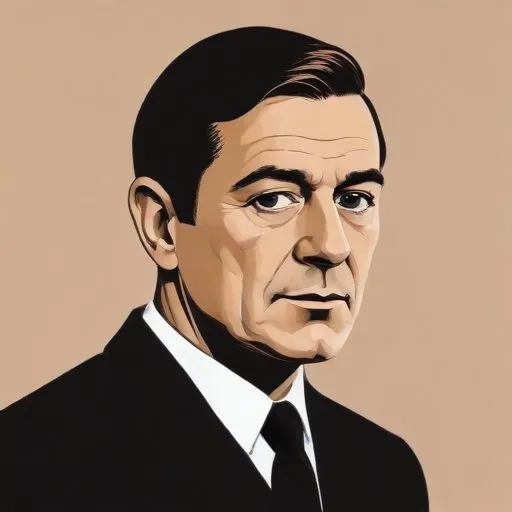
A renowned actor of the silent film era, starring in over 70 films, including the 1926 adaptation of "The Lodger," a thriller based on a Jack the Ripper novel.
Clive Brook, a prominent English film actor, emerged as a leading British actor in the early 1920s and went on to become one of the major stars for Paramount Pictures in the late silent era. With a career spanning over four decades, Brook successfully transitioned to sound films and appeared in many of Hollywood's most prestigious films, including literary adaptations.
Born on 1 June 1887 in Islington, London, Brook was the son of George Alfred Brook and Charlotte Mary Brook. His father's desire for him to pursue a law career led him to attend Dulwich College, but family financial problems forced him to leave at the age of 15. He then studied elocution at a polytechnic, which laid the foundation for his future acting career.
Brook served in the British Army during World War I, rising to the rank of major. After the war, he worked as a journalist and an insurance clerk before venturing into acting. He made his stage debut in 1918 and began appearing in films in 1919, initially in British films and later in Hollywood.
Brook's Hollywood debut came in 1920 with the film Trent's Last Case. His notable performances during the silent era include his portrayal of an alcoholic ex-lawyer in Josef von Sternberg's Underworld (1927) and his starring role opposite Marlene Dietrich in Shanghai Express (1932). Brook's tall, imposing figure and distinctive features made him a convincing screen presence, earning him a reputation as a versatile actor.
Brook successfully transitioned to sound films, appearing in a range of productions, including literary adaptations. He played Sherlock Holmes three times, in The Return of Sherlock Holmes and Sherlock Holmes, as well as in the anthology film Paramount on Parade (1930). In 1934, he was voted one of the most popular stars at the British box office.
In the 1950s and 1960s, Brook appeared in a number of British television dramas, notably in the ITV Play of the Week series. He continued to act until his retirement, leaving behind a legacy as one of the most respected and beloved actors of his generation. Clive Brook passed away on 17 November 1974, leaving behind a body of work that continues to inspire and entertain audiences today.
Brook's contributions to the film industry are undeniable. He was a pioneering figure in the transition from silent to sound films, and his performances in literary adaptations helped to bring classic works to life on the screen. His legacy continues to inspire new generations of actors, filmmakers, and audiences alike, cementing his place as one of the most distinguished English film actors of all time.
Born in 1907
A renowned thespian who dominated the British stage and screen, bringing Shakespearean characters to life with his commanding presence and rich voice.
Born in 1913
A talented actress who won two Academy Awards for her iconic portrayals of Southern belles in "Gone with the Wind" and "A Streetcar Named Desire".
Born in 1902
A renowned stage and screen actor, celebrated for his distinctive voice and authoritative presence, starring in iconic films like "David Copperfield" and "Doctor Zhivago".
Born in 1914
A renowned actor who brought iconic characters to life on screen, including Obi-Wan Kenobi in the Star Wars franchise.
Born in 1904
A renowned thespian, celebrated for his commanding stage presence and iconic performances in Shakespearean plays and films, earning him a knighthood.
Born in 1908
Acclaimed filmmaker behind epic, visually stunning movies like "Lawrence of Arabia" and "Doctor Zhivago", known for his meticulous attention to detail and sweeping cinematography.
Born in 1899
A renowned English actor, playwright, and composer, known for his witty humor, sophisticated style, and iconic works like "Private Lives" and "Blithe Spirit".
Born in 1905
A legendary actress who captivated audiences with her iconic performances on the silver screen, earning her the title of Hollywood's first female superstar.
