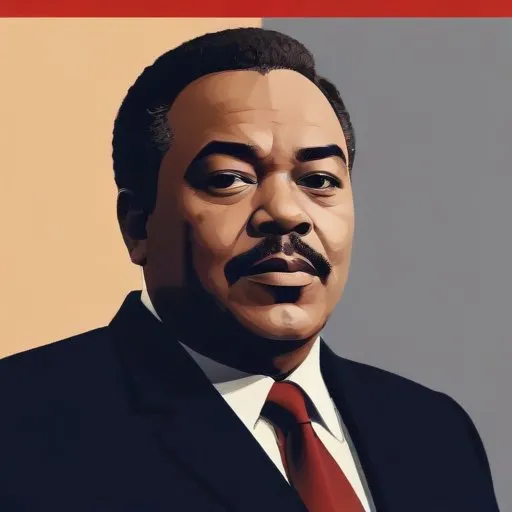
Coleman Young: The Unyielding Champion of Detroit's Resurgence
A Turbulent Rise to Prominence
Coleman Alexander Young, the first African American mayor of Detroit, Michigan, is renowned for his unwavering commitment to revitalizing the city's economy and improving the lives of its citizens. From 1974 to 1994, Young's visionary leadership transformed Detroit, earning him the respect and admiration of his constituents.
Early Life and Education
Born on May 24, 1918, in Tuscaloosa, Alabama, Young's family migrated to Detroit in 1923 as part of the Great Migration, seeking better opportunities in the industrial North. His family's conversion to Catholicism was met with racism, which denied him entry to a Catholic high school due to his race. Undeterred, Young graduated from Eastern High School in 1935 and went on to work for Ford Motor Company and the United States Post Office Department.
World War II and the Tuskegee Airmen
During World War II, Young served as a second lieutenant, bombardier, and navigator in the 477th Medium-Bomber Group, an elite unit of the renowned Tuskegee Airmen. His experience in the United States Army Air Forces was marked by resistance to segregation, culminating in the Freeman Field Mutiny in 1945, where 162 African American officers were arrested for protesting racial segregation at a base near Seymour, Indiana.
A Mayor for the People
Young's ascent to mayorship was characterized by his ability to bridge the gap between the city's business leaders and its marginalized communities. He forged an "ideological truce," earning widespread support from Detroit's elite while remaining committed to the welfare of its working class. His administration oversaw the construction of the
Joe Louis Arena, upgrades to the city's mass transit system, and the development of General Motors' new Poletown plant.
Awards and Recognition
In 1981, Young received the prestigious Spingarn Medal from the NAACP, acknowledging his outstanding achievements and contributions to the African American community.
Controversies and Criticisms
Young's tenure was not without controversy. Critics accused him of prioritizing downtown revitalization at the expense of the city's neighborhoods, diverting funds away from community development. Young countered that these investments were necessary to attract businesses and create jobs.
Legacy and Impact
Coleman Young's unwavering dedication to Detroit's resurgence has left an indelible mark on the city's history. His ability to bring together disparate groups and forging a common vision for the city's future has inspired generations of leaders and citizens alike. Today, his legacy is a testament to the power of perseverance, determination, and community-driven leadership.
Personal Milestones and Key Life Events
- May 24, 1918: Born in Tuscaloosa, Alabama
- 1923: Family migrates to Detroit, Michigan
- 1935: Graduates from Eastern High School
- 1945: Participates in the Freeman Field Mutiny
- 1974-1994: Serves as mayor of Detroit, Michigan
- 1981: Receives the Spingarn Medal from the NAACP
- November 29, 1997: Passes away at the age of 79
Inspirational Quotes
- "I'm not a conciliator, I'm a fighter. And I'm going to fight for what I think is right."
- "The only way to bring about change is to be willing to take risks."
Coleman Young's life and legacy serve as a powerful reminder of the impact one individual can have on shaping the course of history. His unwavering commitment to social justice, community development, and economic progress continues to inspire generations, cementing his place as one of the most influential figures in Detroit's history.
FAQ
What was Coleman Youngs role in American politics?
Coleman Young was an American politician who served as the 66th Mayor of Detroit from 1974 to 1994, becoming the citys first African American mayor.
What were Coleman Youngs key policy initiatives?
Young implemented several notable policies, including the development of the Renaissance Center, the expansion of Detroit Metro Airport, and the revitalization of the Detroit Riverfront.
How did Coleman Youngs early life shape his political career?
Youngs experiences as a union organizer and civil rights activist informed his approach to governance, emphasizing the needs of working-class Detroiters and promoting social justice.
What was Coleman Youngs stance on economic development?
Young championed economic development initiatives, attracting businesses and investments to Detroit and fostering partnerships between government, labor, and industry.
What legacy did Coleman Young leave behind in Detroit politics?
Youngs tireless advocacy for Detroits citizens and his commitment to urban renewal have cemented his place as a pioneering figure in American urban politics.