


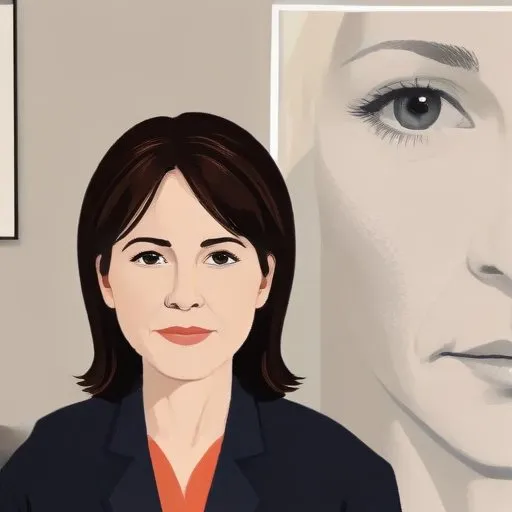
Developed the first standardized intelligence test for Australian children, which helped identify and support students with special needs. Her work contributed significantly to the field of educational psychology.
Constance Davey was a trailblazing Australian psychologist who revolutionized the field of special education in the early 20th century. She is credited with introducing the first special education classes in South Australia, paving the way for a more inclusive and supportive education system for children with intellectual disabilities.
Born on December 4, 1882, in Nuriootpa, South Australia, Constance Davey grew up in a family that valued education. Her parents, Emily Mary and Stephen Henry Davey, encouraged her to pursue higher education, which was uncommon for women during that era. She began teaching at a private school in Port Adelaide in 1908 and later attended the University of Adelaide as a part-time student, completing her Bachelor of Arts in Philosophy in 1915.
Davey's academic achievements earned her the prestigious Catherine Helen Spence Memorial Scholarship in 1921, which enabled her to pursue a doctorate at the University of London. Her research focused on mental efficiency and deficiency in children, laying the groundwork for her future work in special education. In 1924, she received her doctorate and traveled to the United States and Canada to observe the teaching methods for intellectually disabled and delinquent children.
In November 1924, Davey was appointed as the first psychologist in the South Australian Department of Education, a milestone that marked the beginning of her groundbreaking work. She was tasked with examining and organizing classes for "backward, retarded, and problem school students." Her innovative approach included administering intelligence tests to identify educationally delayed children and establishing South Australia's first opportunity class for these students in 1925.
Throughout her career, Davey continued to advocate for the educationally disadvantaged. She developed a course to train teachers in working with intellectually disabled children in 1931 and helped establish a new university course for training social workers in 1938.
In addition to her work in the Department of Education, Davey lectured in psychology at the University of Adelaide from 1927 to 1950. Her lectures and mentorship played a significant role in shaping the minds of future psychologists and educators.
Davey's contributions to psychology and education were recognized by her peers. She was elected as a fellow of the British Psychological Society in 1947, a testament to her dedication and commitment to her field.
Constance Davey's pioneering work in special education has had a lasting impact on the lives of countless children and families. Her groundbreaking research, innovative teaching methods, and tireless advocacy have paved the way for a more inclusive and supportive education system. Today, her legacy continues to inspire educators, psychologists, and policymakers to strive for a more equitable and compassionate society.
Beyond her professional accomplishments, Davey was an active member of the Women's Non-Party Political Association for 30 years, serving as its president from 1943 to 1947. Her commitment to social justice and equality extended beyond her work in education, reflecting her deep-seated passion for creating positive change.
Constance Davey's remarkable life and achievements serve as a testament to the power of dedication, perseverance, and compassion. Her legacy continues to inspire and educate future generations, cementing her place as a true pioneer in the fields of psychology and special education.
Born in 1856
Pioneering psychoanalyst who developed theories on the subconscious mind, childhood experiences, and the structure of personality, revolutionizing our understanding of human behavior and psychology.
Born in 1896
Developed groundbreaking theories on child cognitive development and learning, emphasizing active discovery and hands-on experience. His work has shaped modern education and parenting practices.
Born in 1904
Developed the theory of operant conditioning, which explores the relationship between behavior and environment, and invented the "Skinner box" to study learning and behavior.
Born in 1902
Developed the theory of psychosocial development, which proposes that individuals go through eight stages of development from infancy to old age, each with its own unique challenges and opportunities. His work has had a significant impact on our understanding of human development and identity formation.
Born in 1896
A pioneering psychologist who developed the sociocultural theory, which emphasizes the role of culture and social interaction in shaping human development and learning. His ideas have greatly influenced education and child development.
Born in 1925
Developed the theory of social learning, which suggests that people learn new behaviors by observing and imitating others, and is known for his Bobo doll experiment.
99 Years Old
Developed a theory of moral development, proposing that people progress through six stages of moral reasoning, from obedience to universal ethical principles. His work has had a significant impact on education and moral philosophy.
