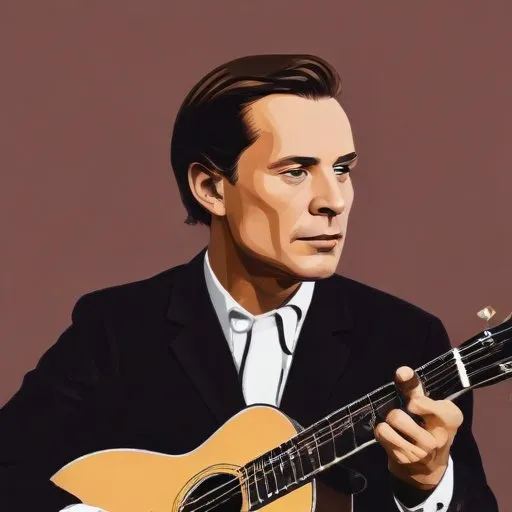
Cornelis Vreeswijk: The Dutch-Swedish Troubadour of Social Conscience
A Life of Musical Dissent and Social Commentary
Cornelis Vreeswijk was a Dutch-born Swedish singer-songwriter and poet known for his unapologetic, socially charged lyrics and distinctive, jazzy melodies that captivated the hearts of Sweden's radical student generation in the 1960s. With a career spanning over two decades, Vreeswijk left an indelible mark on Swedish music, challenging the traditional notion of harmless lyrics and pretty singing with his provocative, sometimes abrasive, but always passionate, songwriting.
Born on August 29, 1937, in the Netherlands, Vreeswijk emigrated to Sweden with his parents in 1949 at the age of twelve. He developed a love for the blues during his time at sea, which later influenced his unique singing style. After returning to Sweden in 1959, Vreeswijk pursued higher education as a social worker at Stockholm University, hoping to become a journalist. However, his passion for music soon took precedence, and he began performing at student events with his characteristic idiosyncratic humor and social engagement.
Vreeswijk's debut album, Ballader och oförskämder (Ballads and Rudenesses, 1964), was an instant hit, gaining him a large following among the emerging radical student generation. His music was heavily influenced by jazz and blues legends such as Josh White, Lead Belly, and Georges Brassens, which is evident in his raw, emotive delivery and socially conscious lyrics. Classics like "Ngatjebet Blues" and "Jubelvisa för Fiffiga Nanette" showcase Vreeswijk's ability to craft memorable, anthemic songs that resonated with a generation of young Swedes.
Through his music, Vreeswijk consistently challenged the status quo, addressing issues like social justice, inequality, and the roles of art and the artist in society. His songs often blurred the lines between music and poetry, with witty, piercing lyrics that exposed the hypocrisies of the upper class and the dangers of complacency. Vreeswijk's unwavering commitment to his artistic vision and his willingness to confront the establishment earned him both critical acclaim and controversy.
- 1964: Released debut album Ballader och oförskämder, which became an instant success
- 1965: Collaborated with Swedish jazz pianist Jan Johansson and his trio
- 1970s: Continued to release influential albums, including Höstvindar fråga! (Autumn Winds Ask!) and :getingar (Visions)
- 1987: Passed away on November 12, leaving behind a legacy as one of Sweden's most beloved and respected troubadours
Cornelis Vreeswijk's music and message continue to inspire new generations of artists, activists, and musicians. His life and work serve as a testament to the power of art as a tool for social change and commentary. In 2010, the Swedish drama film Cornelis, directed by Amir Chamdin, brought Vreeswijk's story to the big screen, introducing his remarkable legacy to a wider audience.
"I don't want to be a poet, I want to be a troublemaker." − Cornelis Vreeswijk
This quote encapsulates Vreeswijk's rebellious spirit and his commitment to using art as a platform for social critique and activism.
Vreeswijk's work can be seen as part of a broader movement of socially conscious musicians and poets who emerged in the 1960s, including artists like Bob Dylan, Joan Baez, and Georges Brassens. His unique blend of jazz, blues, and folk influences, combined with his unflinching social commentary, sets him apart as a trailblazer in Swedish music.
With his unwavering commitment to artistic integrity and social activism, Cornelis Vreeswijk left an indelible mark on Swedish music and culture. His legacy continues to inspire and provoke, reminding us of the transformative power of art to challenge, to question, and to change.
FAQ
What is Cornelis Vreeswijks style of music?
Cornelis Vreeswijk was a singer-songwriter and guitarist known for his unique blend of folk, blues, and rock music, which was heavily influenced by his Dutch-Swedish heritage.
What are some of Cornelis Vreeswijks most famous songs?
Cornelis Vreeswijk wrote and performed many iconic songs, including Veronica and Sjuan Örfyrare, which have become popular classics in Sweden and the Netherlands.
How did Cornelis Vreeswijk get started in music?
Cornelis Vreeswijk began his music career in the 1960s, performing in coffeehouses and clubs in Sweden and the Netherlands, where he developed a loyal following and gained recognition for his unique talent.
What awards did Cornelis Vreeswijk win for his music?
Cornelis Vreeswijk won several awards for his music, including the Swedish Grammy Award for Best Male Artist, and was also nominated for the prestigious Edison Award in the Netherlands.
What is Cornelis Vreeswijks legacy in the music industry?
Cornelis Vreeswijk is remembered as a pioneering figure in Swedish and Dutch music, with a legacy that continues to inspire new generations of musicians and fans.