


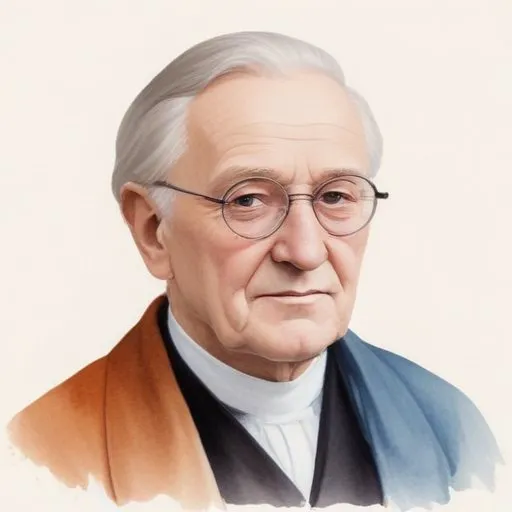
A Dutch philosopher, theologian, and apologist who developed a unique Christian philosophical system, integrating faith and reason, and is known for his apologetic method, which emphasizes the role of presuppositions in shaping one's worldview.
Cornelius Van Til, a Dutch-American Reformed theologian, is renowned for originating modern presuppositional apologetics, a revolutionary approach that transformed the landscape of Christian apologetics. His groundbreaking methodology, which emphasizes the importance of presuppositions in shaping one's worldview, has had a profound impact on the way Christians defend their faith.
Born Kornelis van Til on May 3, 1895, in Grootegast, Netherlands, Van Til was the sixth son of Ite van Til, a dairy farmer, and his wife Klasina van der Veen. At the tender age of ten, he moved with his family to Highland, Indiana, where he became the first in his family to pursue higher education.
Van Til's academic journey took him to Calvin Preparatory School, Calvin College, and Calvin Theological Seminary, where he studied under the tutelage of Louis Berkhof. However, he transferred to Princeton Theological Seminary, where he earned his PhD and laid the foundation for his future work.
Van Til's magnum opus, Christian Apologetics, published in 1936, marked the advent of presuppositional apologetics. This innovative approach challenged the traditional methodology of reasoning, which he deemed inadequate for defending Christianity. By emphasizing the importance of presuppositions, Van Til provided a robust framework for Christians to engage with non-believers and address the intellectual challenges of their time.
His work drew heavily from the ideas of Dutch Calvinist philosophers such as D. H. Th. Vollenhoven, Herman Dooyeweerd, and Hendrik G. Stoker, as well as theologians like Herman Bavinck and Abraham Kuyper. This synergy of influences enabled Van Til to craft a distinctly Reformed approach to apologetics, one that would shape the course of Christian thought for generations to come.
Van Til began his teaching career at Princeton Seminary, but soon joined the conservative group that founded Westminster Theological Seminary, where he taught for 43 years. His tenure at Westminster saw him teaching apologetics and systematic theology, influencing a generation of scholars and theologians, including Greg Bahnsen and R.J. Rushdoony.
As a minister in the Christian Reformed Church in North America and the Orthodox Presbyterian Church, Van Til was embroiled in the Clark-Van Til Controversy, a bitter dispute with Gordon Clark over God's incomprehensibility. Despite this controversy, Van Til remained committed to his calling, continuing to teach occasionally until 1979.
Van Til's influence extends far beyond his own theological tradition. His work has inspired a diverse range of thinkers, from philosophers like Francis Schaeffer to apologists like John Frame. His emphasis on presuppositions has shaped the way Christians engage with non-believers, fostering a more robust and confident approach to defending the faith.
As we reflect on the life and work of Cornelius Van Til, we are reminded of the profound impact one person can have on the trajectory of Christian thought. His groundbreaking approach to apologetics has left an indelible mark on the Christian intellectual tradition, ensuring his influence will be felt for generations to come.
"The Christian apologist must be able to show that the very foundations of the unbeliever's world-view are at cross-purposes with the Christian world-view."
— Cornelius Van Til, Christian Apologetics
Born in 1854
A Dutch philosopher, theologian, and academic who developed a comprehensive Reformed theology, influencing Christian thought and education. He's known for his four-volume magnum opus, "Reformed Dogmatics".
Born in 1797
A prominent 19th-century theologian who shaped Presbyterian doctrine and educated generations of clergy at Princeton Theological Seminary through his writings and teachings. He's known for his systematic theology and biblical commentary.
Born in 1841
Pioneering oceanographer and biologist who explored the ocean's depths, discovering new species and advancing our understanding of marine ecosystems.
Born in 1912
A prominent Christian thinker who developed a comprehensive philosophy of life, integrating faith and culture, and wrote influential books like "How Should We Then Live?"
