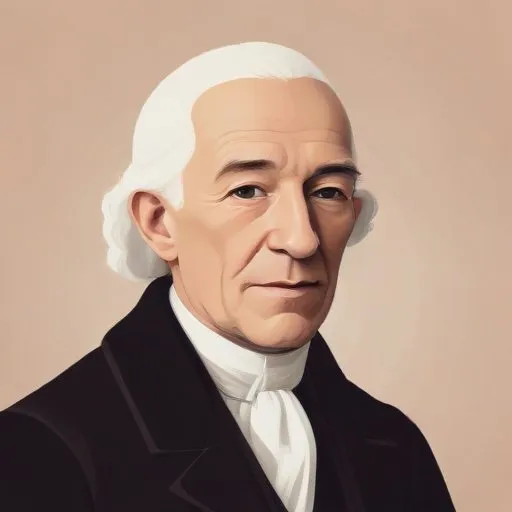
Cotton Mather: The Pioneering Puritan Clergyman and Polymath
A Champion of Faith and Reason
Cotton Mather, a prominent Puritan clergyman and author, left an indelible mark on colonial New England with his extensive writings on theology, history, and science. Born on February 12, 1663, Mather's remarkable life was a testament to his unwavering commitment to his faith, his community, and the pursuit of knowledge.
A Life of Service and Scholarship
After graduating from Harvard College, Mather joined his father, Increase Mather, as minister of the Old North Meeting House in Boston, Massachusetts, where he would preach for the remainder of his life. This esteemed position allowed him to become a prominent figure in English-speaking colonial America, and his influence extended far beyond the pulpit.
A Leading Intellectual and Public Figure
Mather's intellectual curiosity and passion for learning led him to become a prolific writer, producing works on a wide range of subjects, including theology, history, and science. His most famous work,
Magnalia Christi Americana (1702), is still regarded as a seminal work on the history of colonial New England.
A Complex Legacy: The Salem Witch Trials and Beyond
Mather's involvement in the infamous Salem witch trials of 1692-1693, which he defended in his book
Wonders of the Invisible World (1693), has been the subject of much controversy and criticism. While his actions during this period have tarnished his reputation, it is essential to consider the historical context and the complexities of Mather's character.
A Promoter of Science and Innovation
Mather was an early advocate for the scientific method and the experimental approach. He carried out original research on plant hybridization and was instrumental in promoting the variolation method of inoculation against smallpox contagion. His correspondence with European intellectuals and the Royal Society of London, which elected him a fellow, underscores his commitment to advancing knowledge and understanding.
Personal Milestones and Key Life Events
- 1685: Mather earns his Master of Arts degree from Harvard College
- 1691: He marries Abigail Phillips, with whom he has nine children
- 1702: Mather publishes Magnalia Christi Americana, a comprehensive history of colonial New England
- 1710: He receives an honorary Doctor of Divinity degree from the University of Glasgow
Influence on Modern Society and Educational Contributions
Mather's impact on American history, literature, and education extends far beyond his time. He played a significant role in shaping the intellectual and cultural landscape of colonial New England, and his writings continue to influence scholars and historians to this day.
As a testament to his enduring legacy, Cotton Mather's work remains an essential part of American cultural heritage, offering valuable insights into the complexities of the human experience and the power of faith, reason, and knowledge.
FAQ
What was Cotton Mathers role in American history?
Cotton Mather was a prominent English-American minister, author, and intellectual who played a key role in shaping American literature, politics, and culture during the colonial era.
What was Cotton Mathers involvement in the Salem witch trials?
Cotton Mather was involved in the Salem witch trials, although his role is still a subject of debate among historians. He wrote several books on the topic, including Memorable Providences, Relating to Witchcrafts and Possessions.
What are Cotton Mathers most famous works?
Some of Cotton Mathers most famous works include Magnalia Christi Americana and Bonifacius: An Essay upon the Good.
Did Cotton Mather have any scientific interests?
Yes, Cotton Mather had a strong interest in science, particularly in the fields of medicine and astronomy. He was one of the first Americans to be inducted into the Royal Society.
How did Cotton Mather influence American literature?
Cotton Mather had a significant impact on American literature, helping to establish Puritan literature and influencing future generations of American writers, including Nathaniel Hawthorne and Herman Melville.