


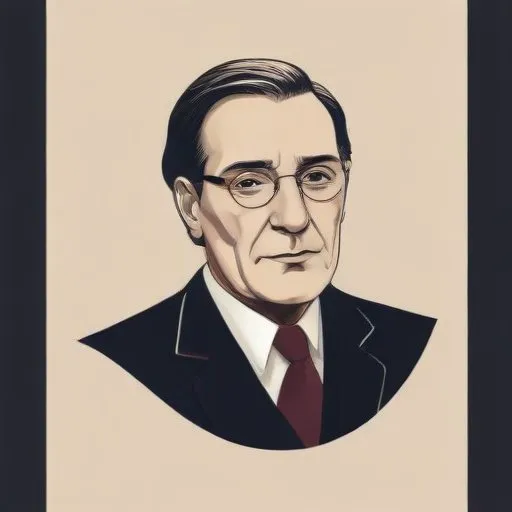
A 17th-century lawyer and politician who advocated for the rights of the common man and played a key role in the development of the English Parliament. He's known for being a pioneer of British democracy.
John Eliot, a prominent English statesman, etched his name in history by fearlessly championing the rights and privileges of Parliament, ultimately leading to his imprisonment and demise in the Tower of London. His unwavering dedication to the cause earned him a revered place in the annals of English politics.
Born on April 11, 1592, at Cuddenbeak, a farm on his father's Port Eliot estate in St Germans, Cornwall, John Eliot was the son of Richard Eliot and Bridget Carswell. He was baptized at St Germans Priory, adjacent to Port Eliot. The Eliot family, an old Devon family, had settled in Cornwall.
Eliot's educational journey took him to Blundells School in Tiverton, followed by Exeter College, Oxford, where he matriculated in 1607. After leaving the university, he pursued law at one of the Inns of Court. His formative years also included travels to France, Spain, and Italy, during which he spent time with young George Villiers, the future 1st Duke of Buckingham.
At just 22, Eliot embarked on his parliamentary career as Member of Parliament for St Germans in the Addled Parliament of 1614. In 1618, he was knighted, and soon after, through the patronage of Buckingham, he secured the appointment of Vice-Admiral of Devon. This role granted him vast powers for defense and commerce control in the county.
His characteristic energy and zeal led to his imprisonment in the Marshalsea prison in 1623, where he was detained for nearly four months. This was a result of his efforts to entrap the notorious pirate John Nutt, who had been plaguing the southern coast and inflicting immense damage on English commerce. Despite his imprisonment, Eliot's unwavering commitment to his principles remained unshaken.
The relentless pursuit of his convictions eventually led to Eliot's downfall. He was imprisoned multiple times, with the final stint being in the Tower of London, where he ultimately succumbed to his fate on November 27, 1632.
John Eliot's indomitable spirit and sacrifices have left an indelible mark on English history. He remains an inspiration to those who value courage, conviction, and the unwavering pursuit of justice. In the face of adversity, Eliot's unshakeable resolve continues to reverberate through the ages, a testament to the power of principle and the human spirit.
John Eliot's life and legacy underscore his deep-seated commitment to the principles of justice, equality, and the rule of law. He fervently believed in the importance of upholding the rights and privileges of Parliament, even in the face of opposition from the monarch. His courage and conviction continue to inspire generations, serving as a beacon of hope for those who stand up against oppression and inequality.
Born in 1599
Leader of the Parliamentarian forces during the English Civil War, who later ruled England, Scotland, and Ireland as a republican dictator, known for his military victories and radical reforms.
93 Years Old
A theologian and author who wrote extensively on Christian spirituality, exploring the human condition and the search for meaning, with a focus on the inner child and emotional healing.
Born in 1612
A prominent Parliamentarian commander during the English Civil War, he led the New Model Army to several victories, playing a crucial role in the execution of King Charles I.
