


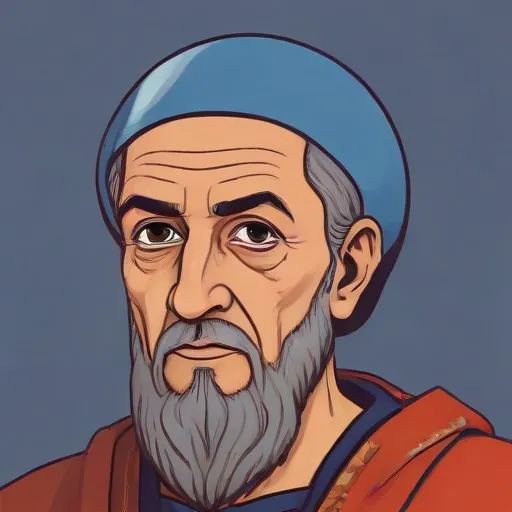
Greek Orthodox patriarch and theologian who played a key role in shaping Eastern Orthodox theology and was a strong advocate for ecumenism and unity with the Catholic Church. He's also known for his Calvinist-influenced writings.
Cyril Lucaris, also known as Kyrillos Loukaris, is renowned for his attempts to reform the Eastern Orthodox Church along Calvinist Protestant lines, earning him both admiration and criticism from scholars and theologians alike. Born in Candia, Crete, on November 13, 1572, Lucaris would go on to become the Greek Patriarch of Alexandria and Ecumenical Patriarch of Constantinople.
Lucaris' ecclesiastical career spanned multiple continents, with notable appointments including Rector of Ostroh Academy and Patriarch of Alexandria. In 1601, at the age of twenty-nine, he was installed as the Patriarch of Alexandria, a position he would hold for twenty years before ascending to the See of Constantinople.
During his tenure, Lucaris played a pivotal role in shaping Orthodox opposition to the Union of Brest-Litovsk, a proposed union of Kiev with Rome. He served as a professor at the Orthodox academy in Vilnius for six years, leaving an indelible mark on the region's theological landscape.
Lucaris' most enduring legacy lies in his attempts to reform the Eastern Orthodox Church, which were met with a mix of enthusiasm and apprehension. His reforms, influenced by Calvinist thought, aimed to address perceived anomalies within the Orthodox Church, sparking heated debates among scholars and theologians.
The motivations and specific viewpoints behind Lucaris' actions remain a subject of ongoing scholarly debate, with some hailing him as a courageous reformer and others criticizing his perceived deviations from Orthodox tradition.
In spite of the controversies surrounding his reforms, Cyril Lucaris is revered as a hieromartyr in the Alexandrian Orthodox Church. The Holy Synod of the Patriarchate of Alexandria glorified him on October 6, 2009, and his memory is commemorated on June 27.
Lucaris' impact on Eastern Orthodox theology and his trailblazing efforts to reform the Church continue to inspire scholars, theologians, and faithful alike, cementing his place as one of the most fascinating and influential figures in Orthodox history.
Cyril Lucaris' life and works must be viewed within the context of the tumultuous 16th and 17th centuries, marked by rising tensions between Eastern Orthodoxy and Roman Catholicism. His attempts to reform the Church were a response to the perceived need for renewal and adaptation in the face of changing theological and political landscapes.
Lucaris' legacy extends beyond his own lifetime, influencing generations of Orthodox theologians and shaping the trajectory of Eastern Orthodox thought.
Born in 1417
A 15th-century pope who played a significant role in the fall of the Western Schism, ending the division in the Catholic Church. He's also known for his lavish spending and nepotism.
