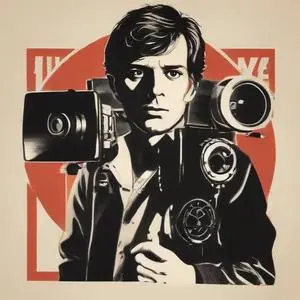
D. A. Pennebaker: The Pioneer of Direct Cinema
A Chronicler of Counterculture and Politics
D. A. Pennebaker is renowned for his groundbreaking contributions to documentary filmmaking, particularly in the realm of direct cinema. As a pioneer in this genre, he has been recognized as one of the most influential chroniclers of the 1960s counterculture movement and American politics.
Early Life and Education
Born Donn Alan Pennebaker on July 15, 1925, in Evanston, Illinois, he was affectionately known as "Penny" to his friends. His father, John Paul Pennebaker, was a commercial photographer, which may have sparked his interest in the visual arts. After serving in the Navy during World War II, Pennebaker studied engineering at Yale and later worked as an engineer, founding Electronics Engineering, which developed the first computerized airline reservation system.
Career Highlights and Major Works
Pennebaker's film career began in 1953, influenced by experimental filmmaker Francis Thompson. His first film,
Daybreak Express, was released in 1958 and featured a montage of the soon-to-be-demolished Third Avenue elevated subway in New York City, set to a classic
Duke Ellington recording. This early work caught the attention of Ellington himself, who responded favorably.
Some of Pennebaker's most notable documentaries include:
- Dont Look Back (1967), a behind-the-scenes look at Bob Dylan's 1965 UK tour
- Monterey Pop (1968), a film capturing the essence of the Monterey Pop Festival
- Original Cast Album: Company (1971), a documentary on the creation of Stephen Sondheim's Company
- Ziggy Stardust and the Spiders from Mars (1979), a concert film featuring David Bowie's iconic persona
- Jimi Plays Monterey (1986), a documentary on Jimi Hendrix's legendary performance at the Monterey Pop Festival
- Elaine Stritch: At Liberty (2004), a documentary on the life and career of the legendary actress
- Kings of Pastry (2009), a film showcasing the art of French pastry-making
Awards and Honors
Pennebaker's contributions to documentary filmmaking have been recognized with numerous awards and nominations, including:
- An Academy Honorary Award in 2013 for his body of work
- An Academy Award nomination for Best Documentary Feature for The War Room (1993)
Influence on Modern Society
Pennebaker's work has had a profound impact on the world of documentary filmmaking, inspiring generations of filmmakers to adopt the direct cinema style. His films have also contributed to our understanding of the 1960s counterculture movement and American politics, providing a unique perspective on these pivotal moments in history.
Legacy
D. A. Pennebaker's legacy extends beyond his own films, influencing the way documentaries are made and perceived today. As a pioneer of direct cinema, he has left an indelible mark on the world of filmmaking, ensuring that his work will continue to inspire and educate audiences for years to come.
FAQ
What type of documentaries did D.A. Pennebaker make?
D.A. Pennebaker was a pioneering filmmaker known for creating influential documentary films that explored the lives of iconic figures, such as Bob Dylan and John Kennedy.
What was D.A. Pennebakers filmmaking style?
Pennebakers filmmaking style was characterized by a direct cinema approach, where he often used handheld cameras to capture intimate, unscripted moments.
What is D.A. Pennebakers most famous documentary?
One of Pennebakers most celebrated documentaries is Dont Look Back, which follows Bob Dylans 1965 UK tour and offers a unique glimpse into the artists creative process.
What awards did D.A. Pennebaker win?
Throughout his career, Pennebaker won numerous awards, including an Academy Award for Best Documentary Feature for The War Room in 1994.
What was D.A. Pennebakers impact on documentary filmmaking?
Pennebakers innovative approach to documentary filmmaking has inspired generations of filmmakers, pushing the boundaries of the genre and redefining the way we tell stories on screen.