


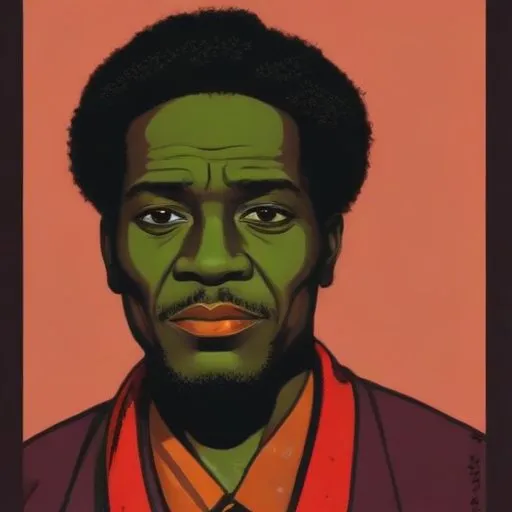
A Zimbabwean writer and poet known for his provocative and experimental works that explored themes of identity, colonialism, and African culture. His writing often blended elements of poetry, fiction, and autobiography.
Renowned for his pioneering and provocative writing style, Dambudzo Marechera was a Zimbabwean novelist, short story writer, playwright, and poet who left an indelible mark on African literature. His debut book, The House of Hunger, won the prestigious Guardian Fiction Prize in 1979, cementing his status as a literary icon.
Born on June 4, 1952, in Vengere Township, Rusape, Southern Rhodesia (now Zimbabwe), Marechera was the child of Shona parents, Isaac and Masvotwa Venenzia Marechera. His tumultuous upbringing in the ghetto would later inspire his writing, which often blurred the lines between reality and fiction. Marechera's family life was marked by turmoil, with his father's mysterious death and his own strained relationships with his family members.
Marechera's writing was characterized by its abrasive, detailed, and self-aware nature, which was unprecedented in African literature at the time. His work often explored themes of identity, colonialism, and the human condition. Throughout his short but prolific career, he published a collection of stories, two novels (one posthumously), a book of plays, prose, and poetry, and a collection of poetry also published posthumously.
Marechera's writing reflected his rebellious and nonconformist nature, challenging traditional norms and conventions in African literature. He was known for his unapologetic and unflinching portrayal of the harsh realities of life in Southern Rhodesia under colonial rule. His work embodies a sense of defiance and nonconformity, reflecting his own experiences as an outsider in both his native Zimbabwe and in the academic establishments he attended.
Marechera's work has inspired a generation of African writers, challenging traditional narratives and pushing the boundaries of literary expression. His legacy extends beyond the literary world, influencing contemporary Zimbabwean culture and identity. Despite his untimely death on August 18, 1987, Marechera's work continues to resonate with readers and writers across the globe.
Marechera's unorthodox behavior, both in his personal life and academic pursuits, often sparked controversy and debate. His strained relationships with his family members, particularly his mother, were well-documented and remain a topic of discussion among scholars and readers.
"I think that is the function of the writer, to be some sort of Cassandra, to be some sort of Cassandra, to be a nuisance, to be a pest, to be a bother, to be a worry, to be an anxiety, to be a problem."
"The writer's duty is to be a critic of society, not a promoter of tourism."
Marechera's work emerged during a pivotal moment in Zimbabwe's history, as the country transitioned from colonial rule to independence. His writing reflects the complexities and contradictions of this period, offering a unique perspective on the African experience. Comparative analysis with contemporaries such as Ngugi wa Thiong'o and Ayi Kwei Armah highlights Marechera's distinct voice and contribution to the African literary canon.
Marechera's relationships with his family members were marked by tension and estrangement, reflecting the turmoil of his upbringing. His rejection of his mother and sisters when they attempted to visit him during his tenure as Writer-in-Residence at the University of Zimbabwe remains a poignant and telling anecdote.
Marechera's life serves as a testament to the power of creativity and resilience in the face of adversity. Despite the challenges he faced, he remained true to his artistic vision, leaving behind a legacy that continues to inspire and provoke readers today.
95 Years Old
A renowned African literary voice, celebrated for his poignant and thought-provoking works that explore the complexities of Nigerian culture and the human experience.
92 Years Old
A Nigerian literary giant, renowned for his powerful writings that explore the complexities of African identity, culture, and politics. His works often blend traditional Yoruba mythology with modernist experimentation.
67 Years Old
A Nigerian poet and author celebrated for his magical realist novels that explore the human condition, often blending myth and reality to convey powerful messages about politics, culture, and identity.
